

The Economy & Governance program focuses on issue areas affecting all Californians—from housing and land use, to transportation and voter resources. Some of the recent key projects from this program include an analysis of how well California jurisdictions are doing in meeting their housing goals, as well as a look at what type of housing we need to build and where in order to meet our housing needs without compromising our climate goals. While housing has become a pressing priority for the state and, likewise, for Next 10—we also continue to produce more broadly relevant economy and governance tools, including the California Choices website. This nonpartisan online platform provides in-depth election information and resources to help voters make informed decisions in the voting booth. Through civic engagement and in-depth analyses of some of the state’s most pressing problems, we hope Californians will become empowered to affect change in their communities.
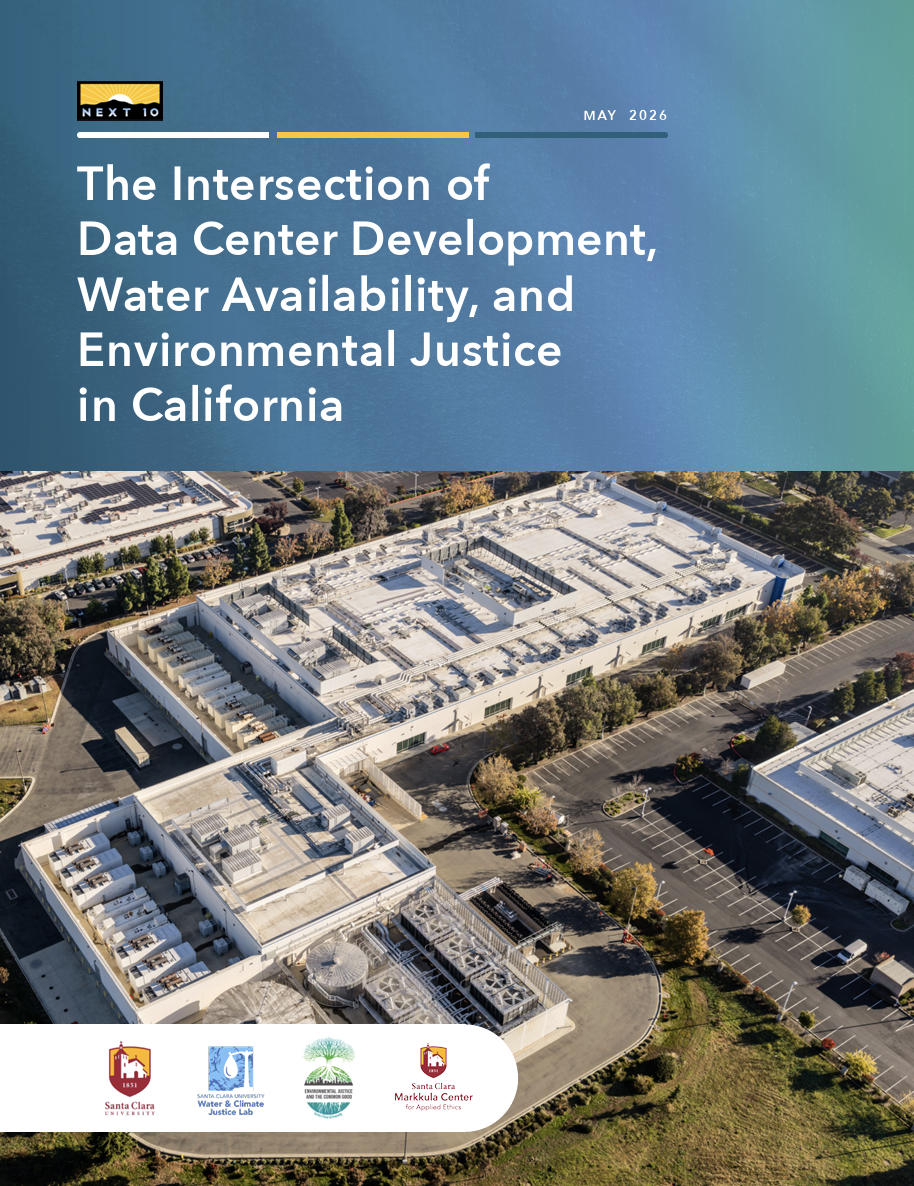
The Intersection of Data Center Development, Water Availability, and Environmental Justice In California
As demand for artificial intelligence and cloud computing accelerates, large-scale data centers which require significant water resources for cooling are increasingly being sited in regions already facing constrained supplies due to climate change and reliance on imported water. A new report by Next 10, led by researchers at Santa Clara University, finds that California’s rapidly expanding data center industry is increasingly intersecting with regions facing water scarcity as well as environmental injustice—raising concerns about long-term water sustainability and community vulnerability. The report, The Intersection of Data Center Development, Water Availability, and Environmental Justice In California, is the first comprehensive analysis of every known operating and planned data center in California through a combined water access and environmental justice lens.