
Publications
California Budget Challenge 2026
Take the California Budget Challenge HERE
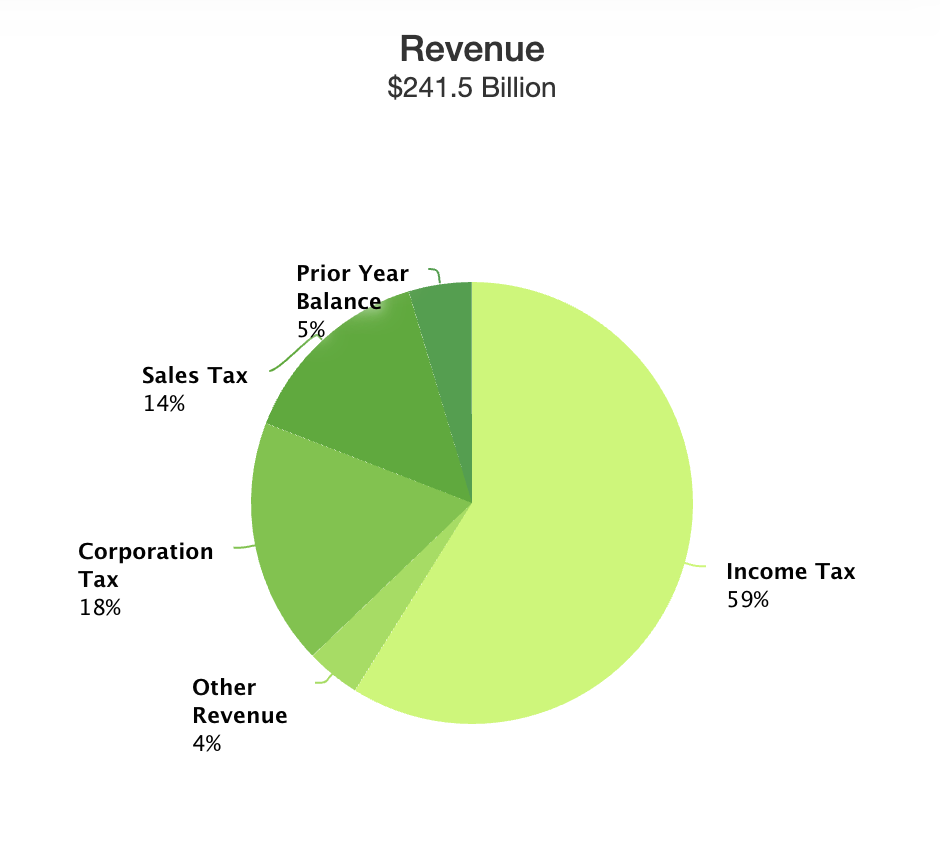
Following large surpluses in 2021 and 2022 due to higher-than-expected revenue and federal COVID relief funds, the state is now facing a projected deficit of $4.6 billion in 2026-27, if the proposals in the Governor’s budget are not adopted. This is a result of higher-than-expected spending, particularly related to healthcare, and uncertainty about the future of the economy and potential changes in federal policy and funding.
The Governor’s budget maintains funds for programs seeking to increase financial security and opportunities for Californians — including funding for post-prison reentry programs, the Housing, Assistance and Prevention Grant program (HHAP), and CalFire. It also maintains planned spending for K-12 schools, community colleges, UCs, and CSUs due to constitutionally required funding allocations and budget commitments made in recent years. In comparison, the Legislature’s budget increases Prop 98 funding to support colleges and state preschool, alike and rejects all proposed reductions to In-Home Supportive Services and Adult Protective Services.
Unlike the 2025-26 proposed budget, the Governor's 2026-27 budget does not draw from the Rainy Day Fund (BSA). The state is required to deposit $3 billion into the BSA this year and the balance of the Rainy Day Fund is projected to be $15 billion at the end of the 2026-27 fiscal year. The California Safety Net Reserve Fund, a specific reserve designed to maintain CalWORKs and Medi-Cal benefits during economic downturns, was completely drained in the 2024-25 budget, leaving zero balance to cover future expenditures.
The California Budget Challenge allows you to decide which proposals from the Governor’s budget to adopt along with options to raise or cut taxes in order to balance the budget.
Take the California Budget Challenge HERE
Featured Graphics
Key Major Spending Cuts:
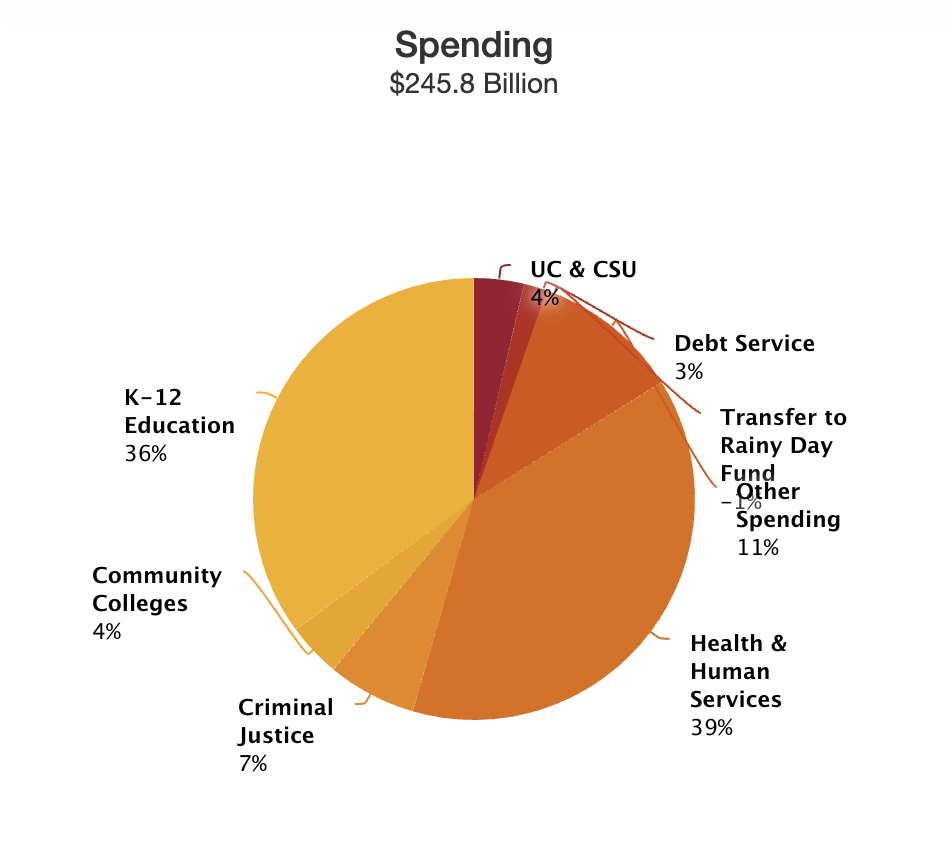
Major spending cuts proposed by the Governor’s 2026-27 budget proposal primarily impact Health & Human Services. The passage of H.R.1 at the federal level has barred states from receiving federal funding for certain programs, primarily those that benefit immigrants and those who receive Medi-Cal (the state’s version of Medicaid).
- Cut $102 million General Fund ($373 million total) in 2026-27 by implementing new work requirements on adults who receive state-funded Medi-Cal under the ACA Medicaid expansion as a result of the federal budget bill H.R.1. Savings are expected to rise to $3.6 billion by 2029-2030.
- Eligibility must be re-checked every 6 months and estimated 3 million Californians could lose their Medi-Cal coverage due to the new work requirements.
- Cut $786 million General Fund in 2026-27 by making many types of legal immigrants no longer eligible for full-scope Medi-Cal and the Children's Health Insurance Program (CHIP) starting on October 1, 2026 as a result of the federal budget bill H.R.1
Despite the significant budget shortfall last year, the state avoided many harmful cuts to core programs. The budget maintains funding for education and child care assistance, but there are no proposals to meaningfully increase funding in these areas outside of previously planned increases. Given the uncertainty around state revenues, the revised budget in May will likely include new spending options and cuts to support evolving priorities and balance the budget.
Key Major Spending Proposals:
Spending proposals largely support programs that were previously funded by the federal government, forcing California to draw from state funds to continue providing these valuable services.
- Spend $60 million one-time General Fund to provide grants to reproductive health care providers who face critical funding shortages due to the federal government cutting off funding for health centers that also provide abortion services
- Spend $383 million General Fund in 2026-27 to make up for the cut in the federal share of funding for CalFresh from 50% to 25% in H.R.1
- Spend $200 million for electric vehicle rebates to make up for canceled federal EV tax credits of up to $7,500
- Spend $500 million General Fund for the Housing, Assistance and Prevention Grant program (HHAP) which awards local flexible funds to address homelessness dependent on various coordination and accountability measures — while this is down from the $1 billion previously allocated, it could have been eliminated all together given the budget constraints.