Publications
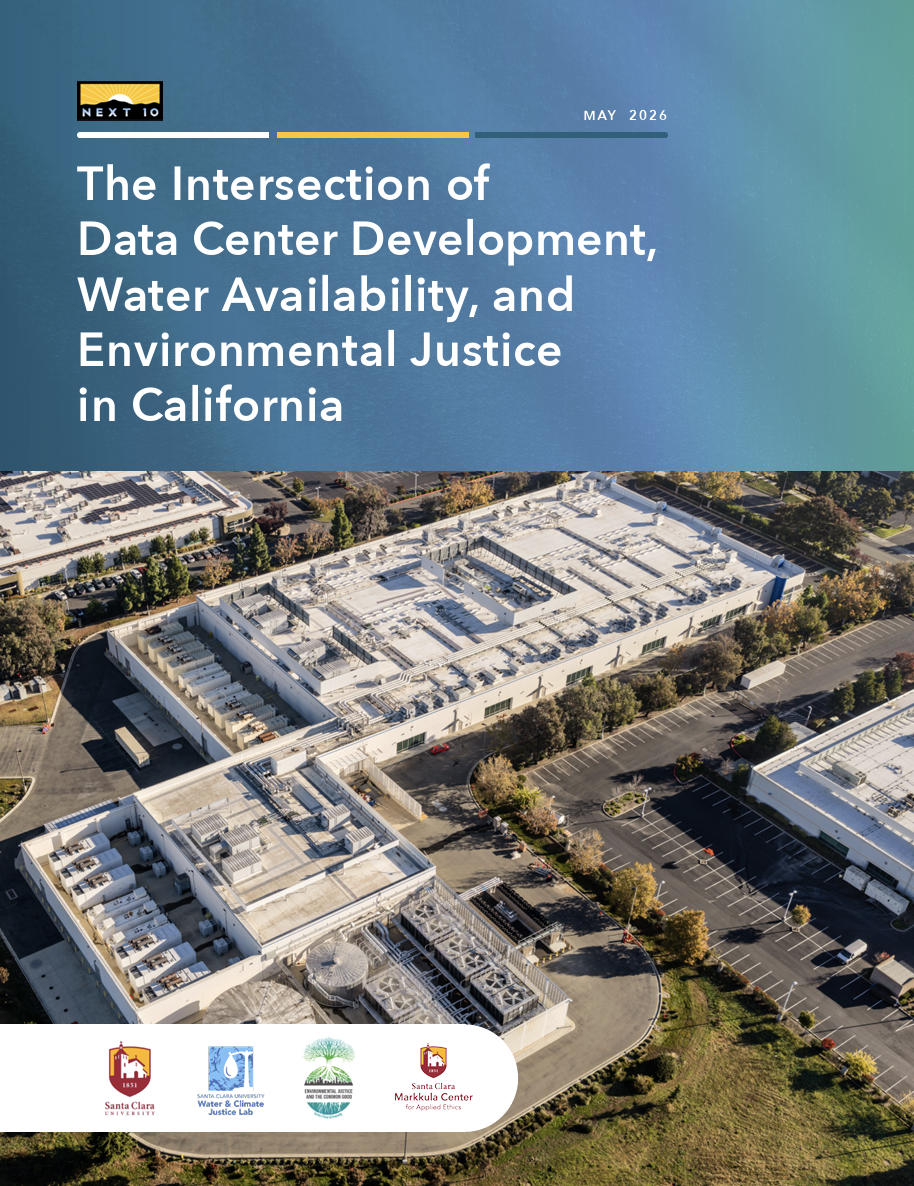
The Intersection of Data Center Development, Water Availability, and Environmental Justice In California
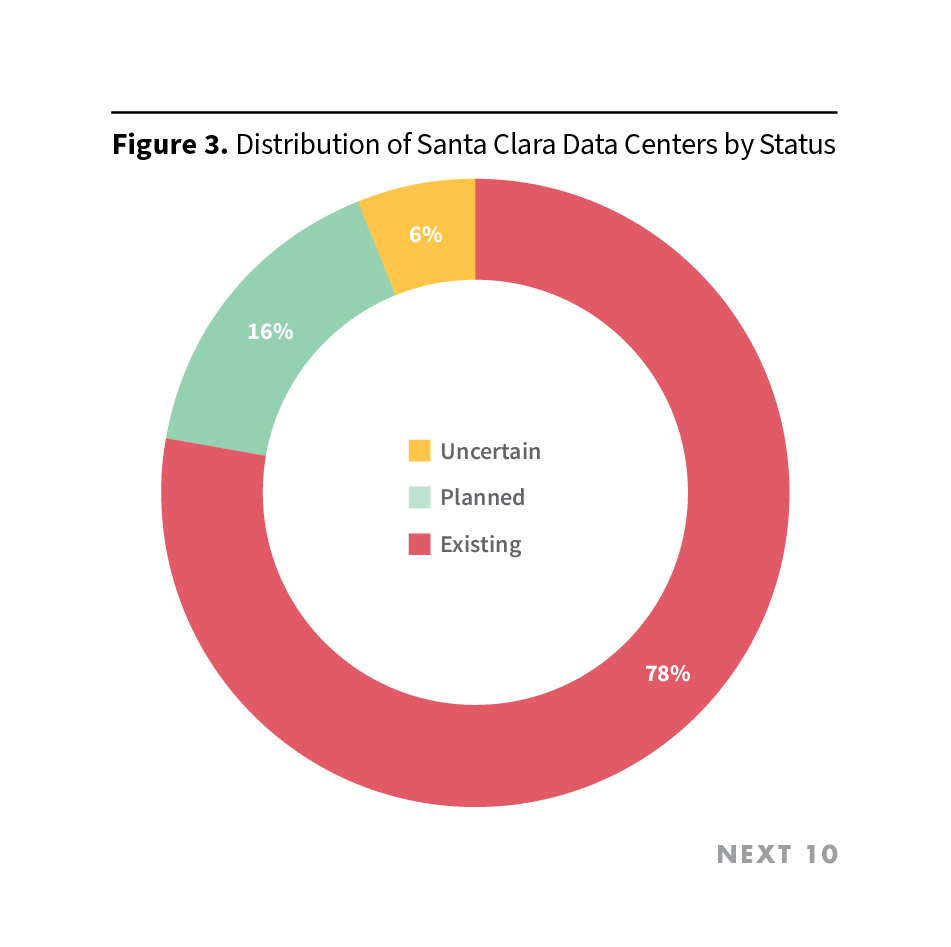
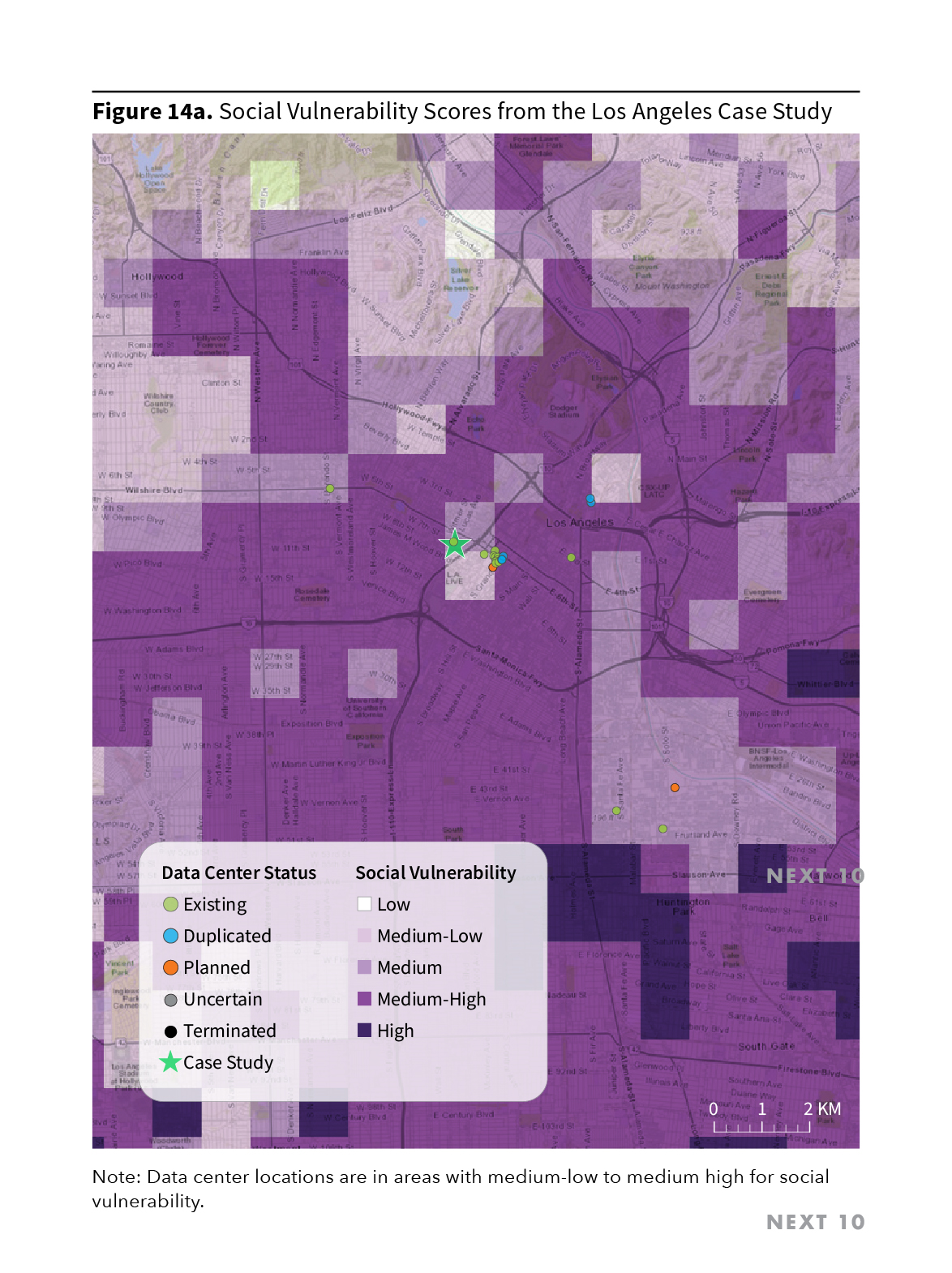
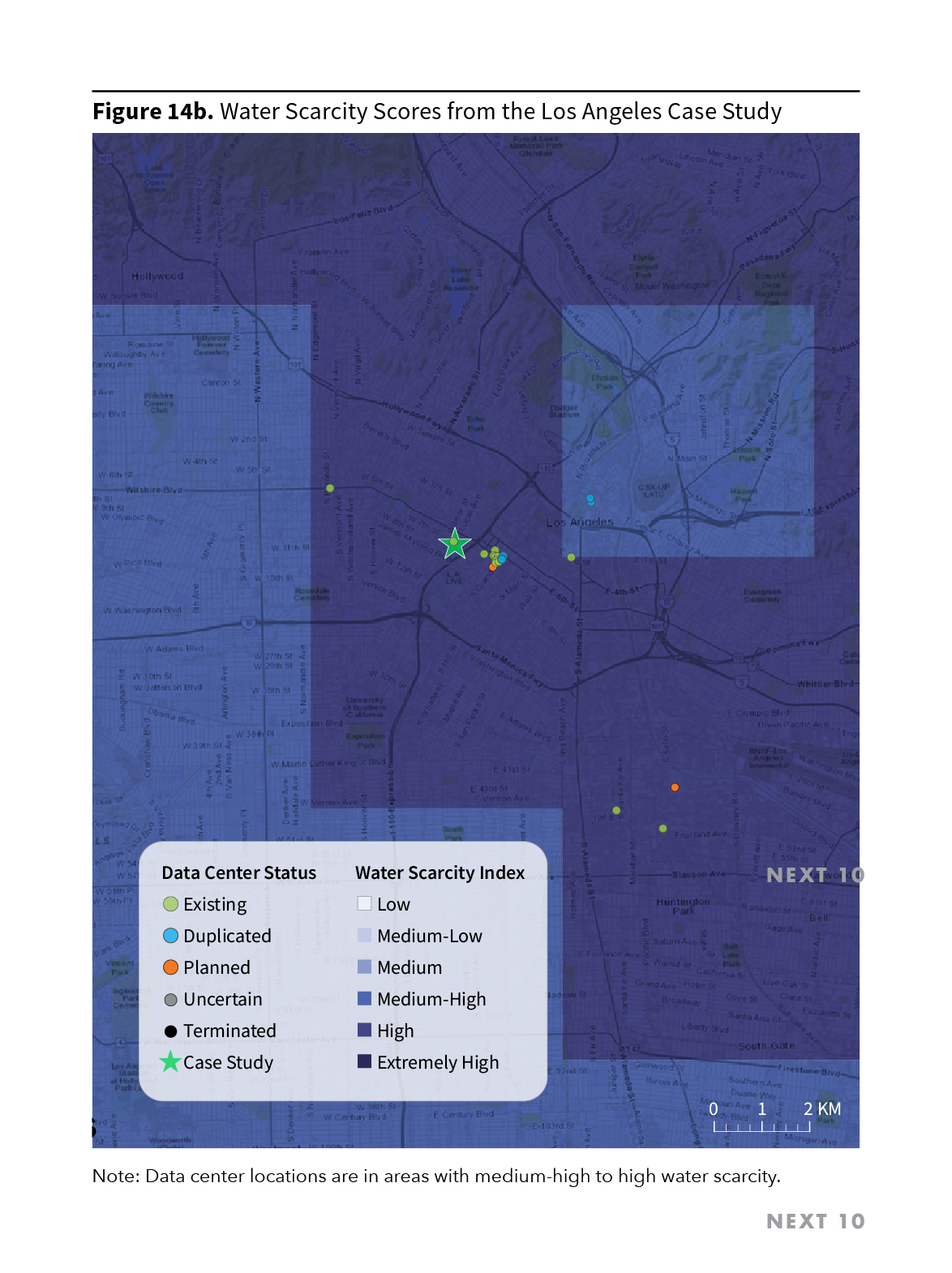
As demand for artificial intelligence and cloud computing accelerates, large-scale data centers which require significant water resources for cooling are increasingly being sited in regions already facing constrained supplies due to climate change and reliance on imported water. A new report by Next 10, led by researchers at Santa Clara University, finds that California’s rapidly expanding data center industry is increasingly intersecting with regions facing water scarcity as well as environmental injustice—raising concerns about long-term water sustainability and community vulnerability. The report, The Intersection of Data Center Development, Water Availability, and Environmental Justice In California, is the first comprehensive analysis of every known operating and planned data center in California through a combined water access and environmental justice lens.
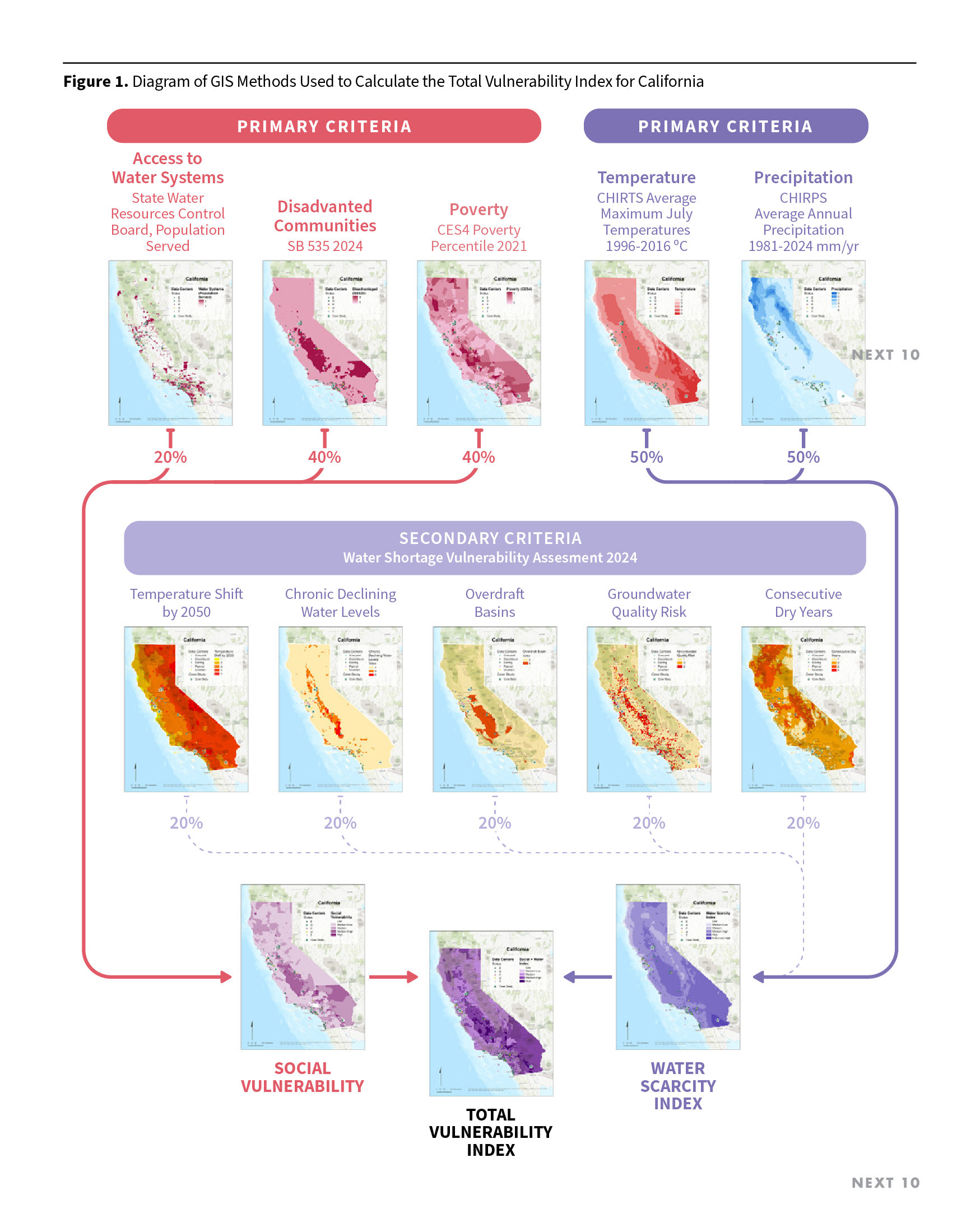
This report assesses the intersection of direct water use by data centers with water availability and distribution in California, focusing on the potential impact of large-scale data center operations on local water resources. The report also evaluates how data centers might affect the water access and sustainability for communities located near these facilities, highlighting potential disparities in water access for particularly vulnerable communities. As part of this assessment, it developed a comprehensive database of California data centers, as well as a newly developed index to evaluate water scarcity and community vulnerability.
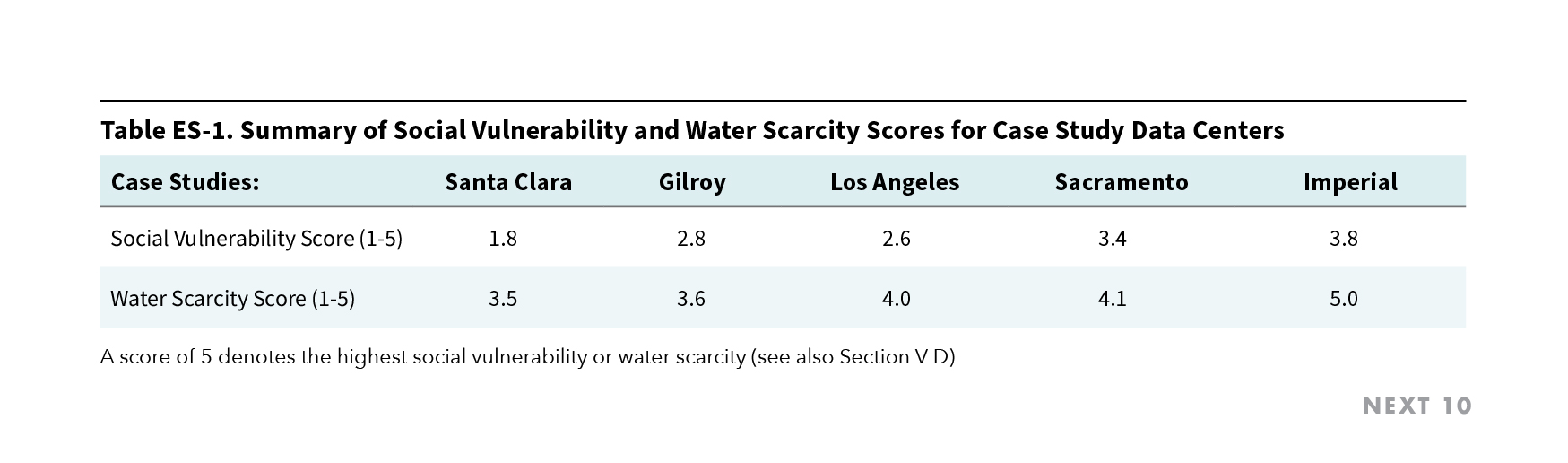
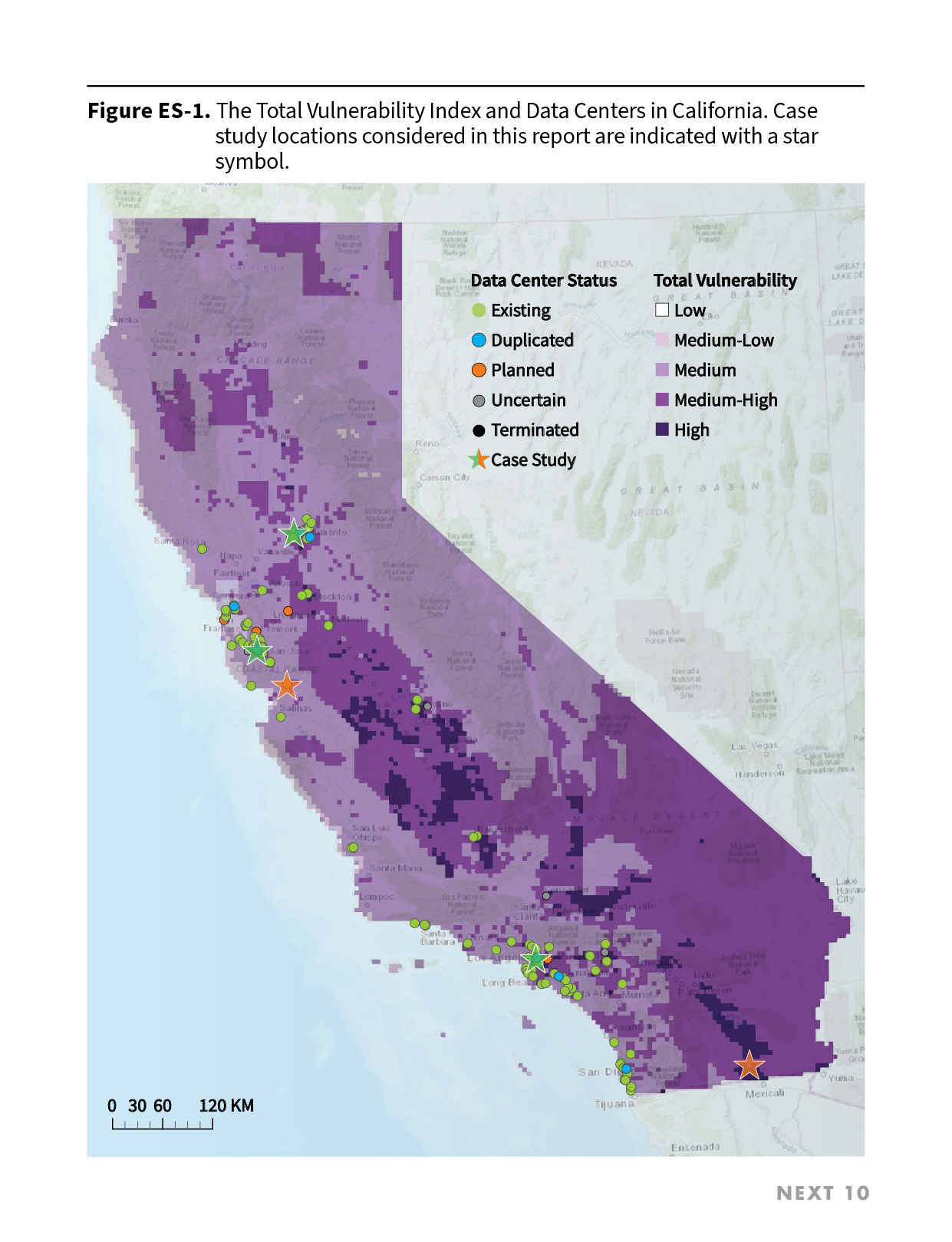
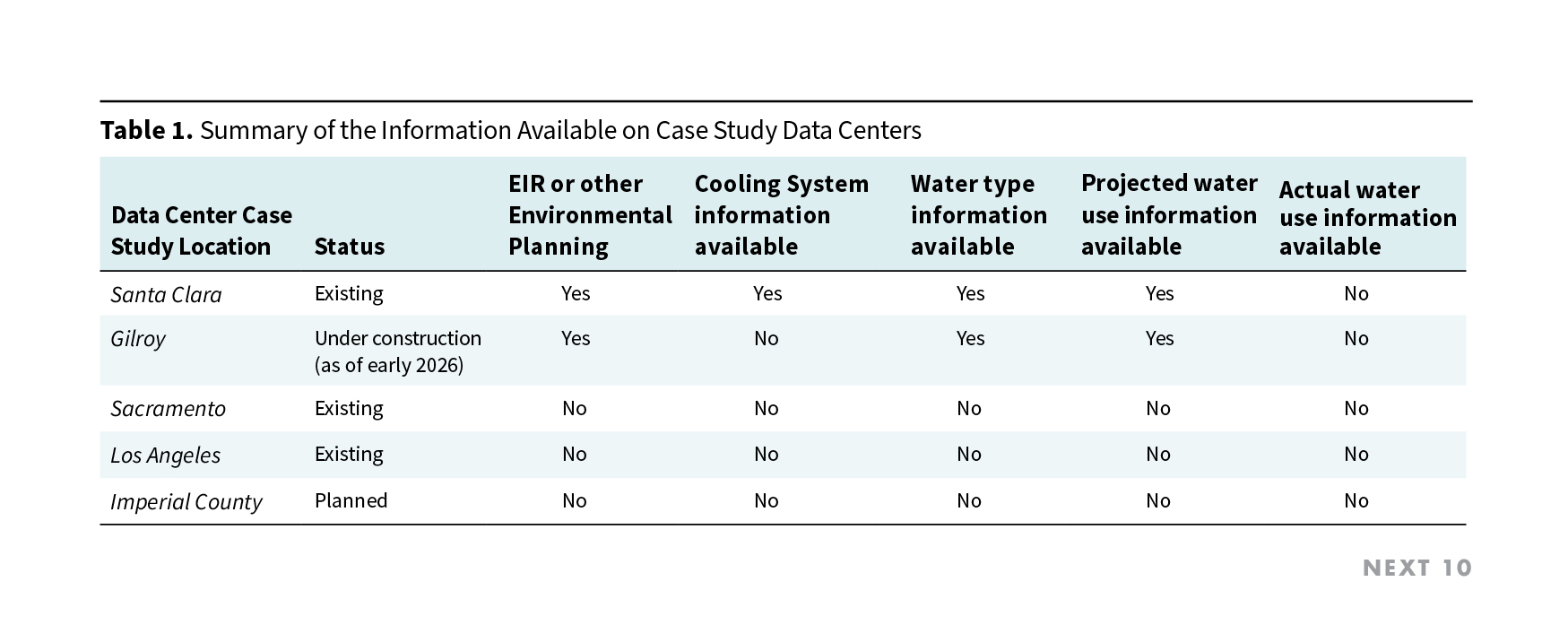
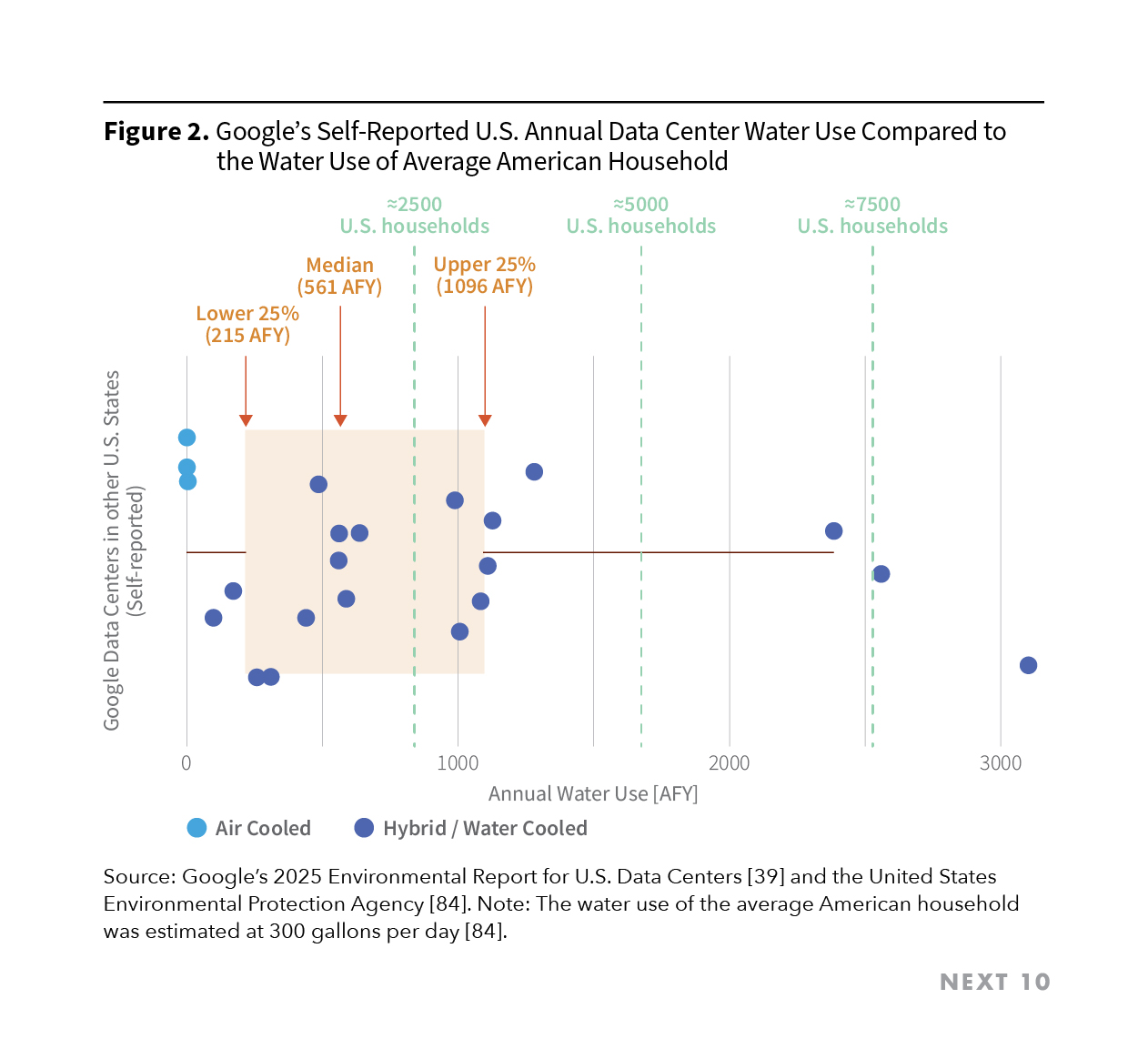
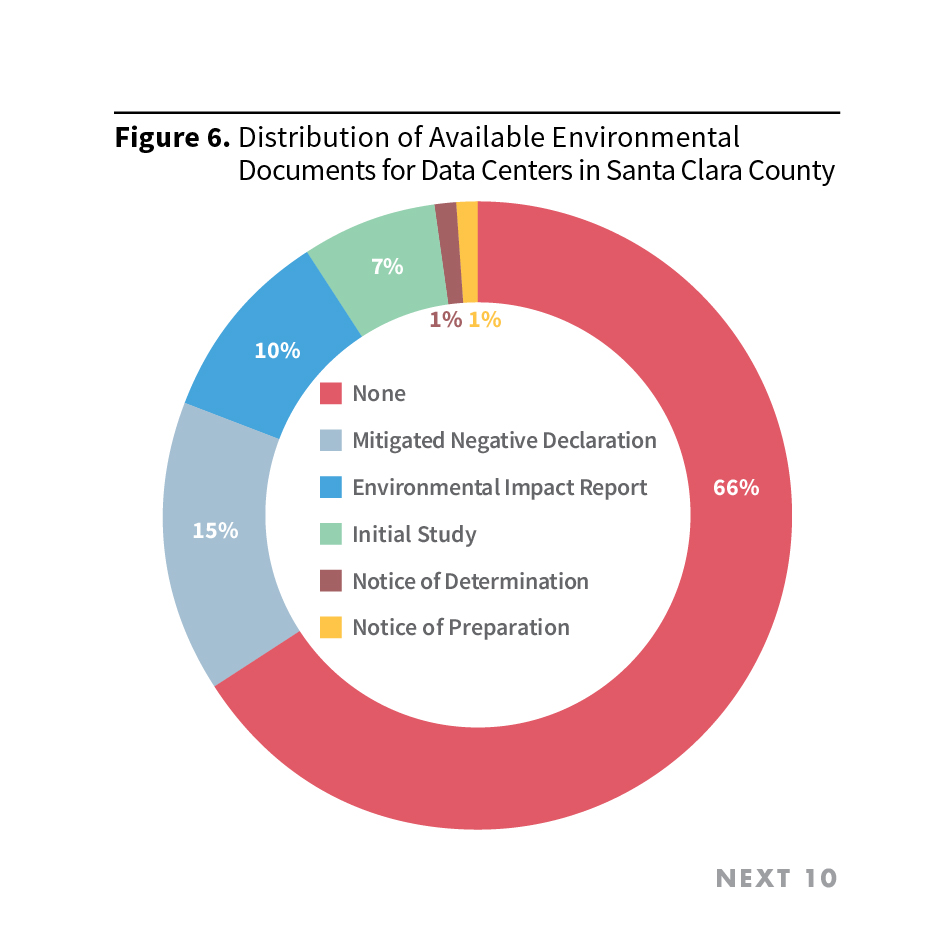
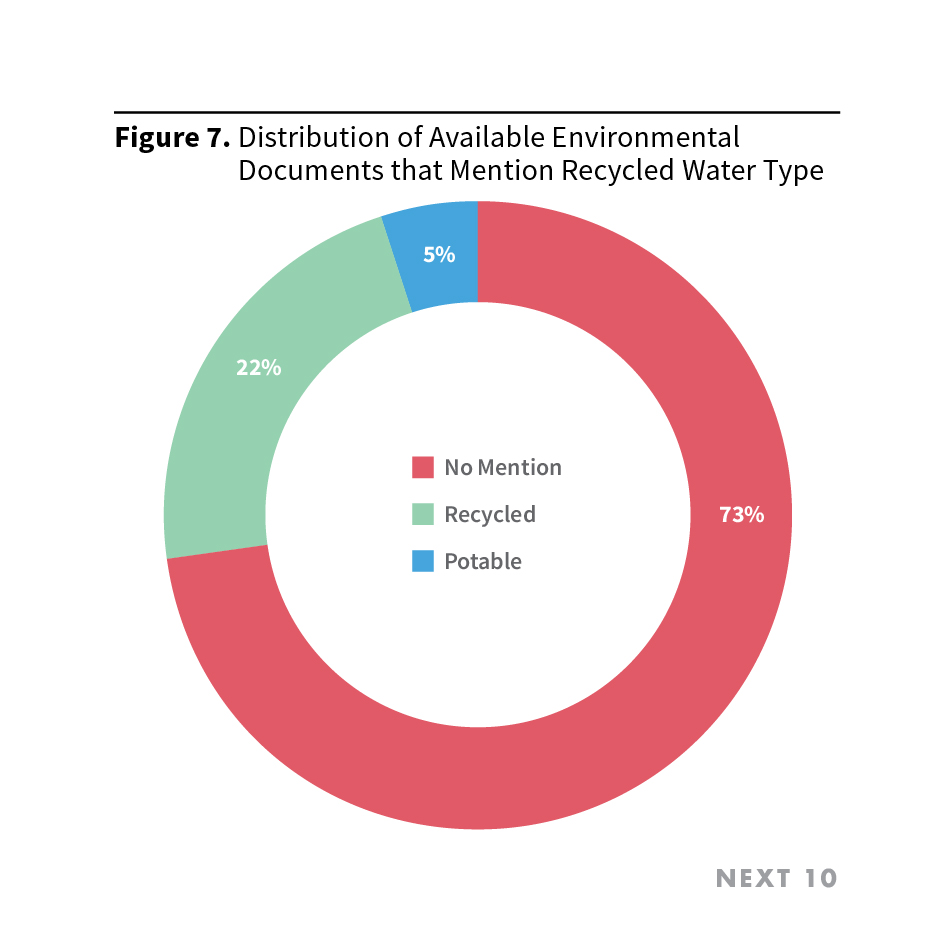
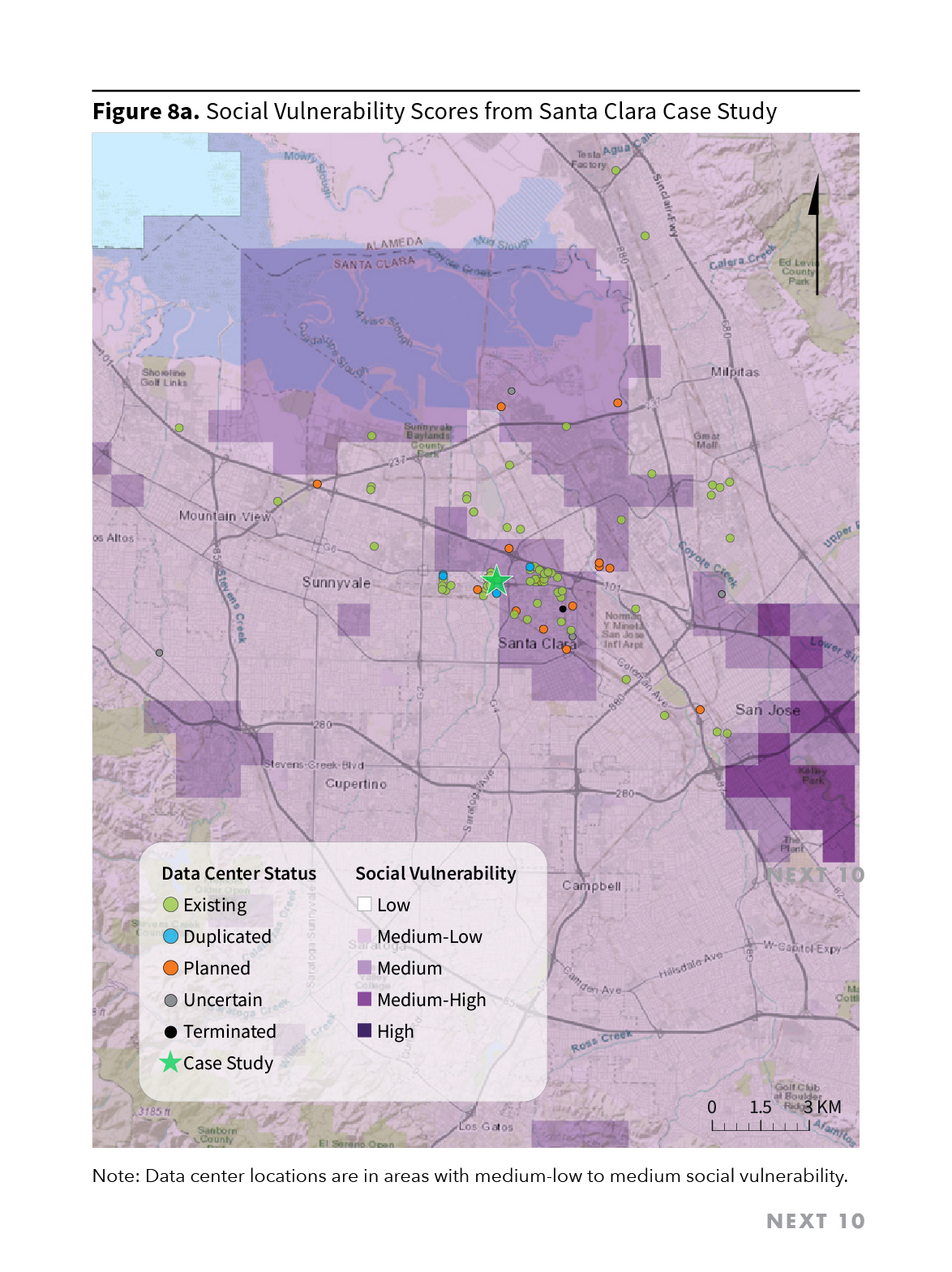
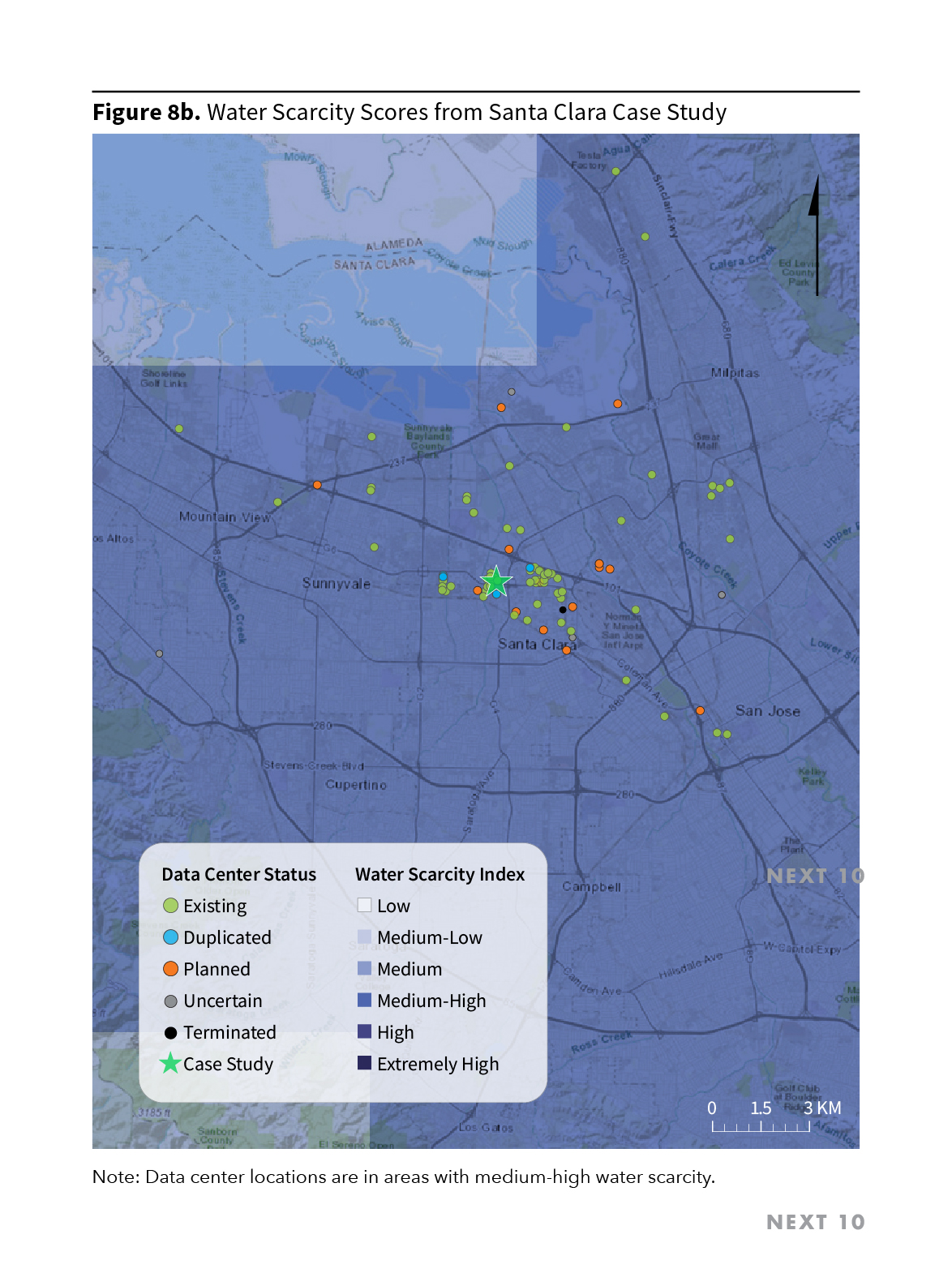
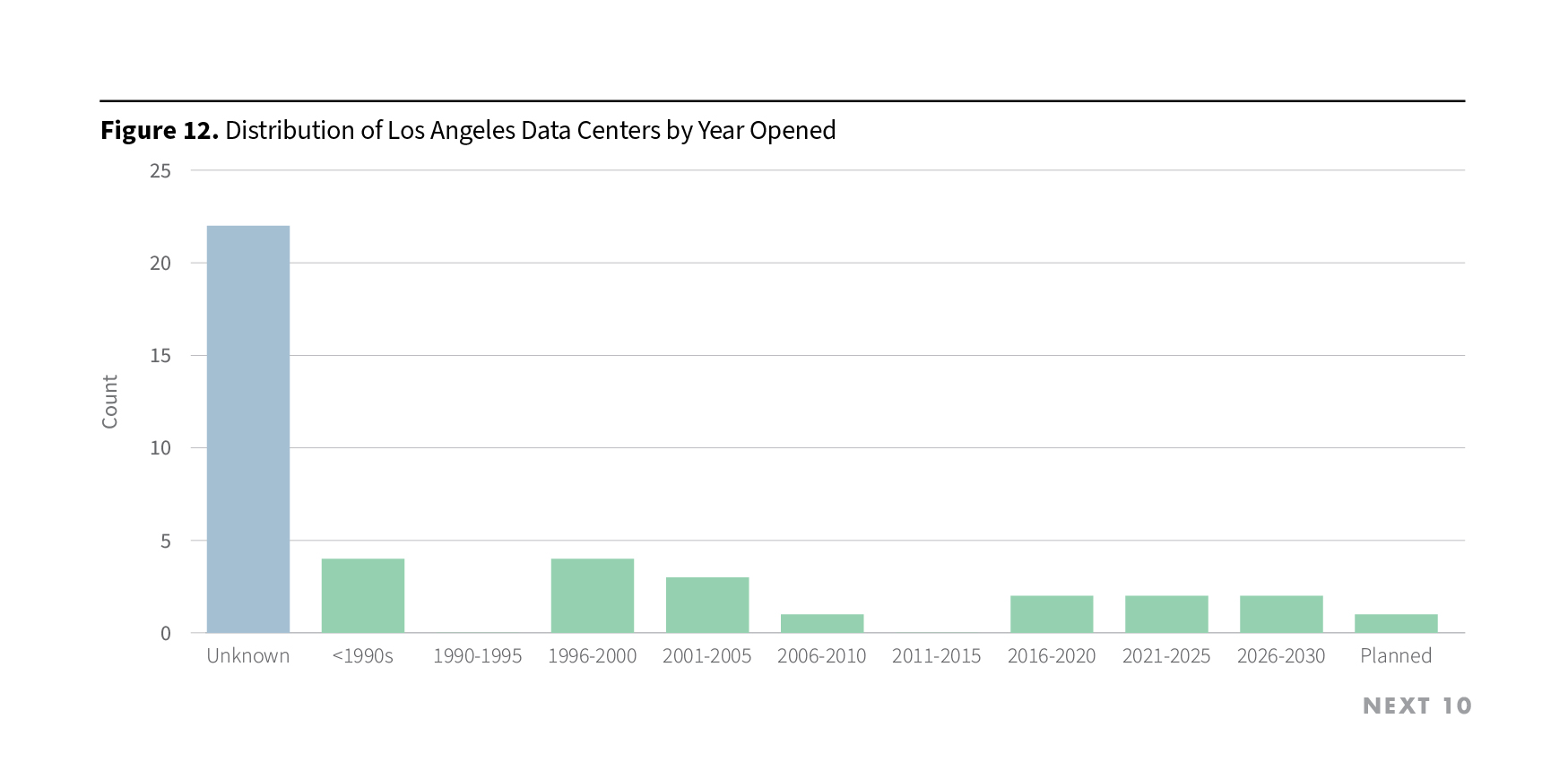
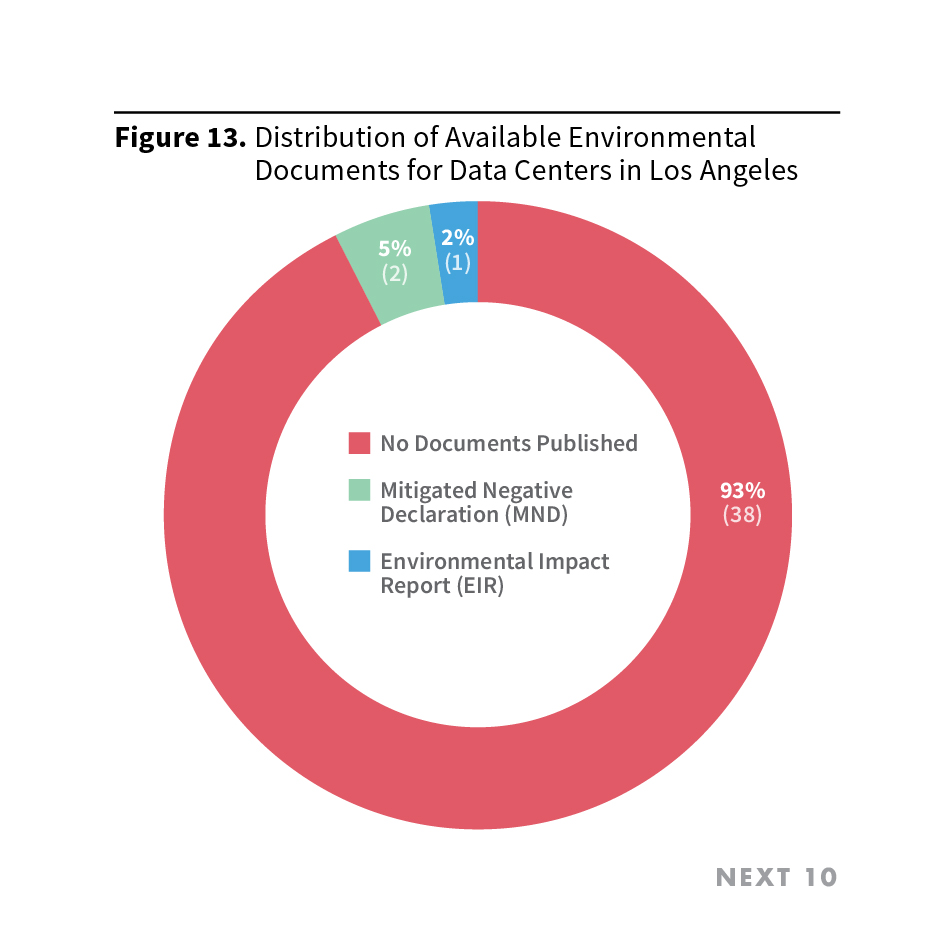
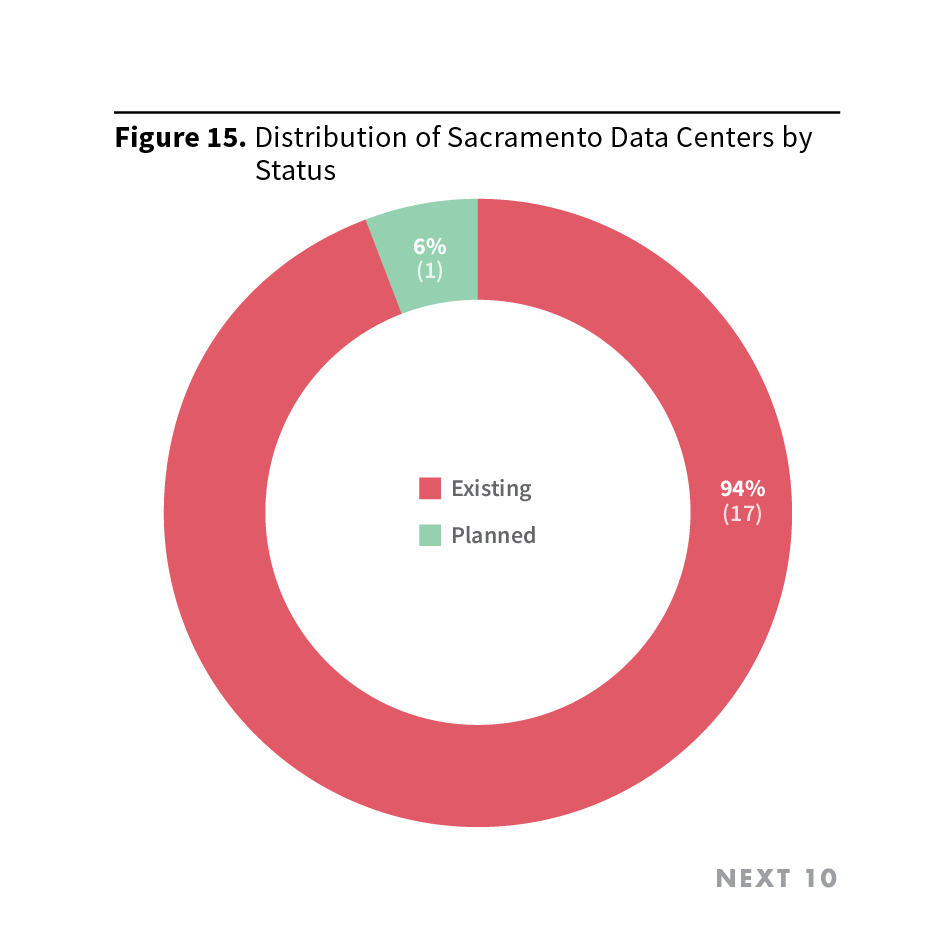
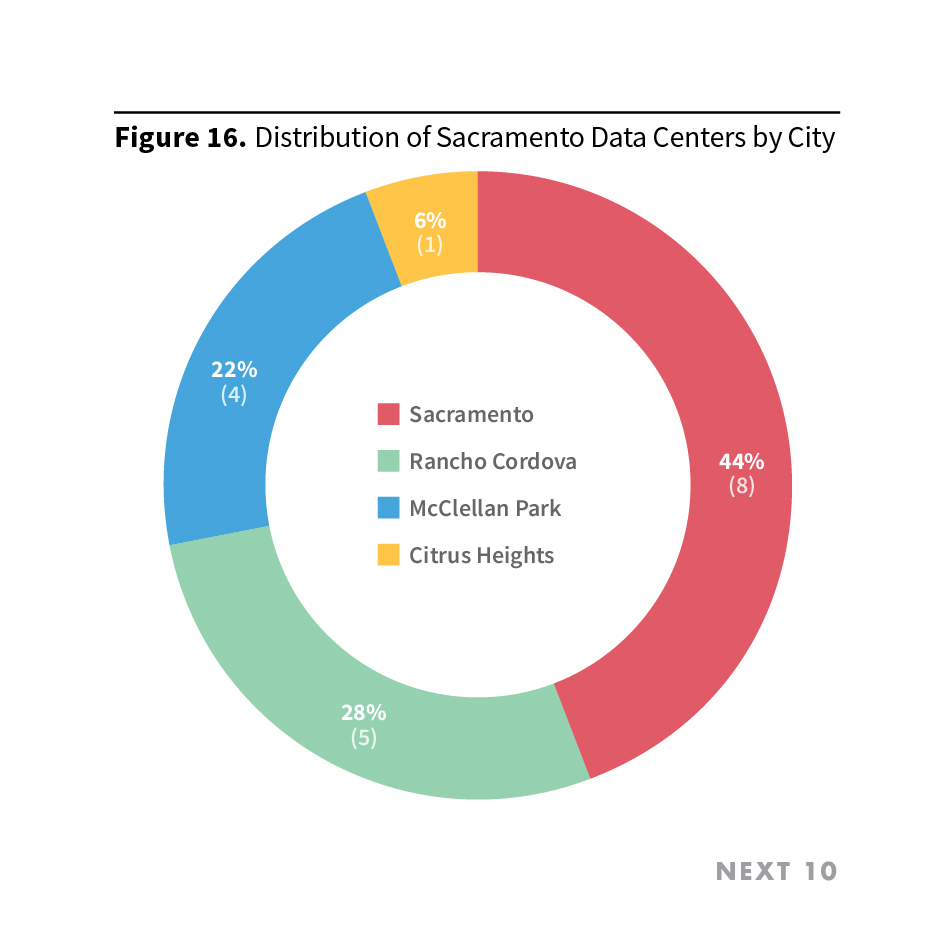
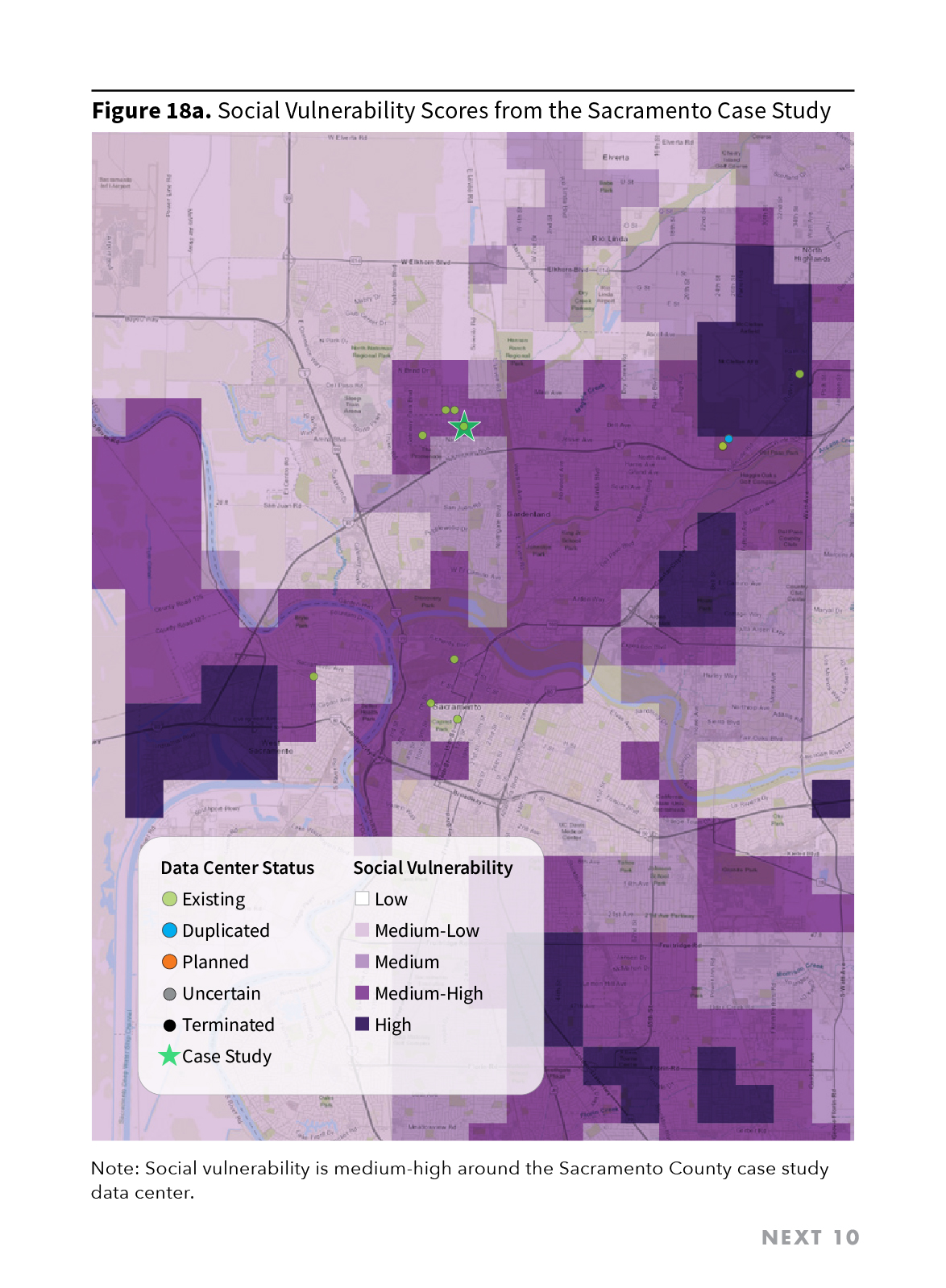
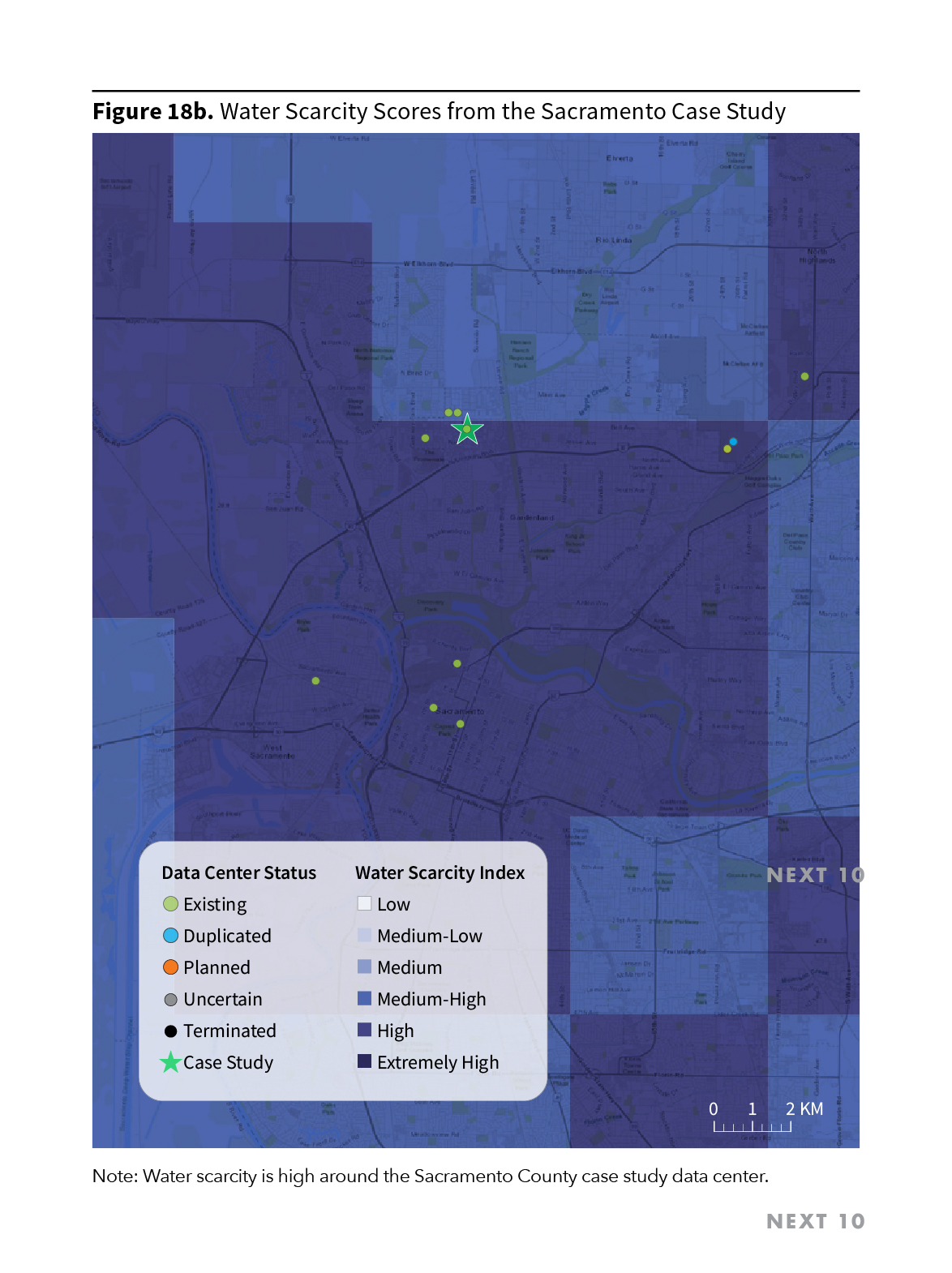
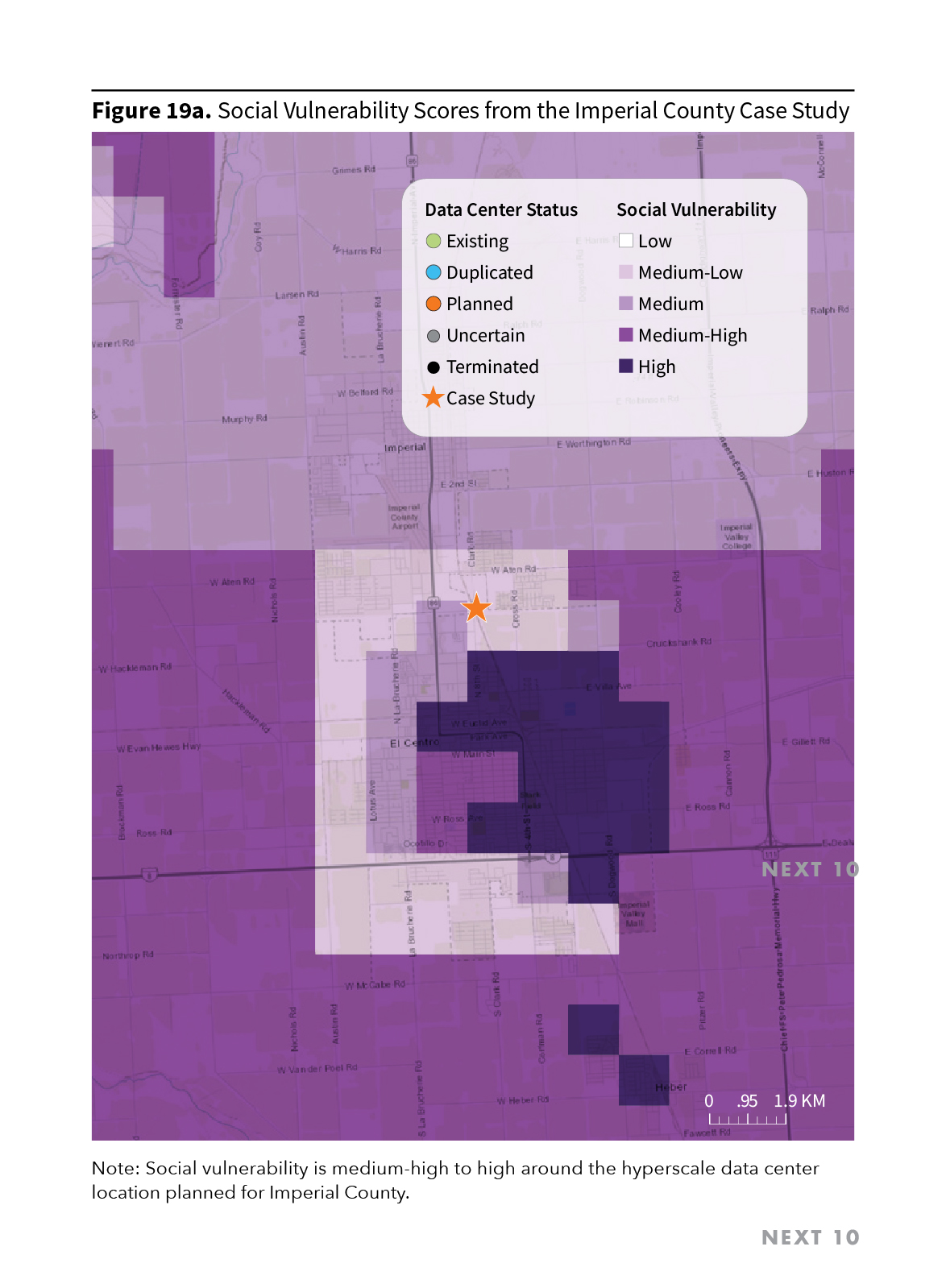
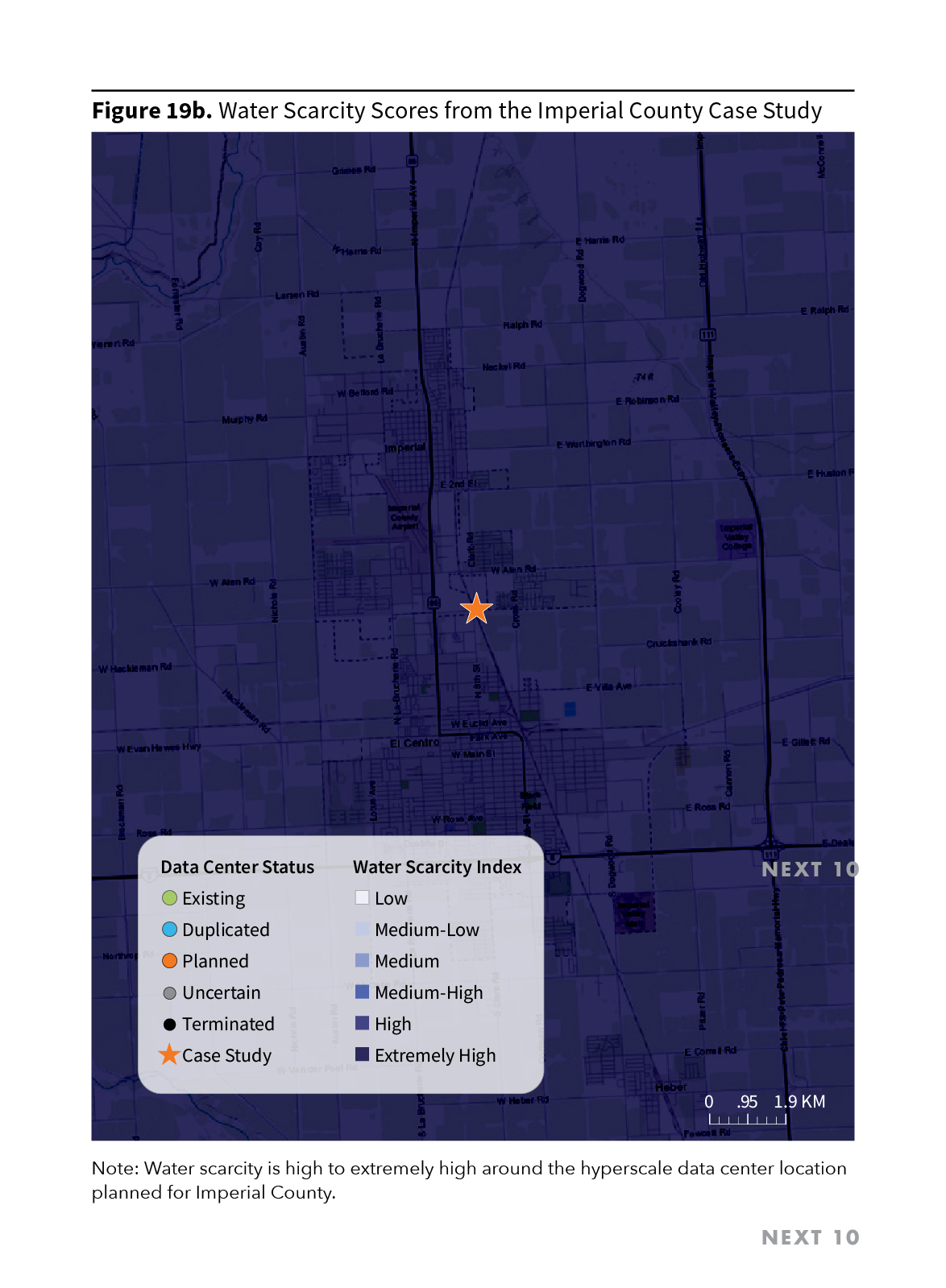
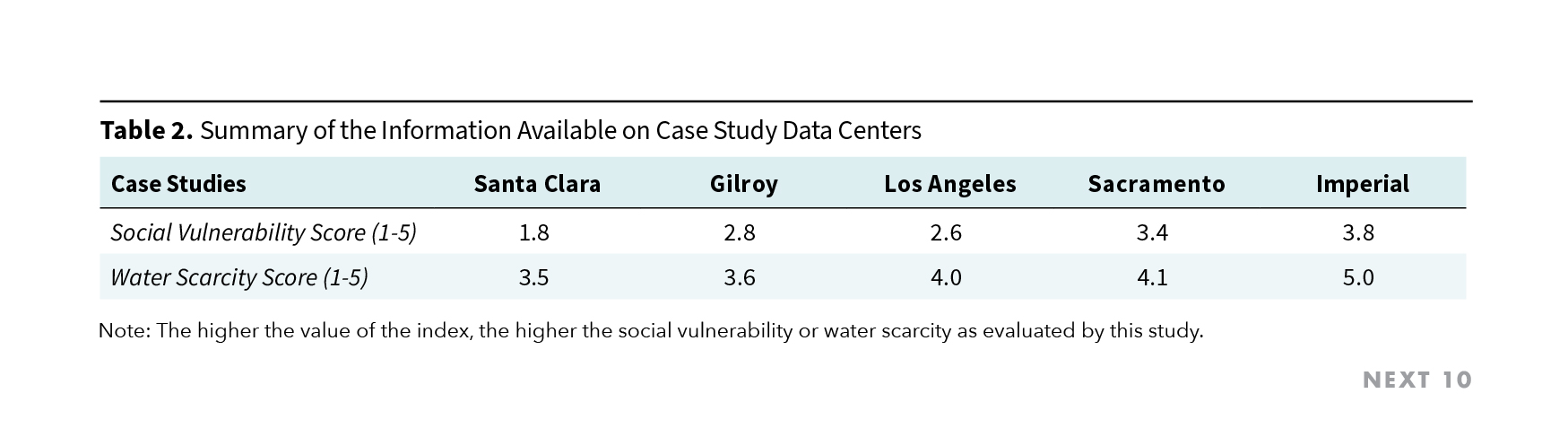
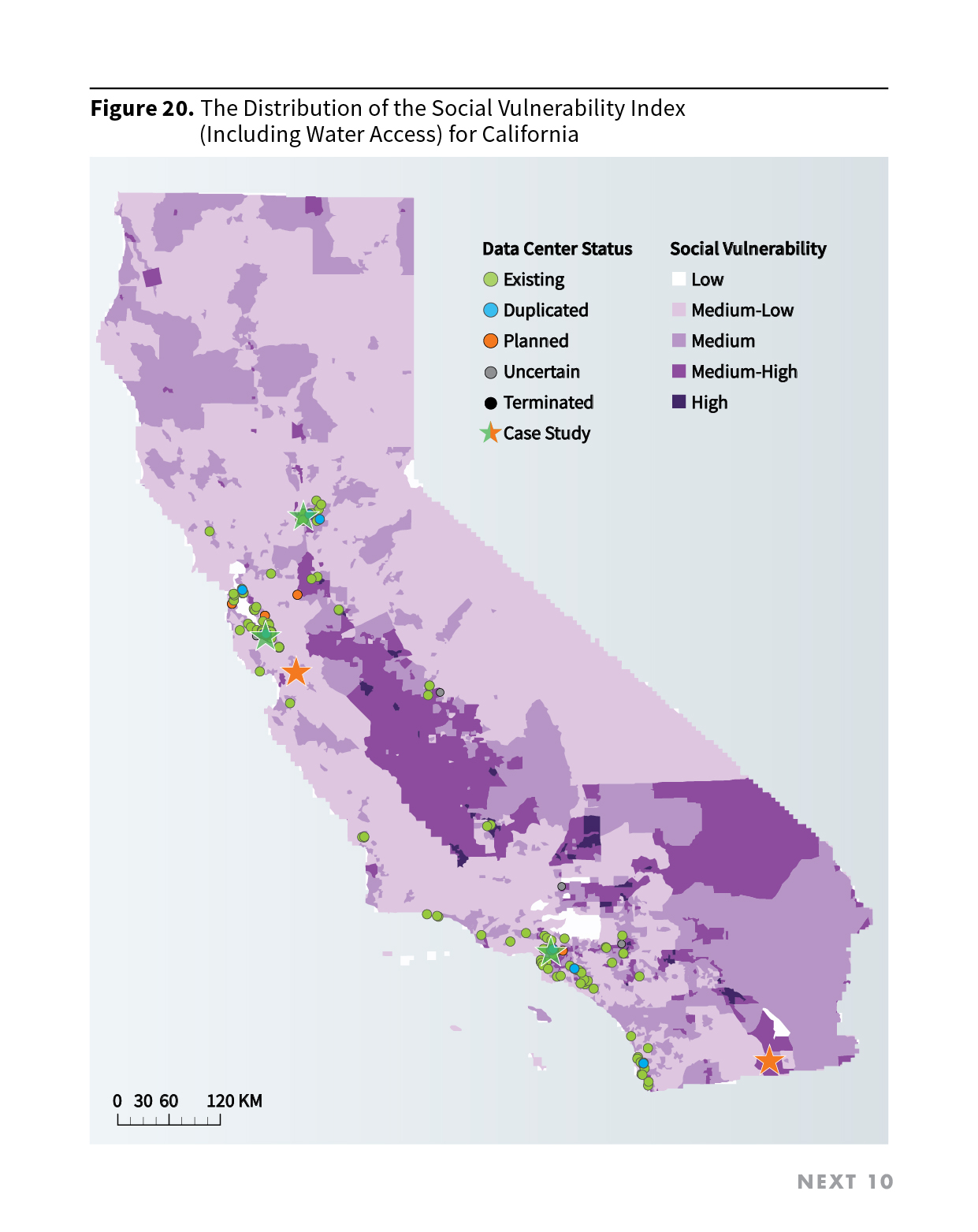
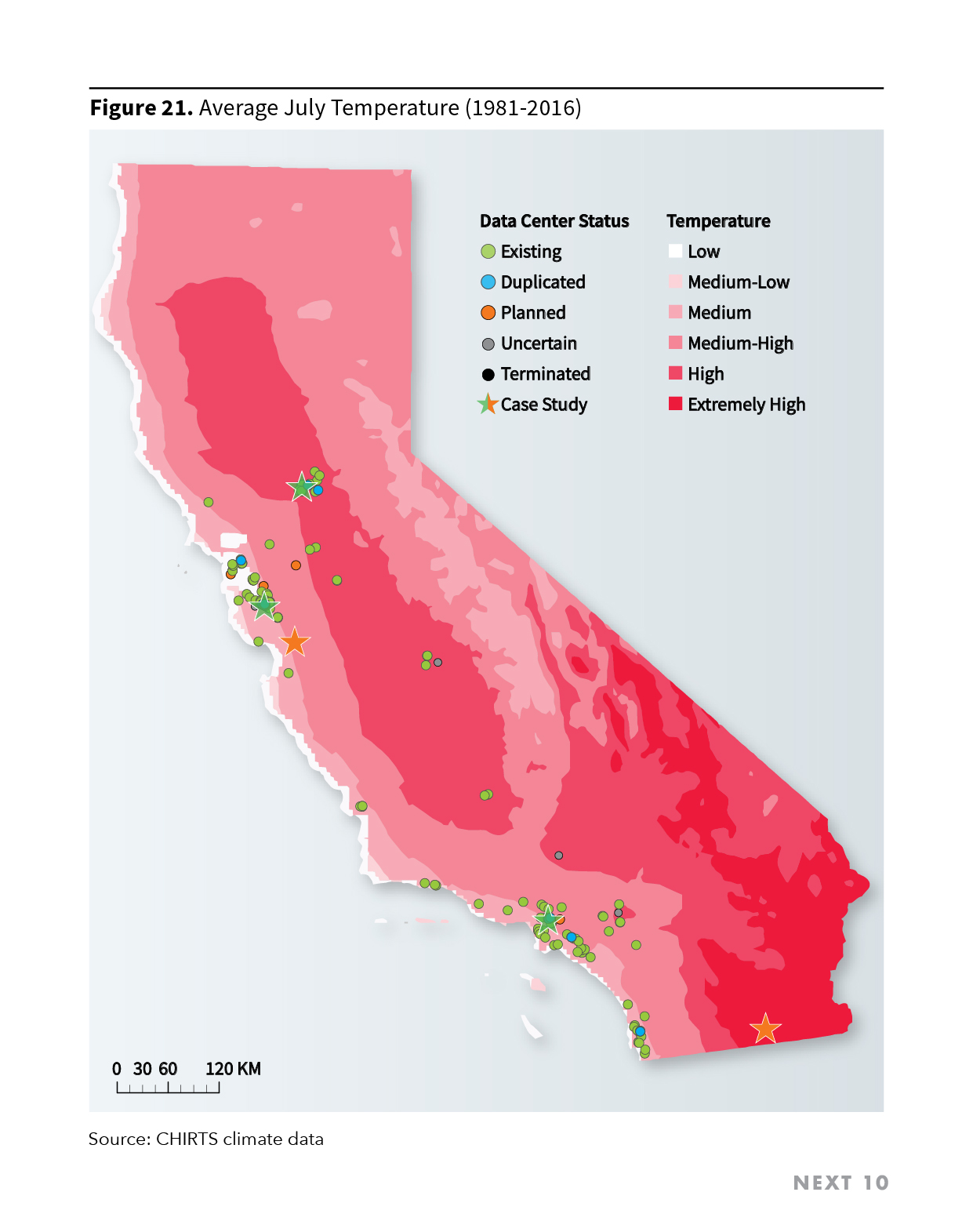
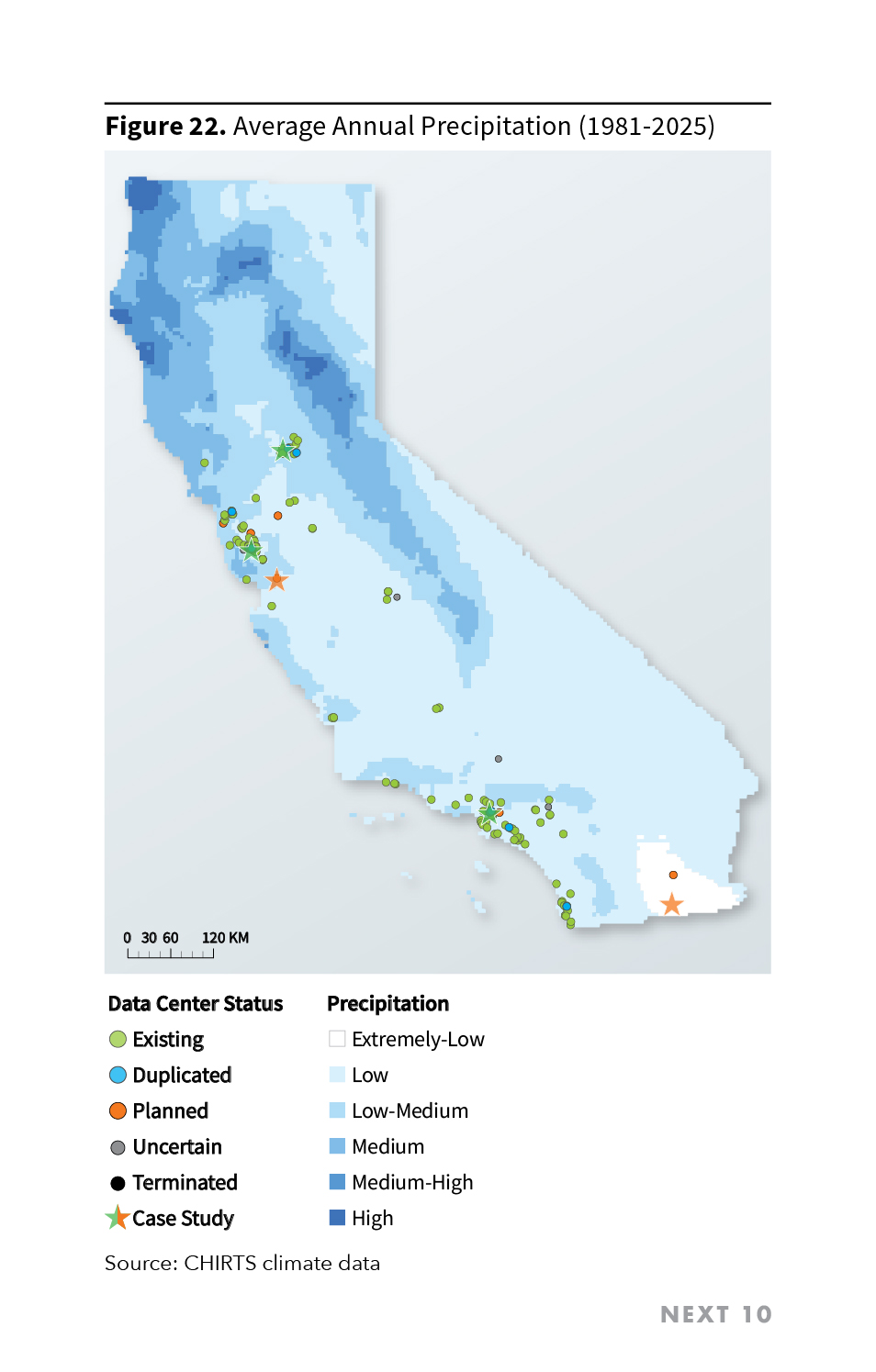
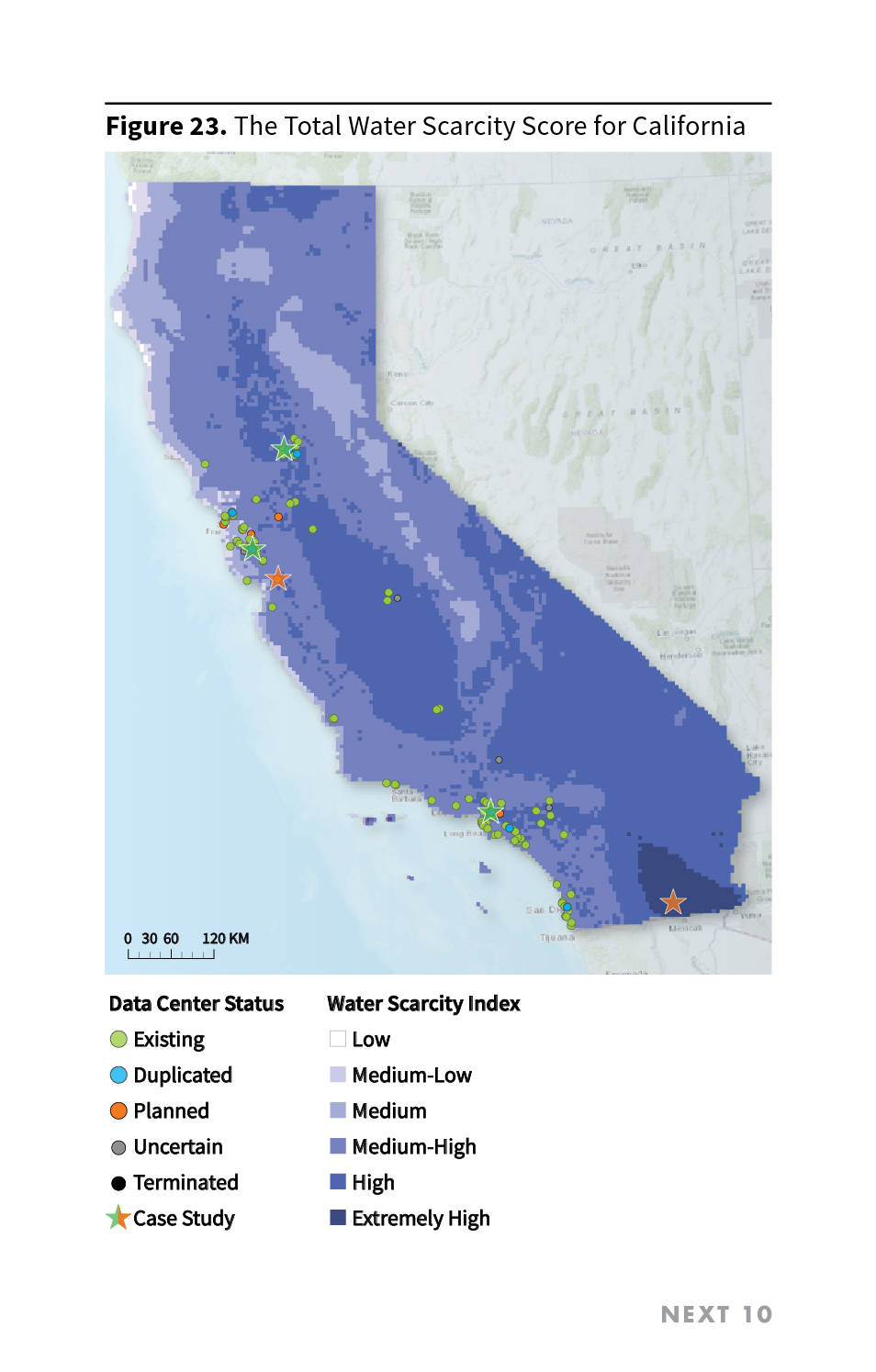
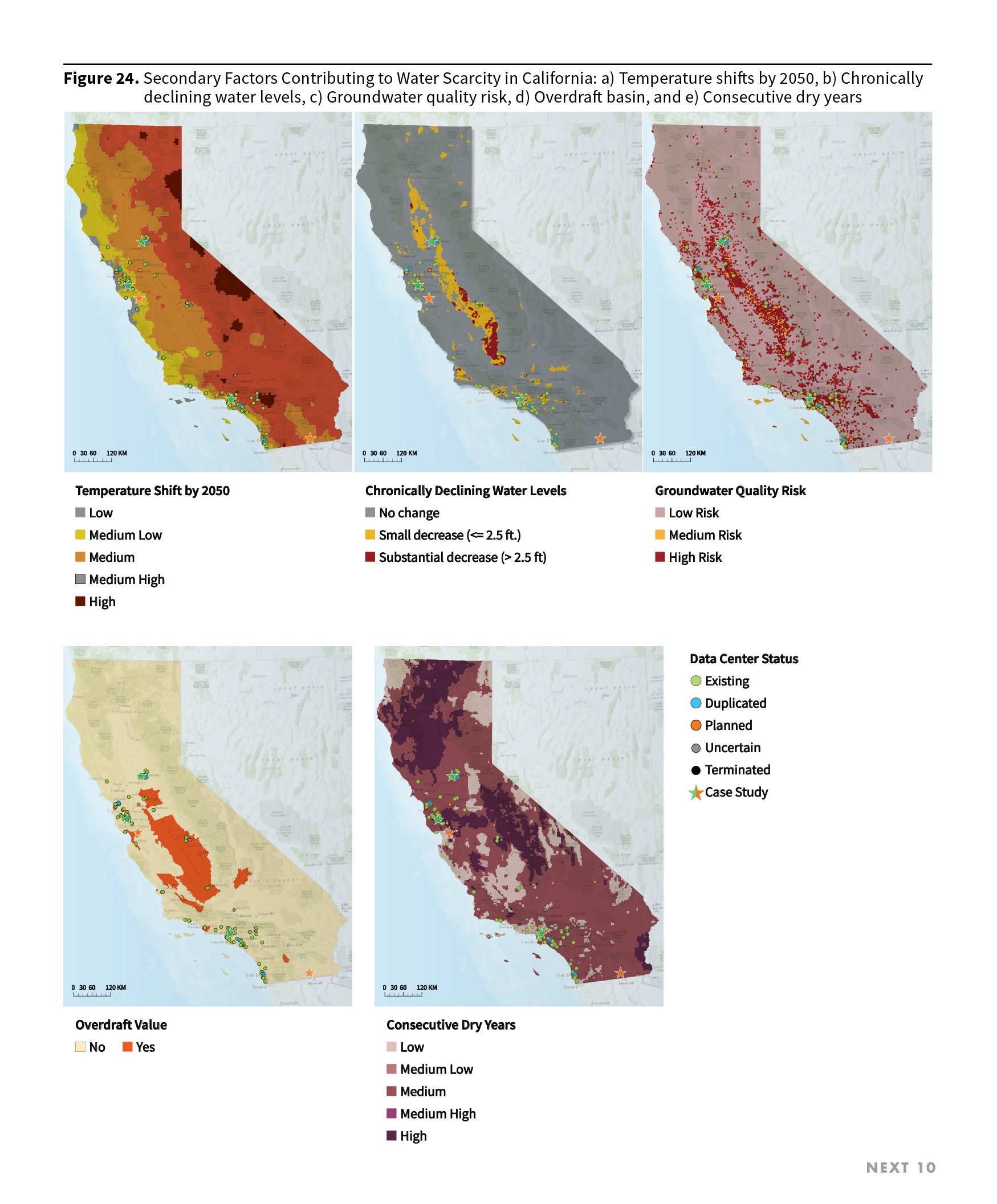
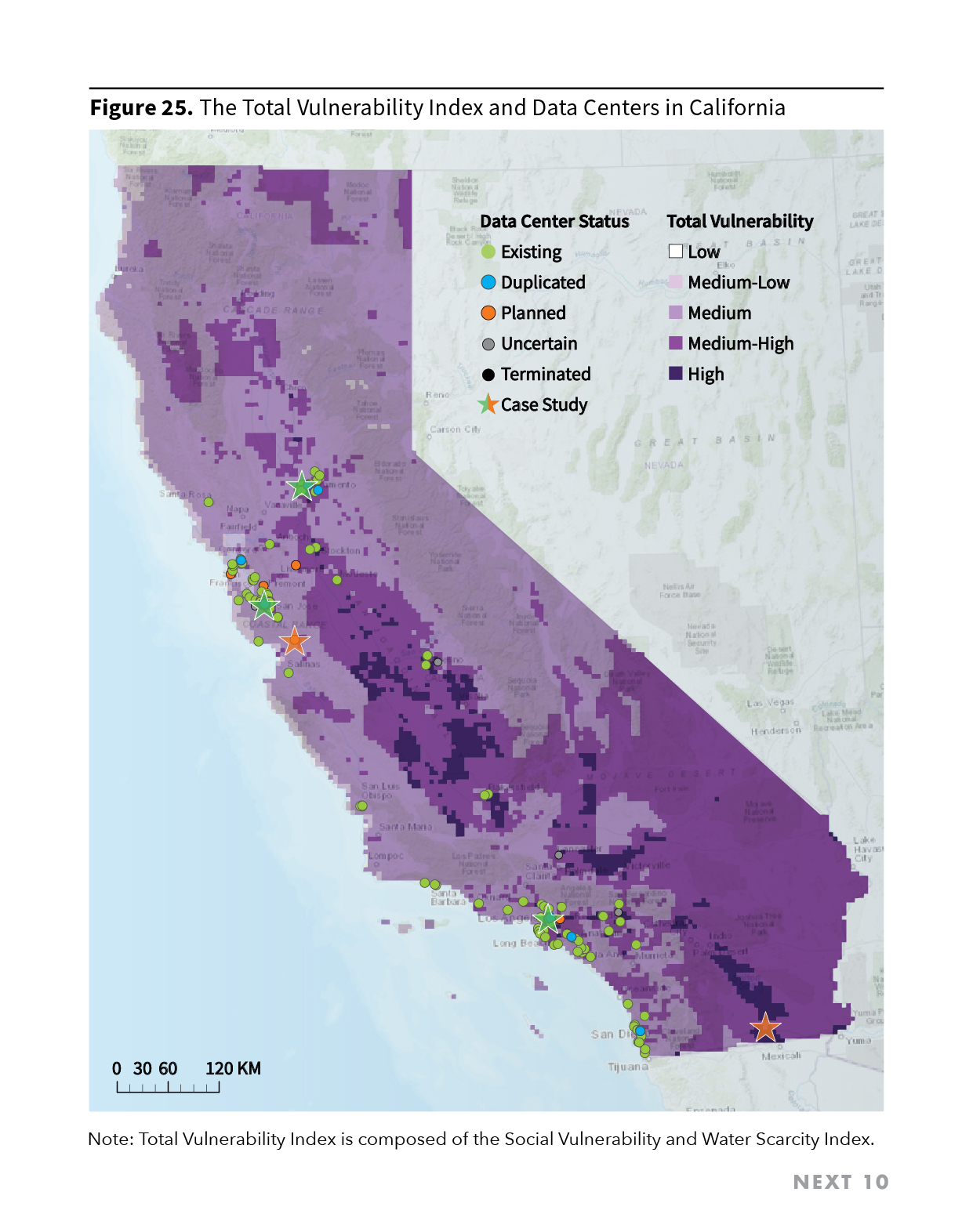
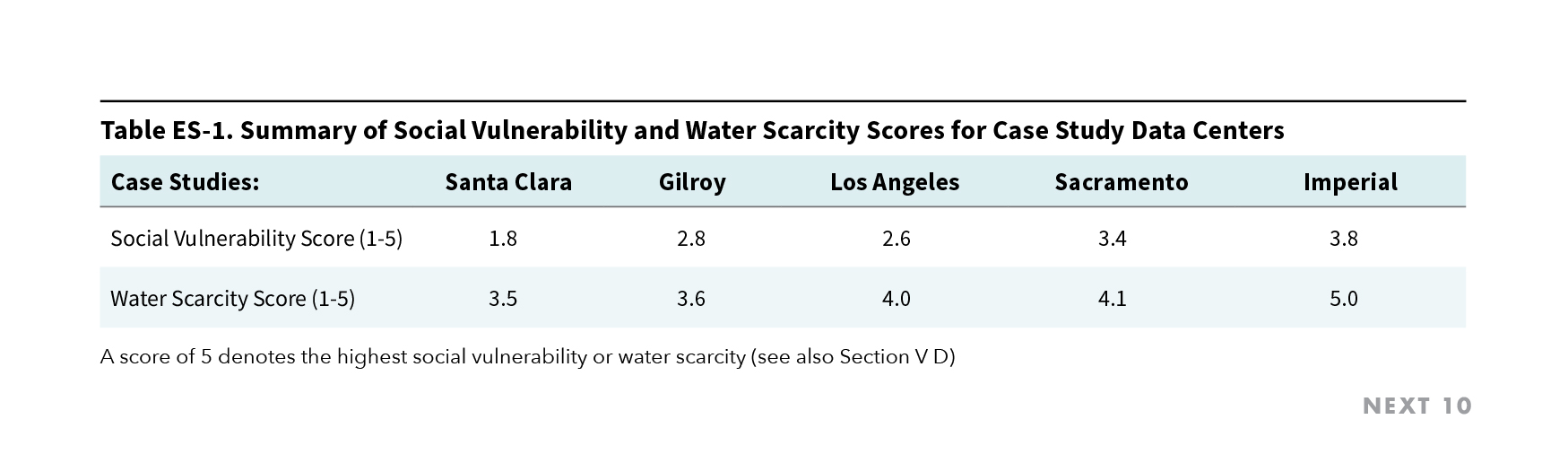
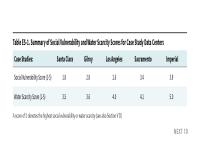
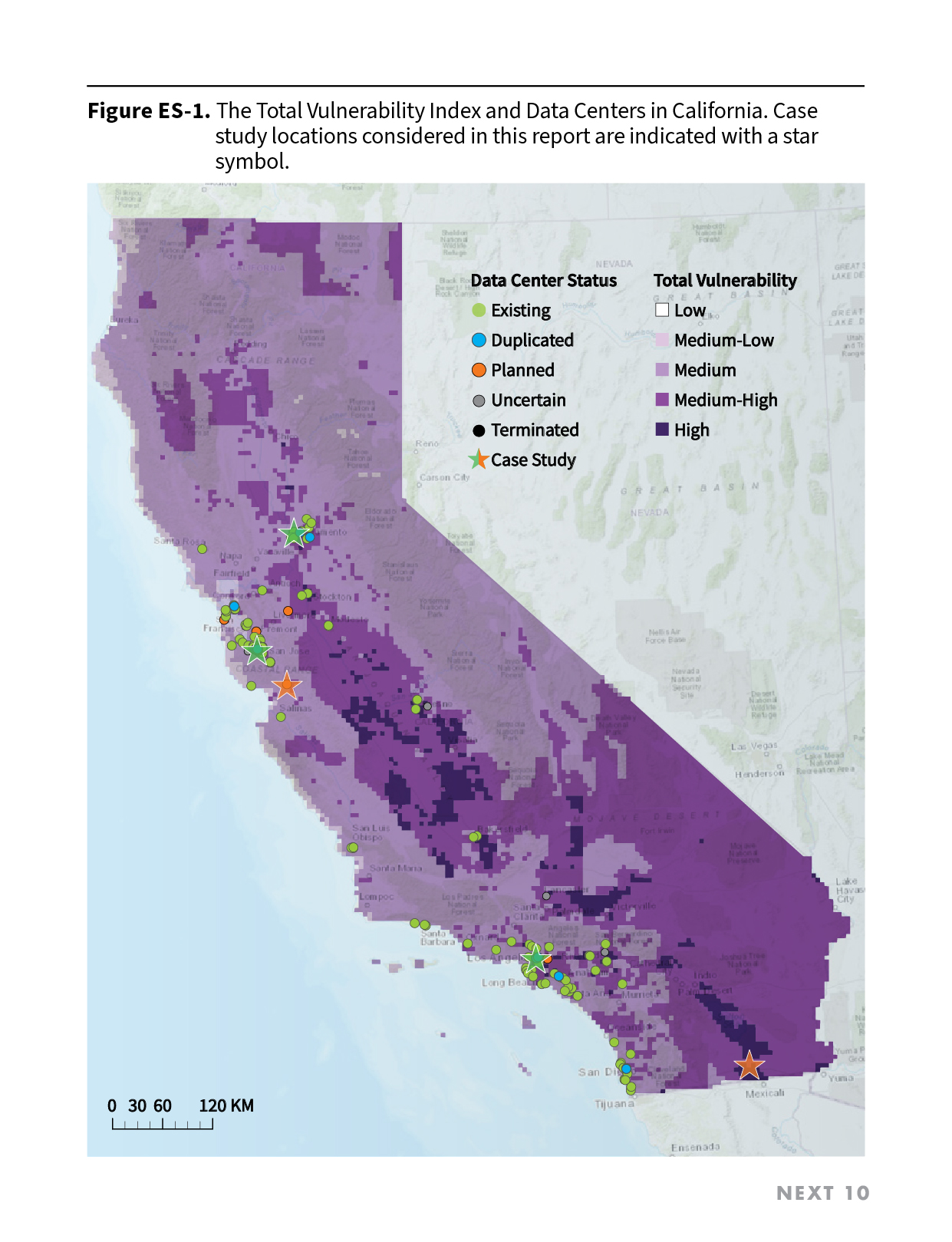
For the vast majority of the data centers mapped, there were no publicly accessible environmental planning documents, or information on cooling systems or the type of water used—highlighting a broader challenge for communities, water providers, and researchers attempting to assess to what degree data centers affect water supplies. The report identified five data centers—three existing and two planned—to serve as case studies to further evaluate the water scarcity and social vulnerability associated with these facilities. The planned data center in Imperial County and existing facility in Sacramento were identified as areas where water scarcity and social vulnerability most acutely overlap.
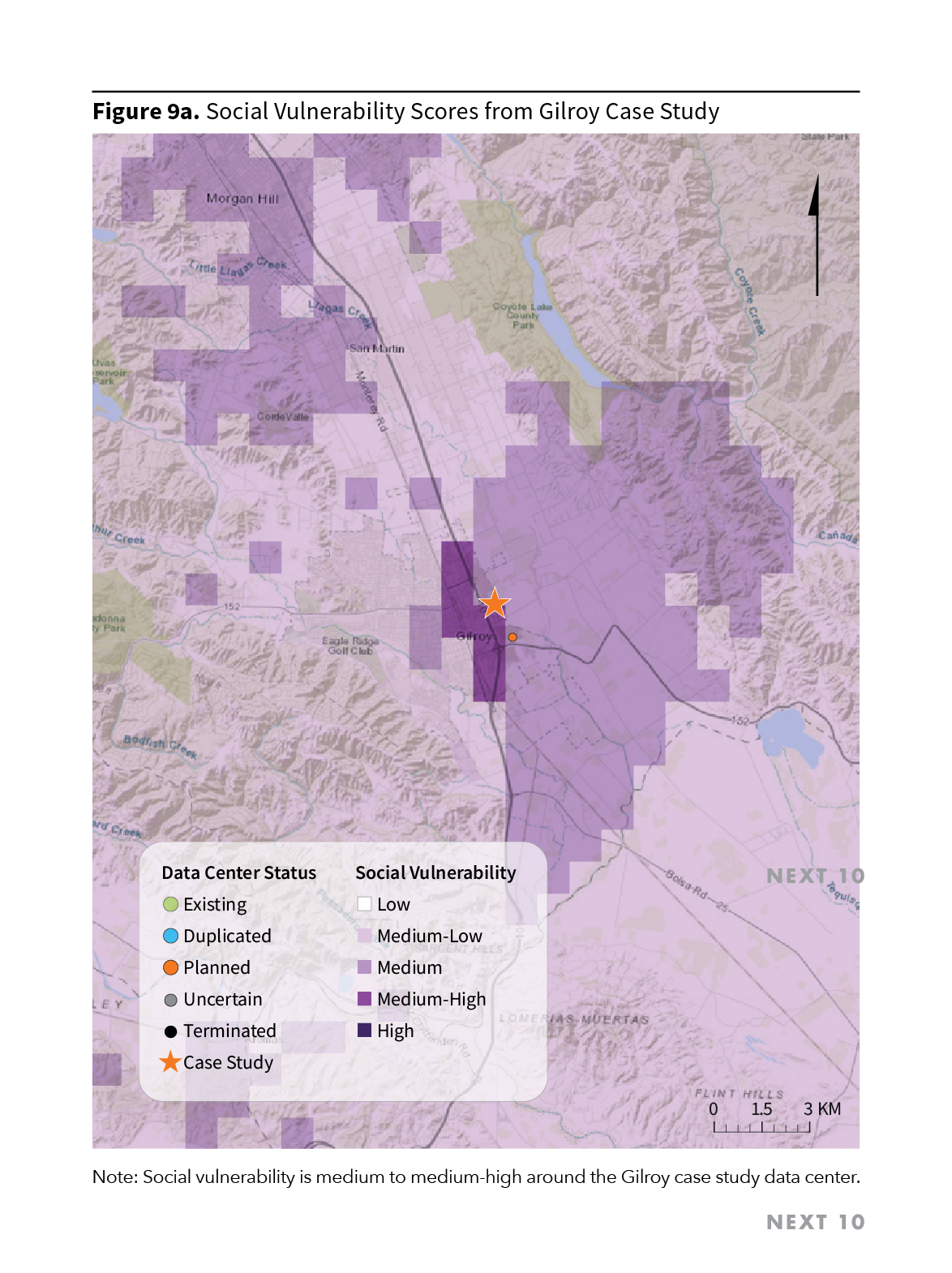
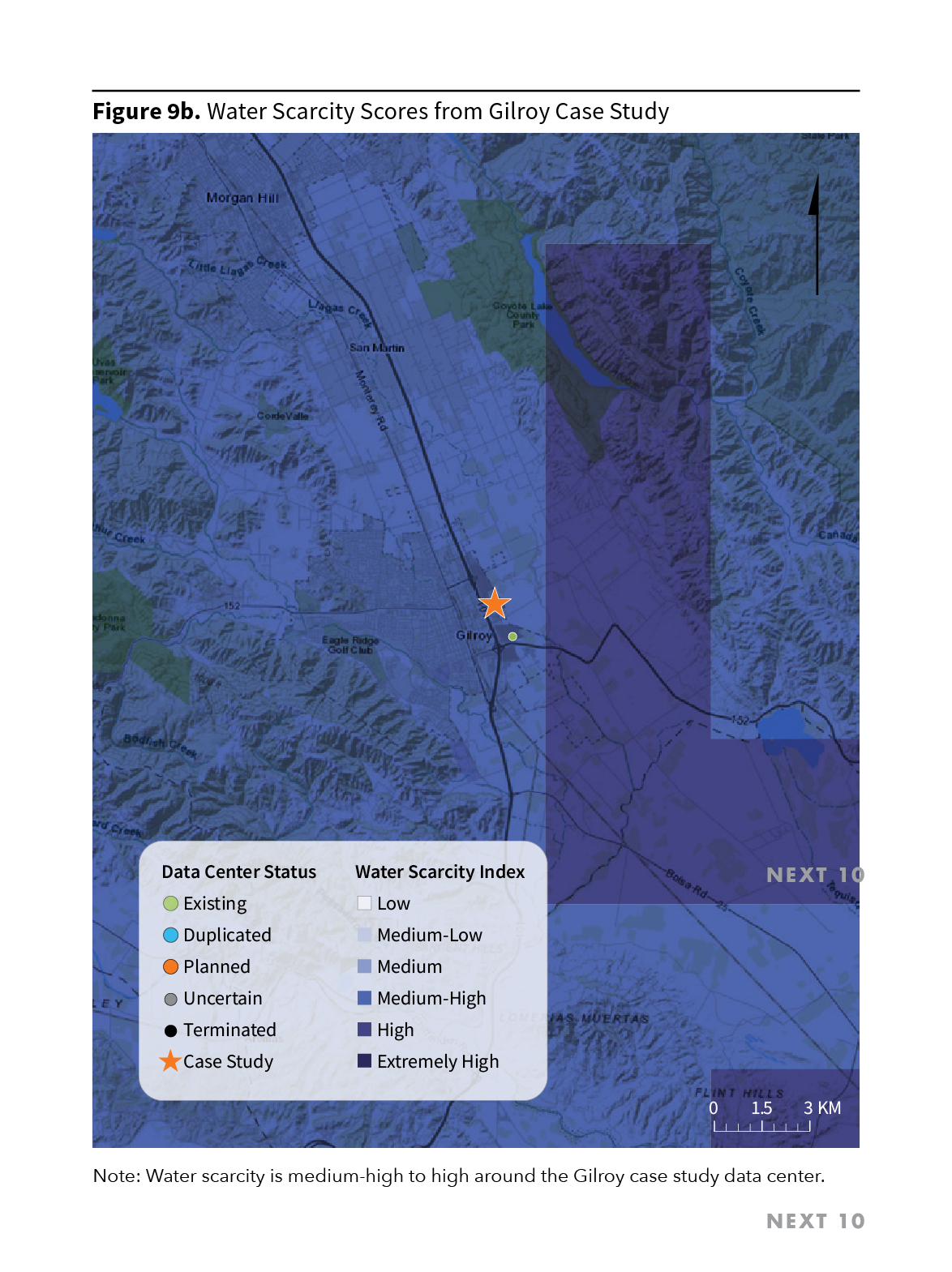
Smaller, groundwater-dependent communities, such as Gilroy, the site of the other planned data center case study, face heightened risks, as they often lack the diversified water supplies and financial flexibility of larger urban systems, while many planned facilities rely on imported water from already- stressed basins—effectively shifting water pressures across regions already confronting climate-related challenges.
The report concludes that while data centers are an essential part of California’s digital economy, their continued expansion must be accompanied by stronger transparency, more consistent environmental review, and integrated planning that considers water, energy, and community impacts together. With more comprehensive data and inclusive decision-making, California has the opportunity to align data center growth with its broader climate, water, and environmental justice goals.
Join Next 10 and Santa Clara University on Thursday, June 11th at 11am PT for a webinar with report authors, Iris Stewart-Frey and Irina Raicu, to discuss the report's key findings, implications, and recommendations for policymakers, local governments, and data center facilities. Register here.
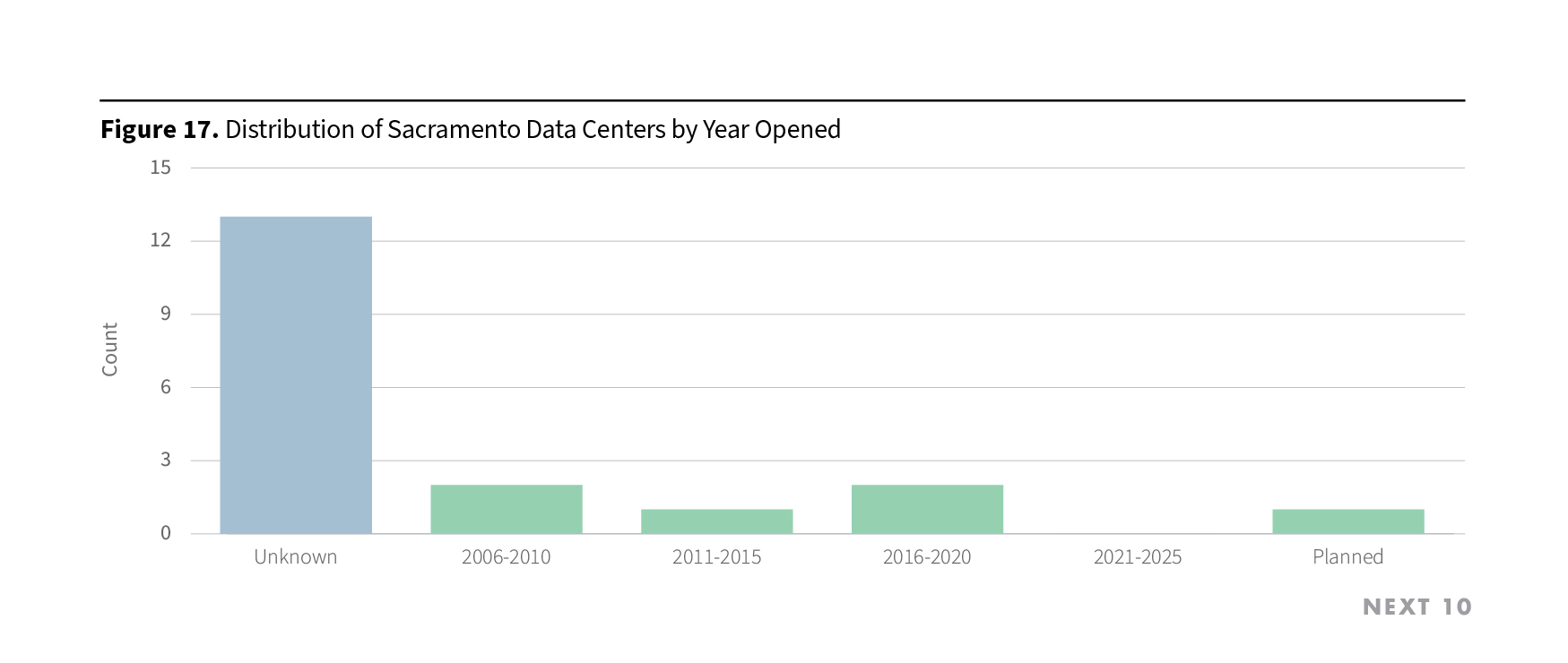
Featured Graphics
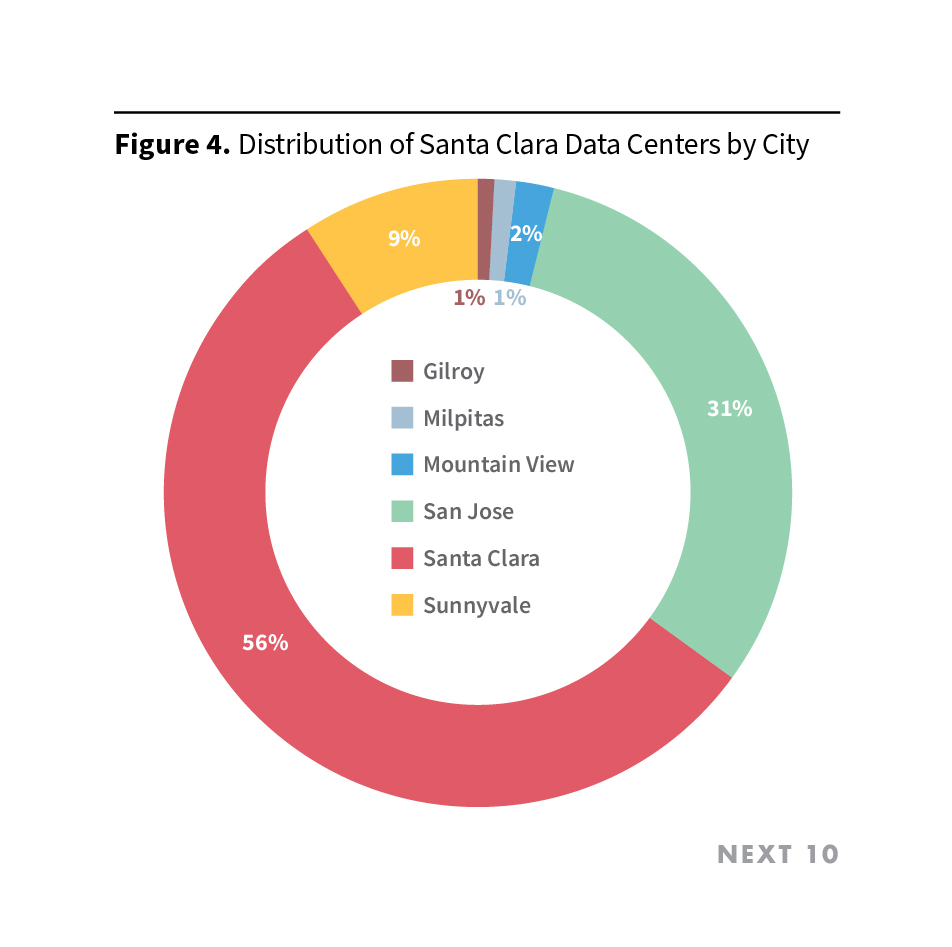
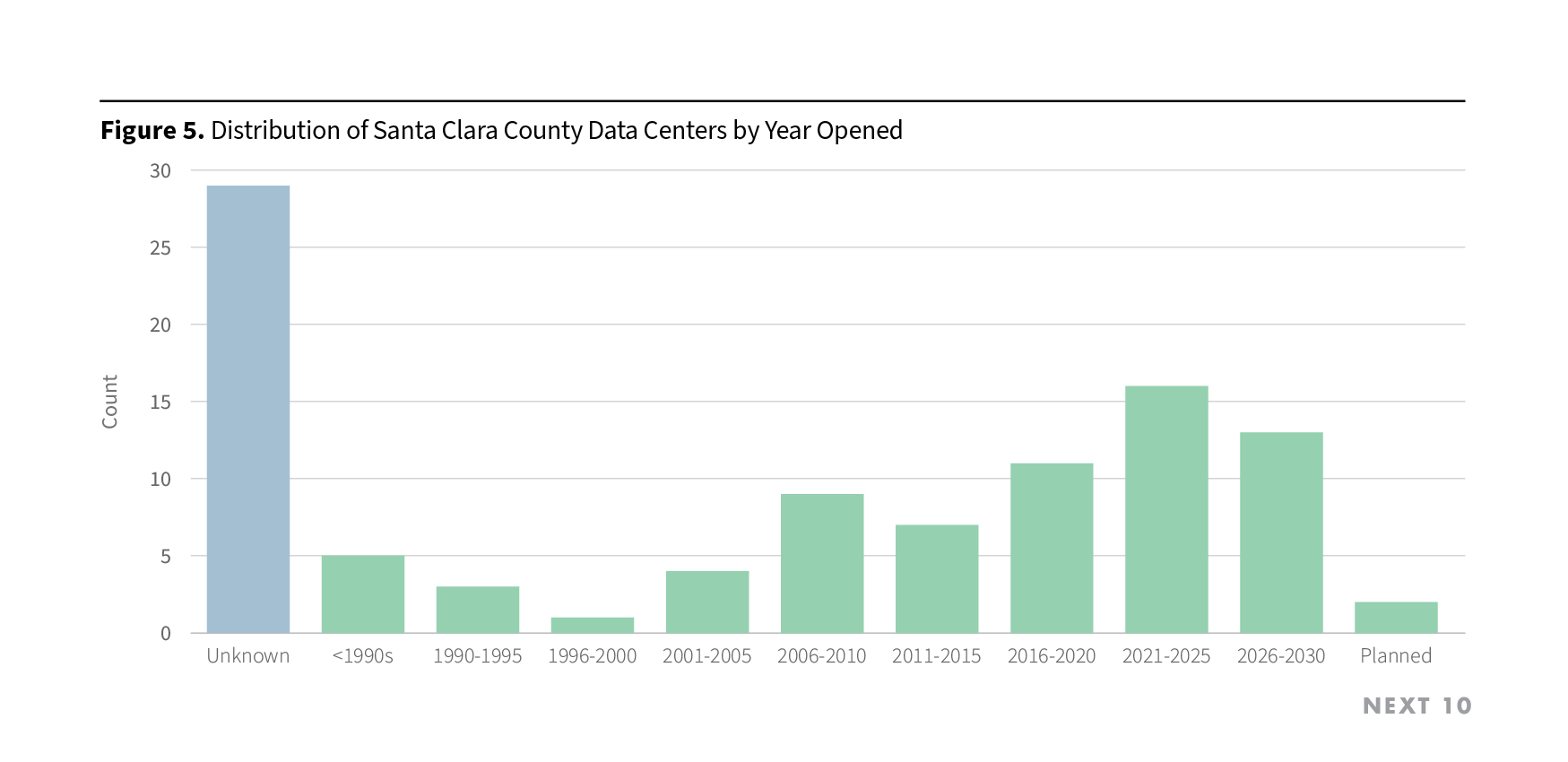
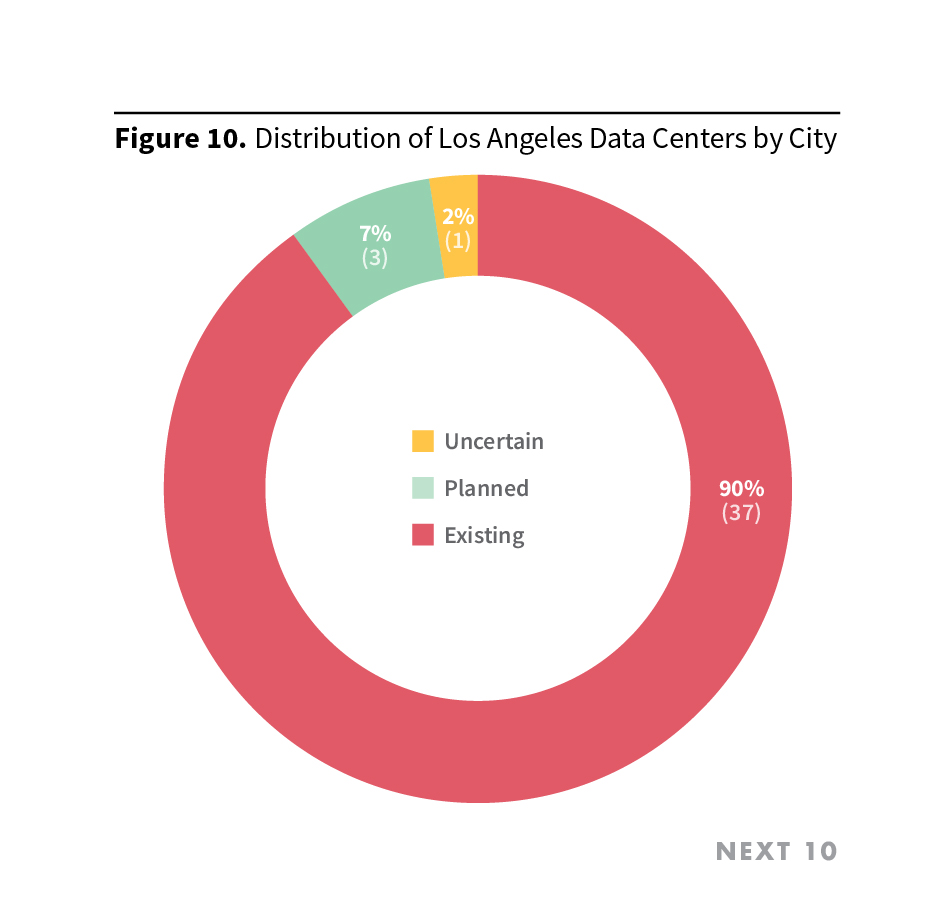
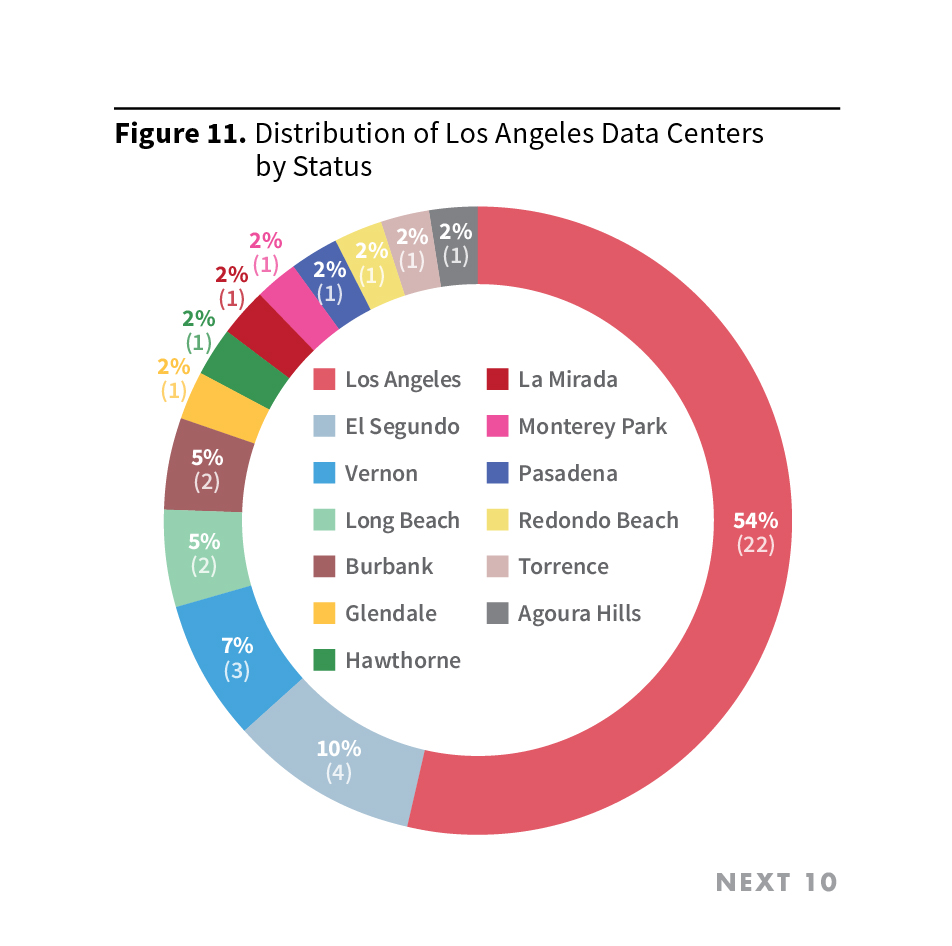
The report is the first comprehensive analysis of every known operating and planned data center in California through a combined water access and environmental justice lens. The main findings of the report include:
- Transparency regarding water use and environmental impacts is severely limited. Without accurate water use estimates, water providers cannot plan for effective and sustainable water distribution, especially under climate change.
- Water scarcity impacts extend beyond the footprint of any single data center, particularly when facilities rely on imported water or shared groundwater basins as increased demand in one jurisdiction can contribute to basin-wide depletion, reduced drought resilience, and ecological or community water stress in distant source regions.
- Data centers are expanding into more socially and hydrologically vulnerable regions. While early data centers in California were concentrated in urban tech hubs, newer hyperscale facilities are increasingly located in or proposed for locations that score higher on both the social vulnerability and water scarcity indices developed for this report.
- Water scarcity risk is highest in the Central Valley and Imperial Valley, where at least two new massive projects are being planned. These are also areas with high social vulnerability.
- Smaller and groundwater-dependent water systems face greater relative risk. Facilities located in smaller water districts rely heavily on groundwater or single-source imported supplies, and have less financial, rights-based, and hydrologic flexibility during drought.
- Many planned data centers depend on imported water from already stressed external basins, shifting hydrologic risk to other regions that are simultaneously confronting scarcity and ecological strains.
- The environmental review framework for data centers has gaps that may allow developers to avoid full regulatory scrutiny. Some data centers appear to avoid full environmental impact and water supply assessments under CEQA.
- Socio-economic vulnerability and water scarcity relative to data centers intersect for large regions in California. Limited and climate-sensitive water supplies intersect with higher poverty rates and pollution burdens, reducing institutional capacity to respond to new demand.
- A lack of data leads to a lack of trust and hampers good legislation, consumer/user agency, technical innovation, and environmental justice.
Given the lack of publicly accessible environmental planning documents, or information on cooling systems or the type of water used — highlighting a broader challenge for communities, water providers, and researchers attempting to assess to what degree data centers affect water supplies — the report recommends that:
- State lawmakers should continue to propose and push for laws requiring disclosure of electricity and water usage by data centers. Useful transparency would require timely disclosure of usage data for individual data centers, standardized reporting, and audits to confirm whether commitments (e.g. re. use of recycled water) are kept and whether estimates provided are accurate.
- State lawmakers incentivize the development and deployment of water-saving and energy-saving technologies for data center operations, as well as the use of recycled water and the building of adequate infrastructure.
- Local water providers and regulatory agencies tasked with water management should engage more with lawmakers and local communities that are either hosting or about to host data centers, to explain the need for accurate water use data and for audits of estimates once data centers are operational.
- Data center developers should focus on areas not disproportionately affected by environmental burdens, that offer sufficient water, cooler climate, and/or access to renewable energy. They should consider impacts on local and imported water supplies, direct and indirect water use, type of water being used (e.g. recycled v. potable), and environmental justice concerns.
- Researchers who focus on water issues and environmental justice should engage more with lawmakers and the public in conjunction with the boom in data center development. A broad effort is required to match the speed and scale of data center build-up, and to offer real-time data-informed suggestions as conditions continue to change.
- Businesses, nonprofits, and government agencies that are considering adopting AI products should consider requiring bids that include assessments of such tools’ environmental impact.
- Communities could build local capacity to make informed decisions with respect to the water impacts of proposed data center projects; including public education, leveraging public records and transparency laws, forming local coalitions and community-academic partnerships, and developing accessible tools and strategies.
- Community organizers and environmental activists could help inform the broader public about the need for accurate data about individual data centers’ water and energy usage.
- Individual users should give preference to AI services and tools from companies that disclose the energy and water usage of the data centers in which their servers are located to the extent possible, and once more information becomes available. Users should also prioritize services and tools that work with communities directly impacted by the development of data centers.