Publications
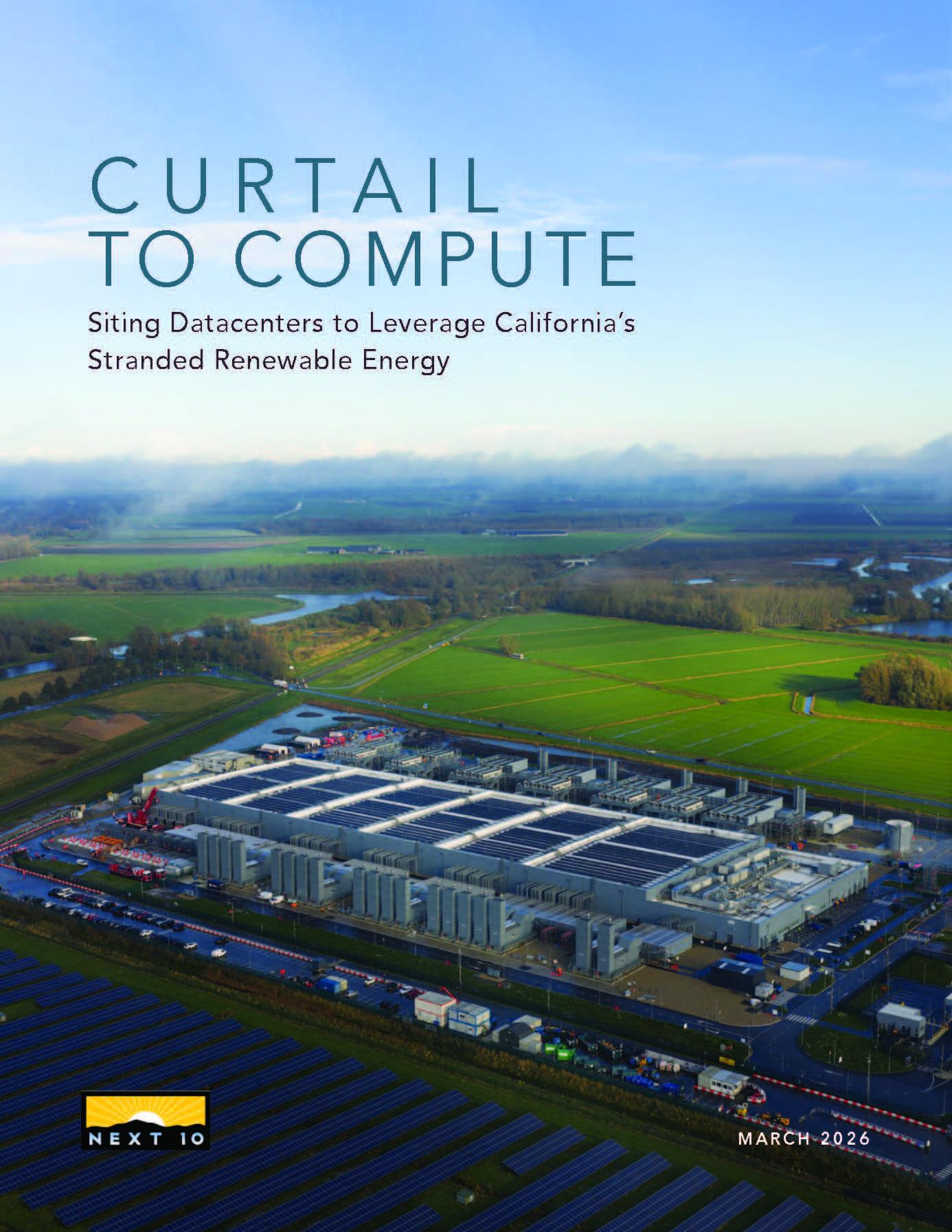
Curtail to Compute: Siting Datacenters to Leverage California’s Stranded Renewable Energy
California leads the nation in renewable energy deployment, with solar and wind generation providing over a third of the state’s electricity in 2024. This clean energy system arises from successful public policy, falling technology costs, and abundant solar resources. However, this success has created new challenges in grid management and resource utilization, including missed opportunities to use carbon-free energy – curtailment – due to congestion on the grid. This wasted potential carries real economic consequences: generators lose revenue, utilities may face negative wholesale prices that ripple through rate structures, and the system underutilizes clean energy assets that ratepayers and taxpayers helped finance.
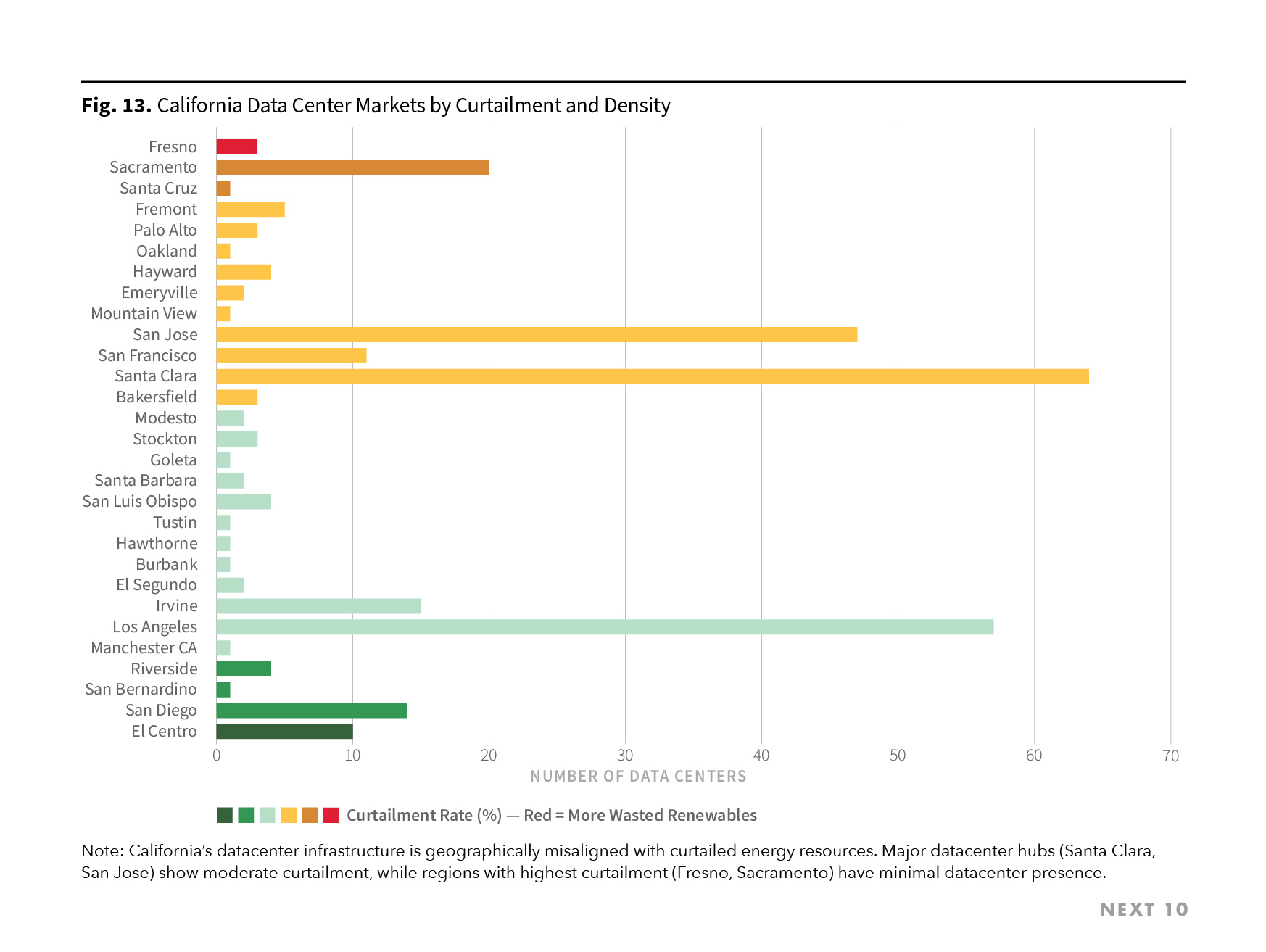
The conventional solution to curtailment is the construction of additional high-voltage transmission lines to provide additional capacity to move the energy from where it is generated to where it is needed thereby easing congestion. However, CAISO estimates that it would cost $700 million to $1.127 billion to build the needed high-voltage transmission lines serving the Bay Area. A new report, authored by researchers from the University of Pennsylvania and produced by Next 10, considers an alternative strategy — rather than moving energy through wires, moving datacenters’ energy-intensive computation to the source where it can productively use the curtailed solar resources.
The report analyzed the following scenarios:
- Urban baseline: A 20 MW data center — roughly enough energy to power 16,500 homes — located in Silicon Valley that cannot access curtailed clean energy produced in faraway rural areas because of grid constraints.
- Rural: A 20 MW data center located in Fresno County can access local curtailed solar energy.
- Rural + Battery: That same 20 MW data center when paired with a 10 MW battery storage system can not only access curtailed solar energy, it can store it for different computational needs.
These scenarios show that cleaner energy direct from its rural source is cheaper and more efficient than traditional fossil fuels in an urban setting. As a consequence, the report recommends establishing “curtailment compute zones” for data centers along grid congestion points, and strengthening market incentives for those data centers to use battery storage for added demand flexibility.
Next 10 and University of Pennsylvania will host a webinar on Tuesday, March 24th at 11am PT where the authors will discuss the key findings from the report and implications for policy. Register here: https://us02web.zoom.us/webinar/register/WN_KC9Oq8L7QXmr7zMg1zpHAQ
Next 10 is not the sole owner of rights to this publication. Usage of this content is subject to permissions, please contact us at info@next10.org for more information.
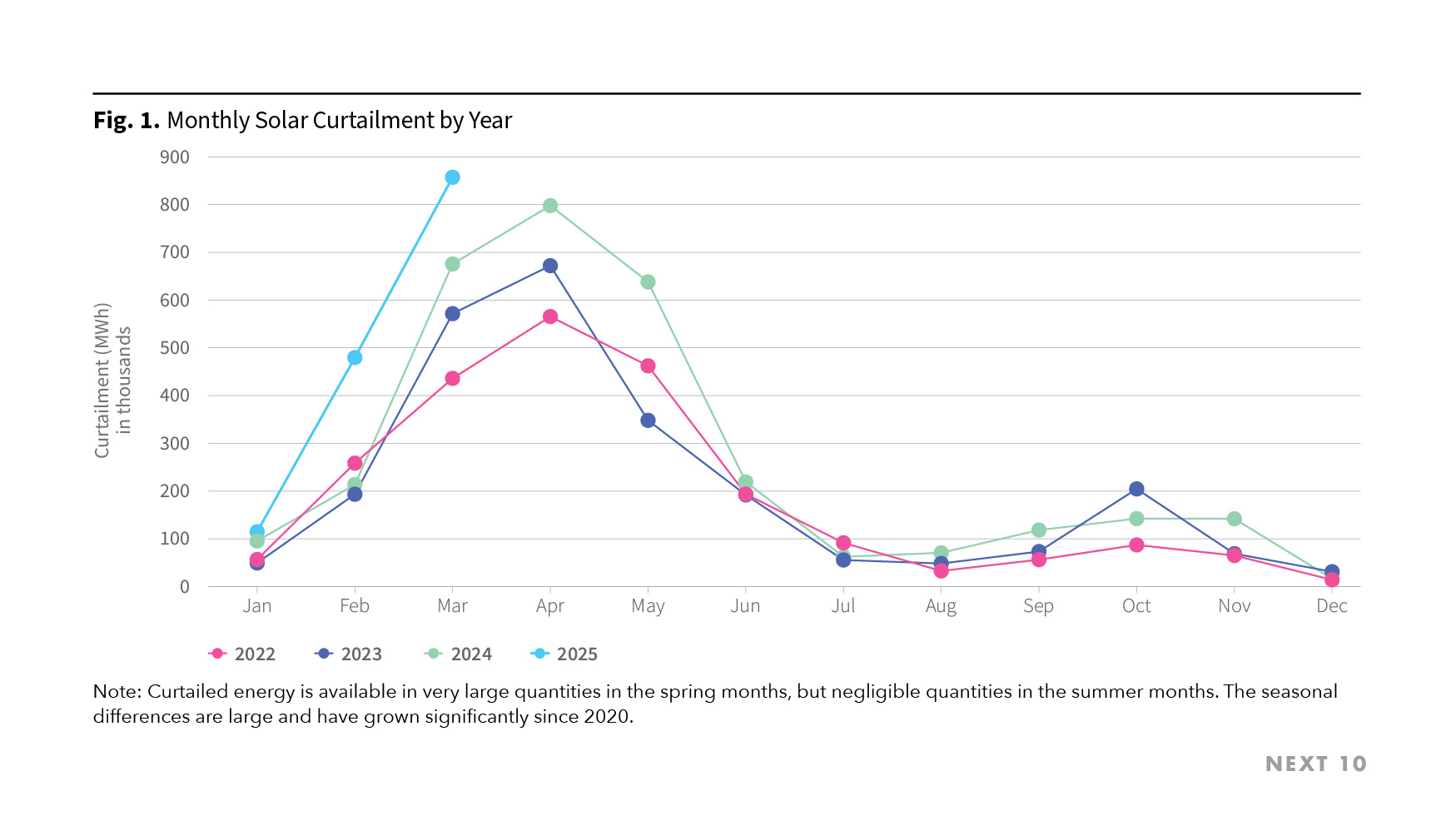
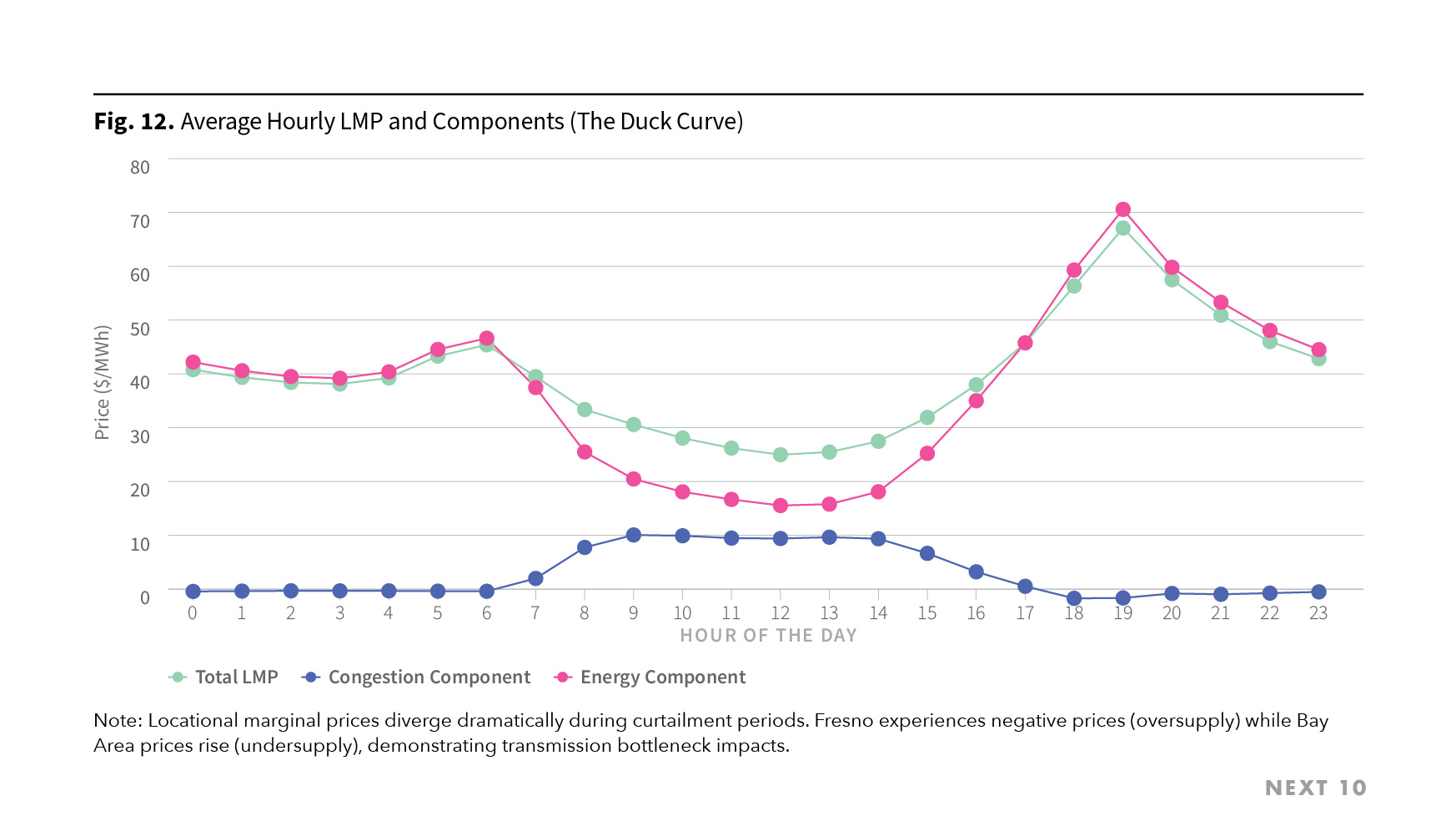
Our analysis of renewable energy curtailment in California from 2020 to 2025 reveals significant and growing challenges that arise from structural mismatches between energy generation and consumption.
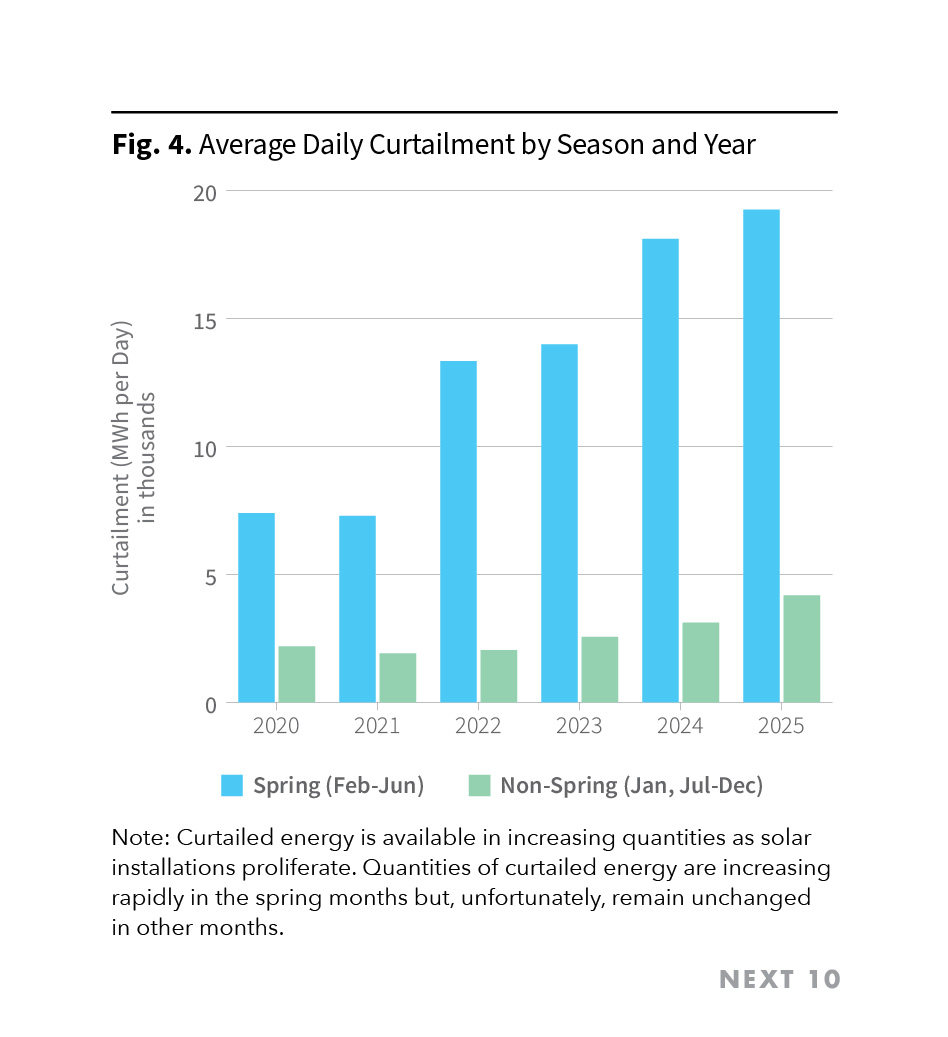
- From 2020 to 2025, average daily curtailment during the spring season, from February to June, is consistently and significantly higher than during the rest of the year.
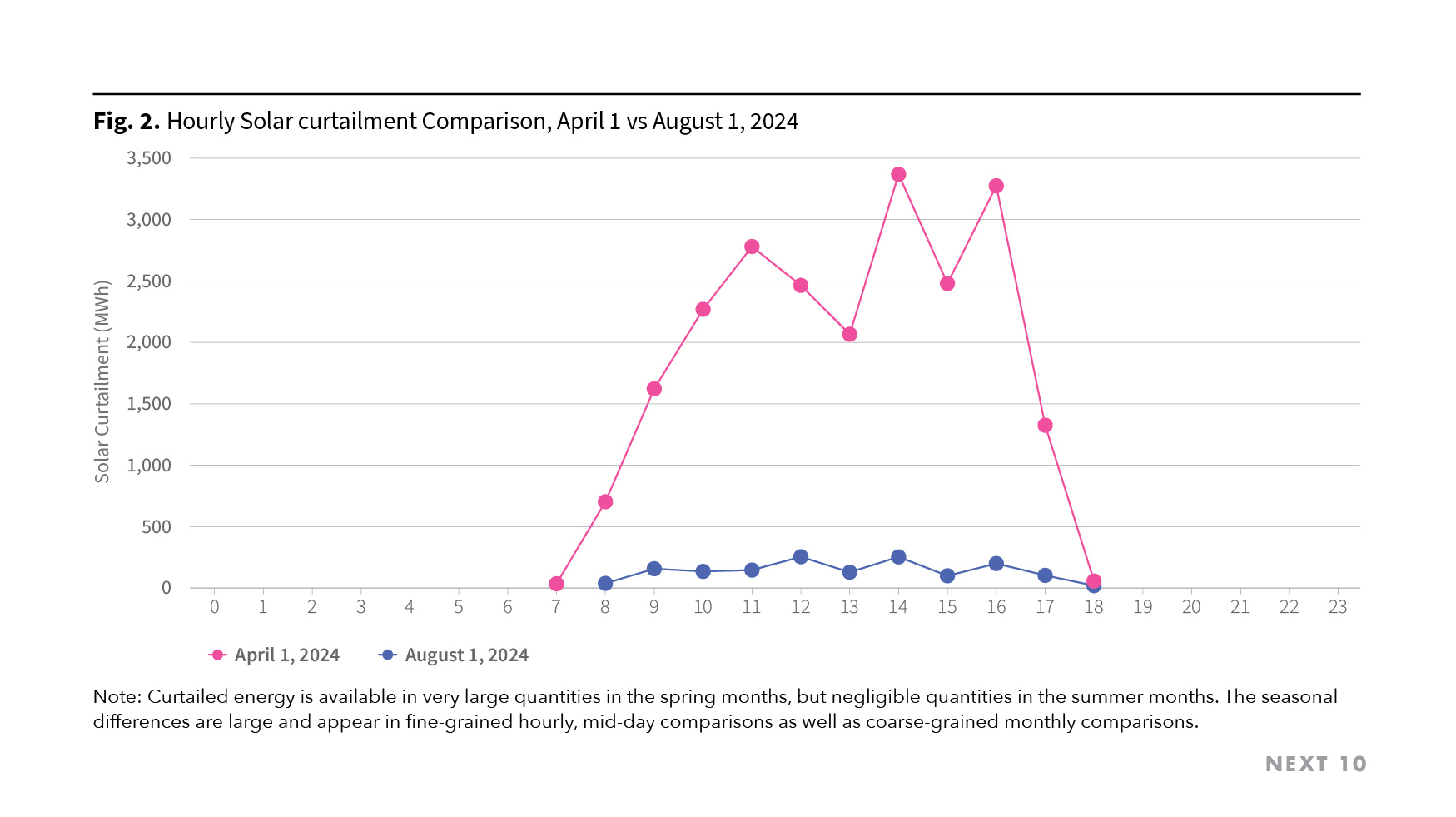
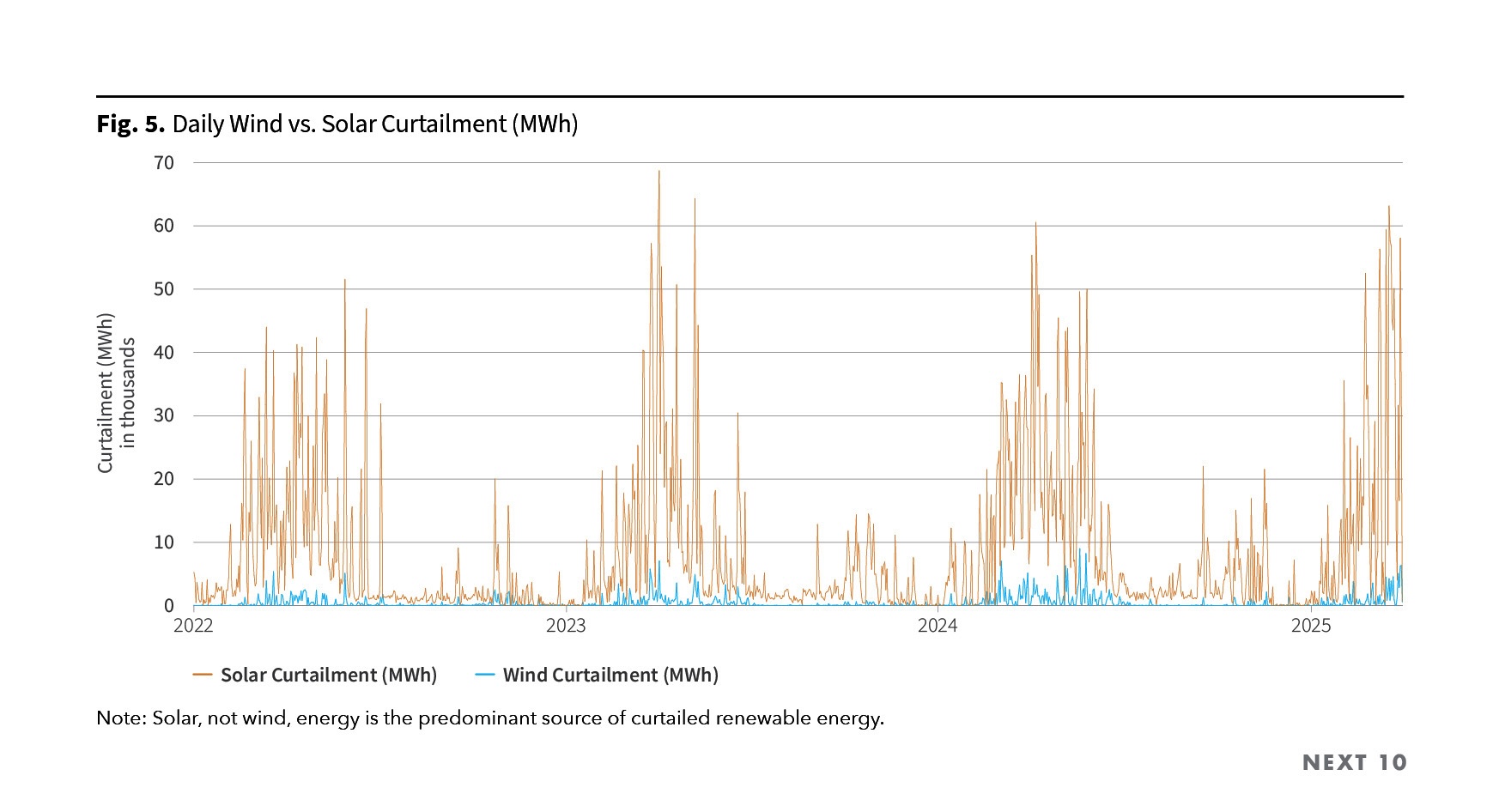
- In April, hourly data reveals a large increase in curtailed energy between 9:00AM and 4:00PM that often exceeds 190 MWh with a midday spike due to abundant solar generation.
- In August, hourly data indicates negligible quantities of curtailed energy that rarely exceed 20 MWh.
- From 2020 to 2025 the average daily curtailment during the spring season has more than tripled, reaching 21,000 MWh per day in 2025 – enough to power 700,000 homes and indicating a growing structural mismatch between renewable energy generation and the grid’s capacity to absorb it.
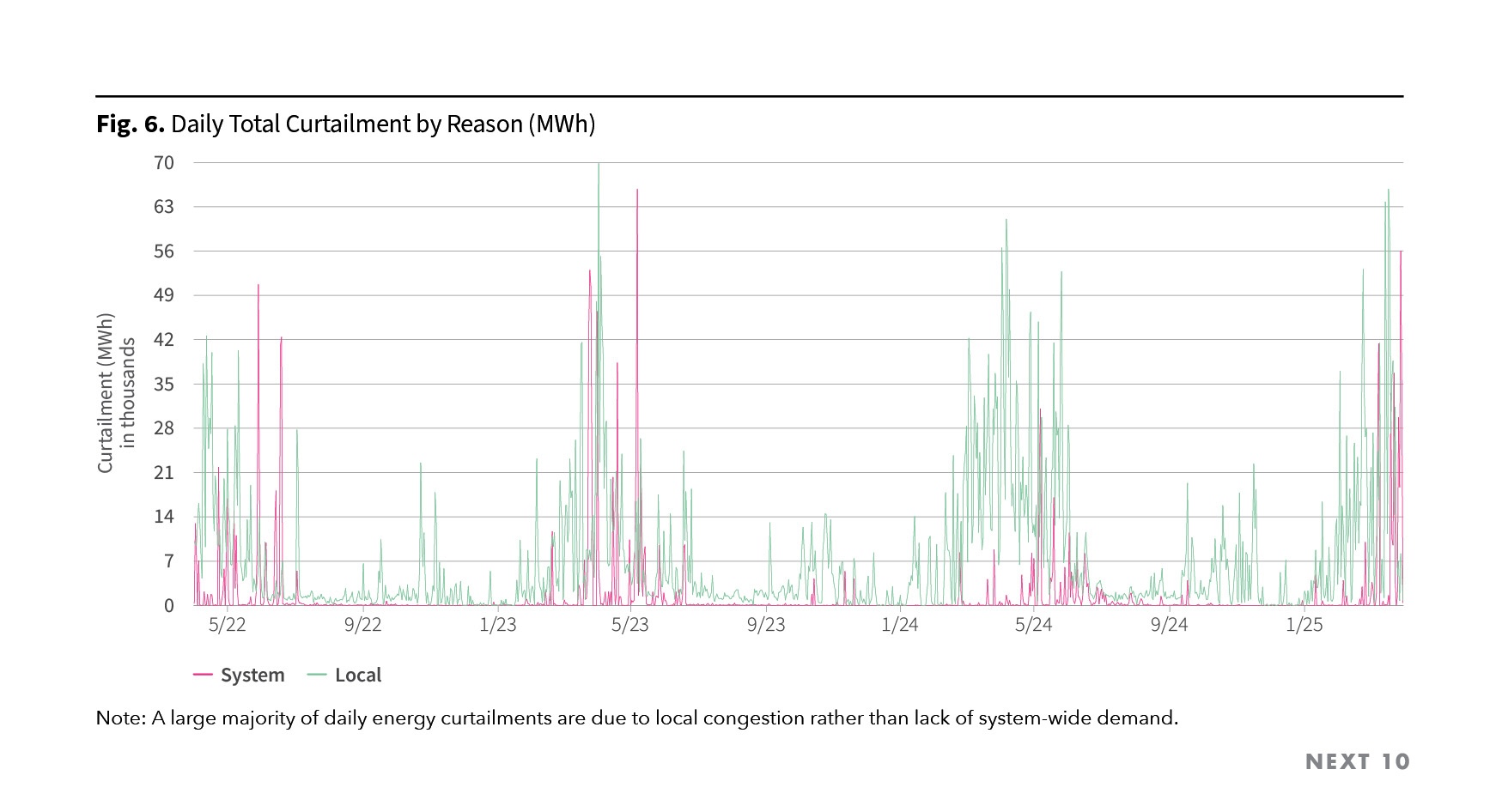
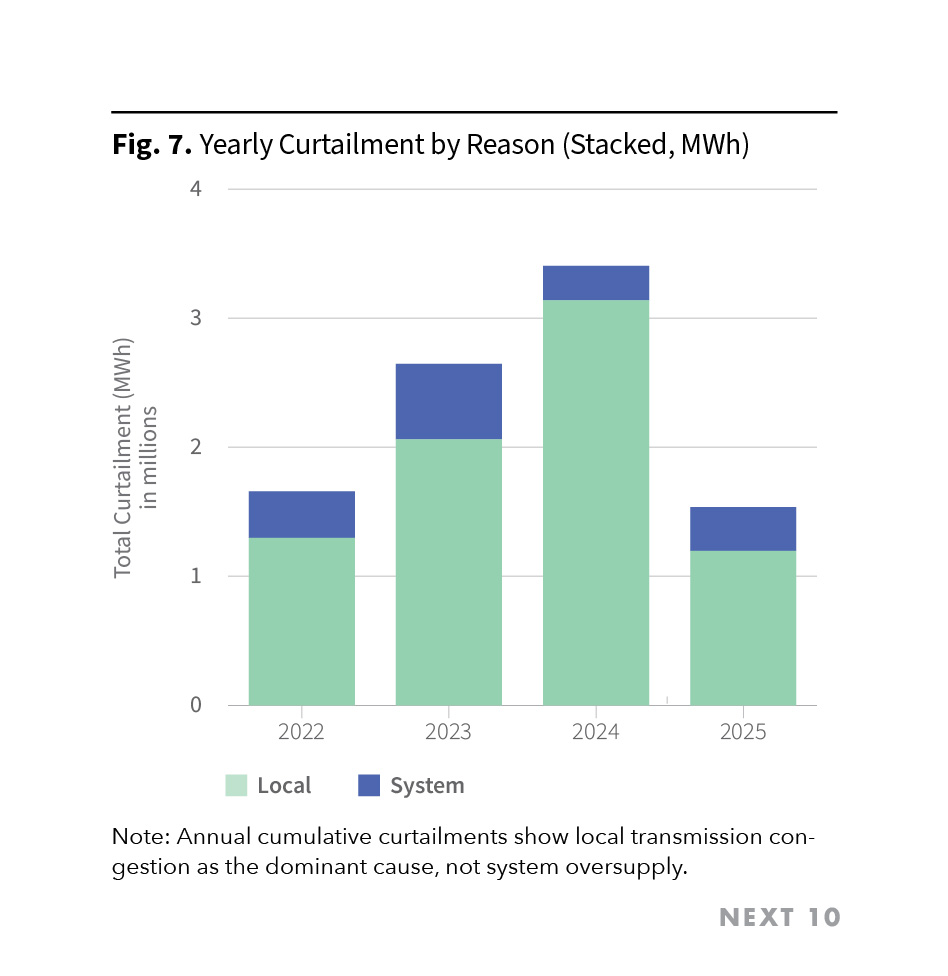
- Over 70% of curtailments result from local transmission congestion rather than system-wide oversupply.
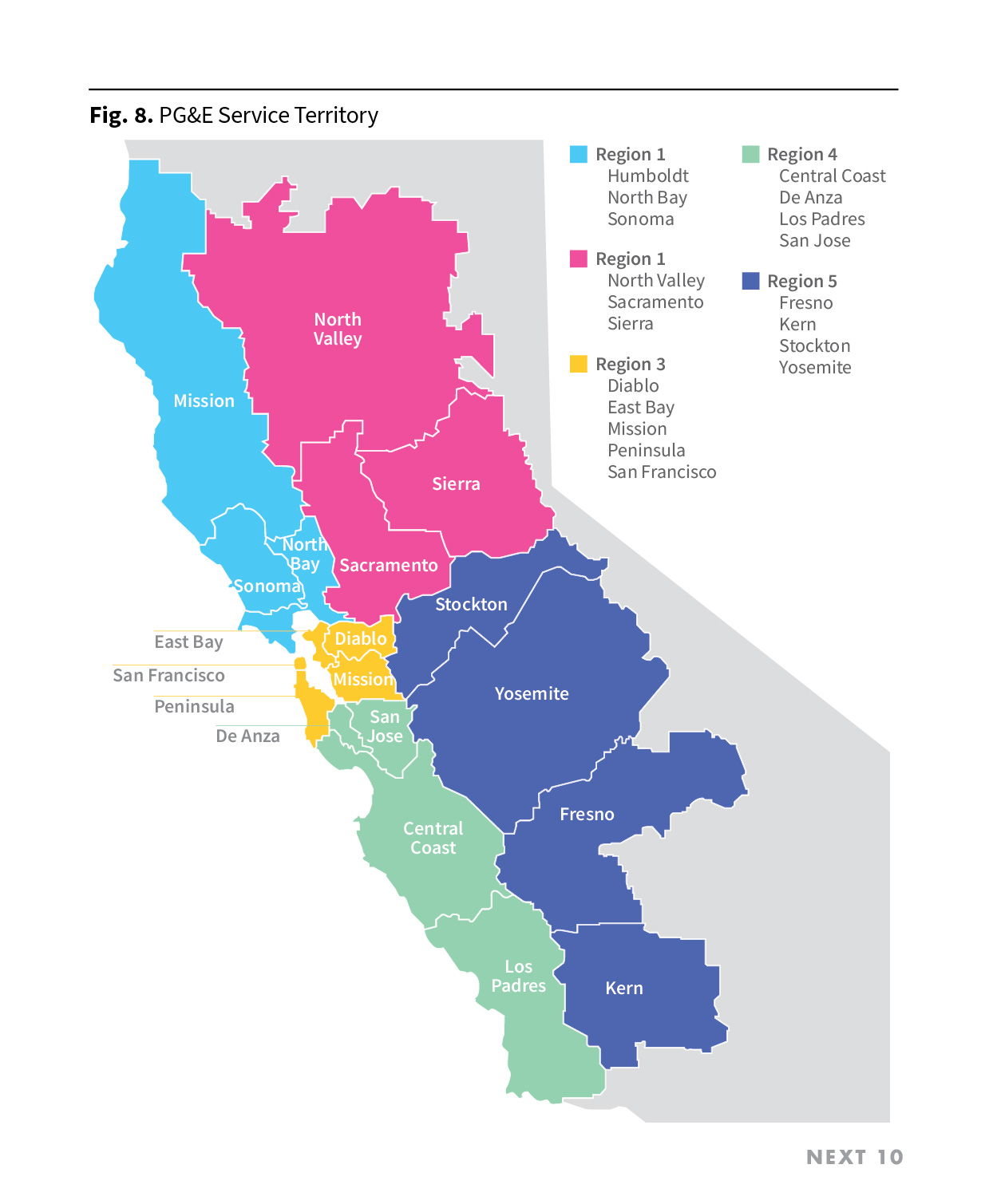
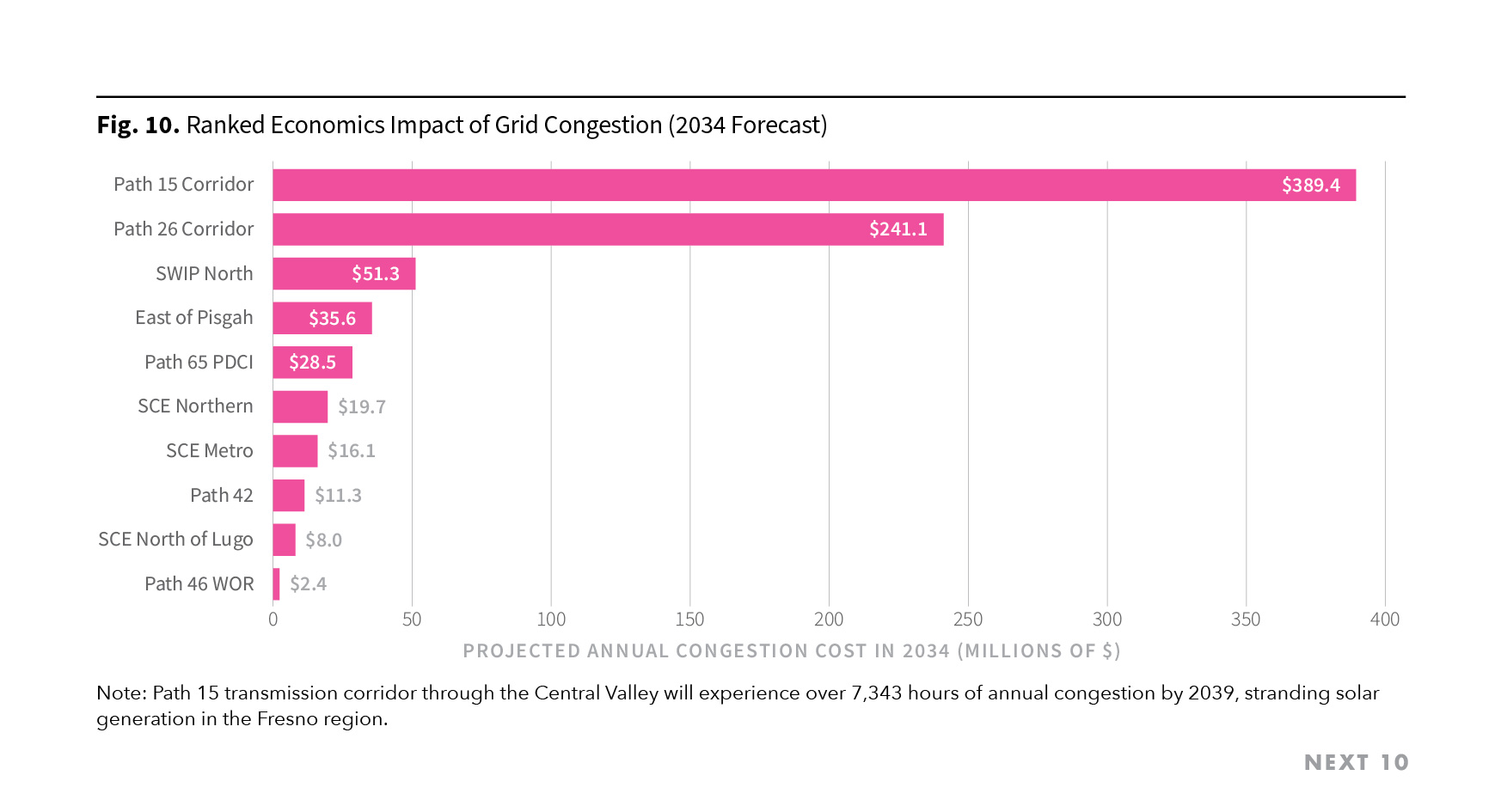
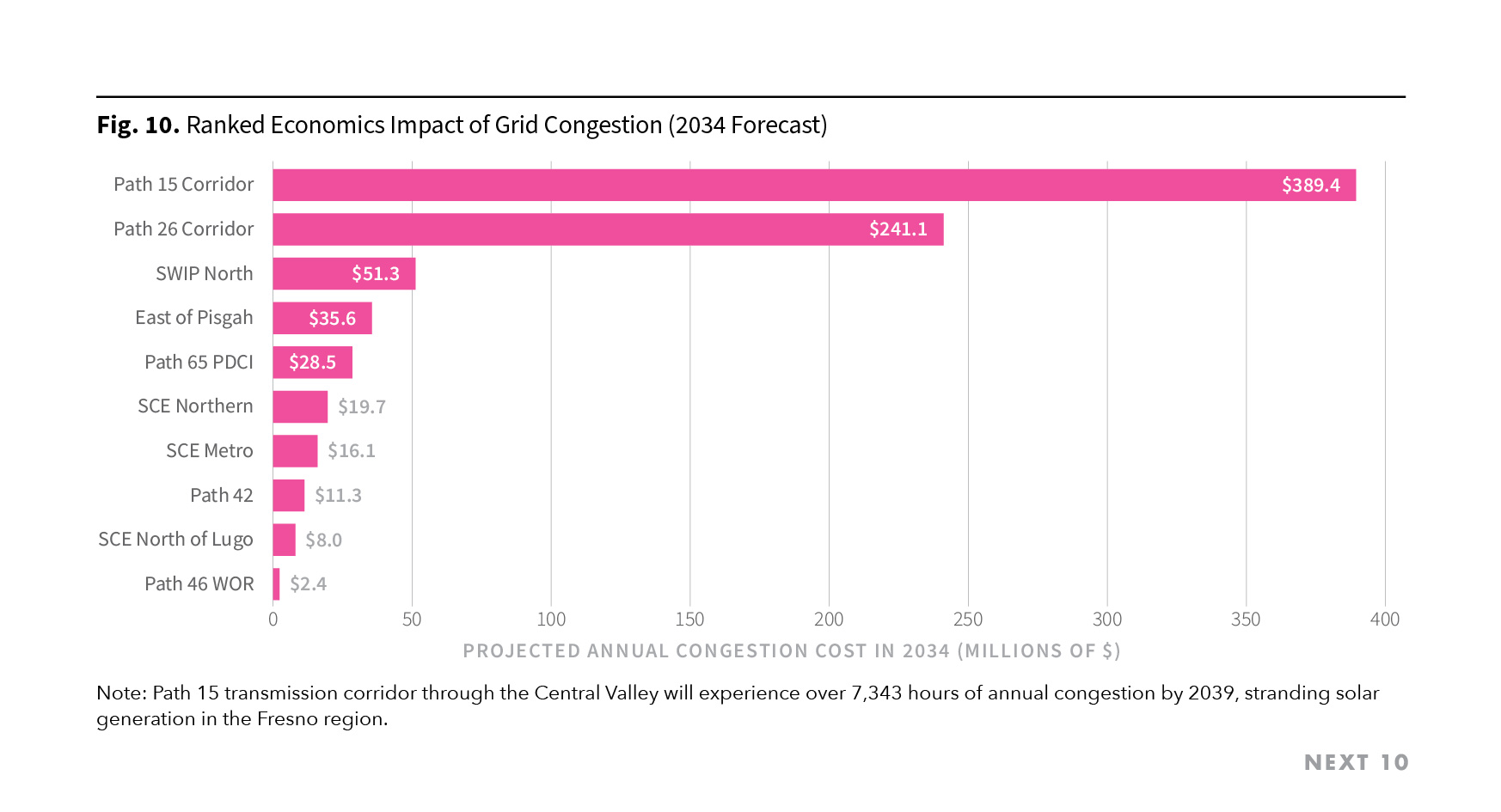
- The Path 15 corridor — the transmission line through rural Fresno county that connects Northern and Southern California’s grids – exhibits the highest curtailment rate and is projected to experience congestion for more than 7,300 hours annually by 2039, equivalent to 84% of all hours in a year.
- CAISO estimates that it would cost $700 million to $1.127 billion to build the needed high-voltage transmission lines serving the Bay Area.
The conventional solution to curtailment is the construction of additional high-voltage transmission lines to provide additional capacity to move the energy from where it is generated to where it is needed thereby easing congestion. Alternatively, strategically siting datacenters to leverage California’s curtailed renewable energy would support both California’s carbon neutrality goals and growing technology infrastructure needs.
The report scenarios find:
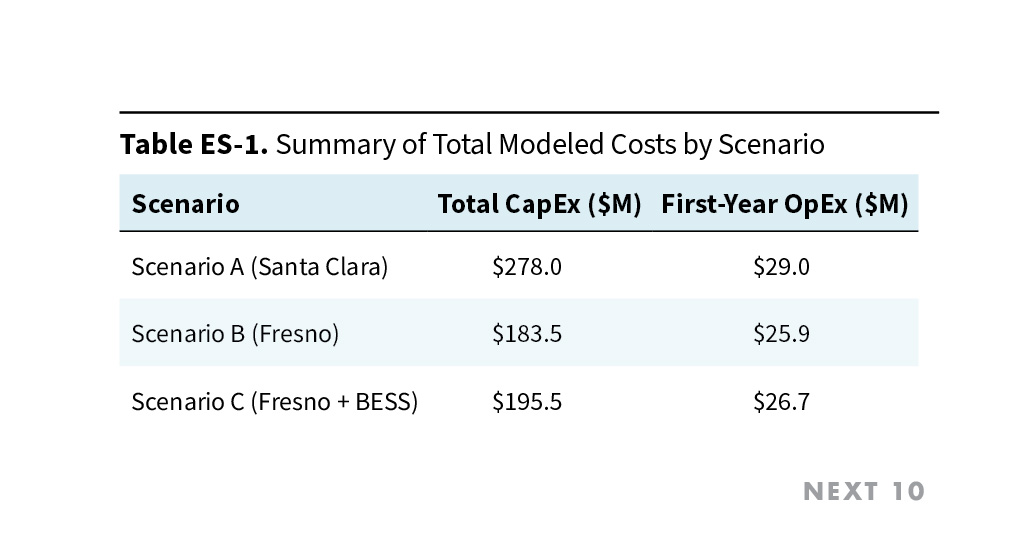
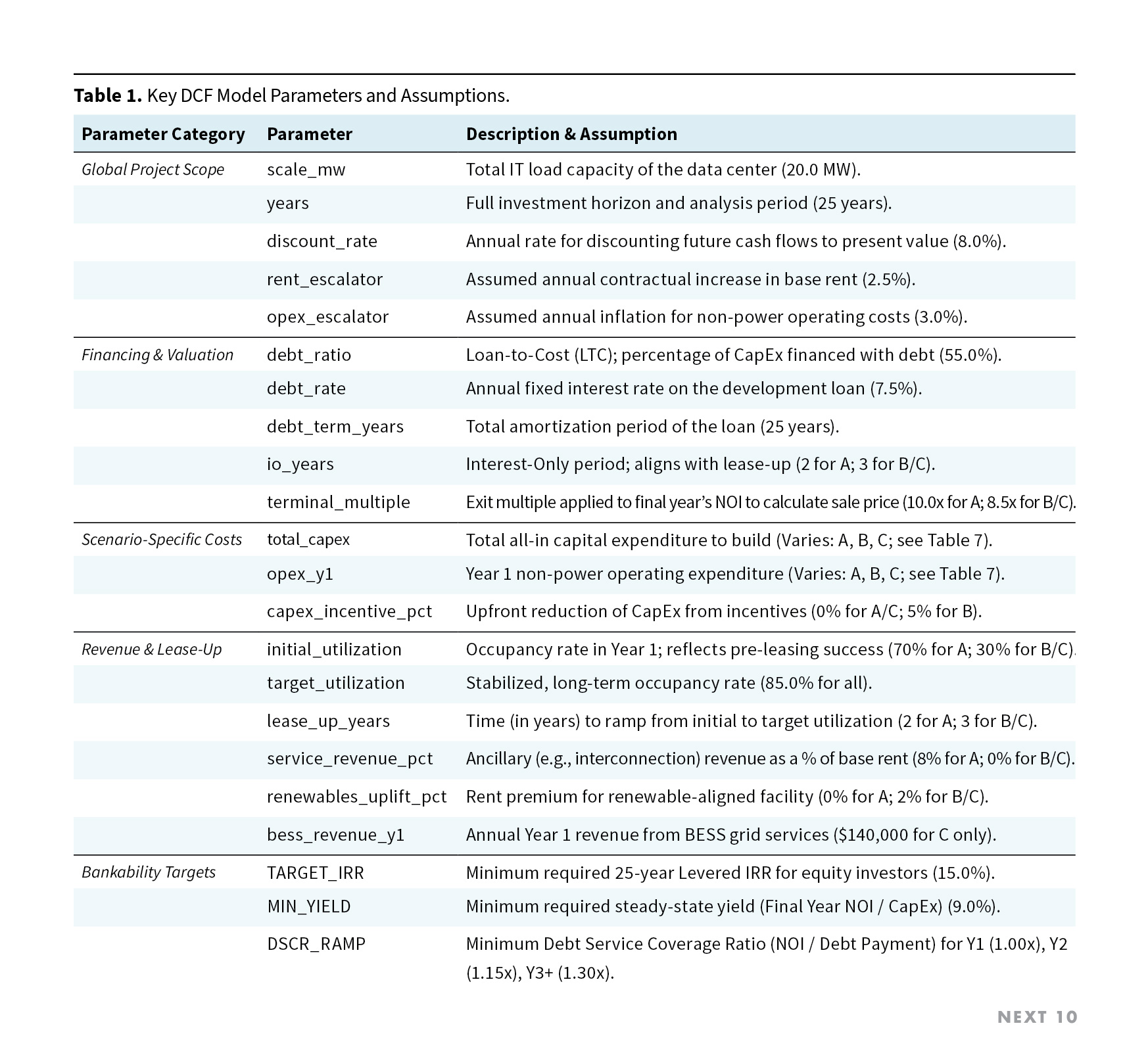
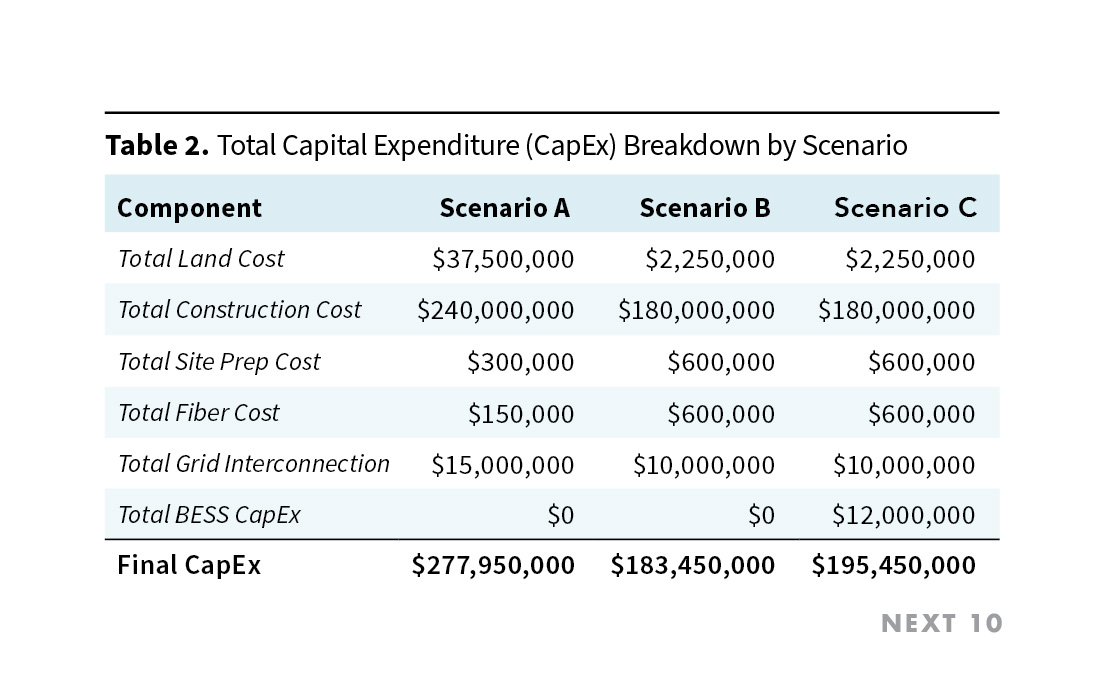
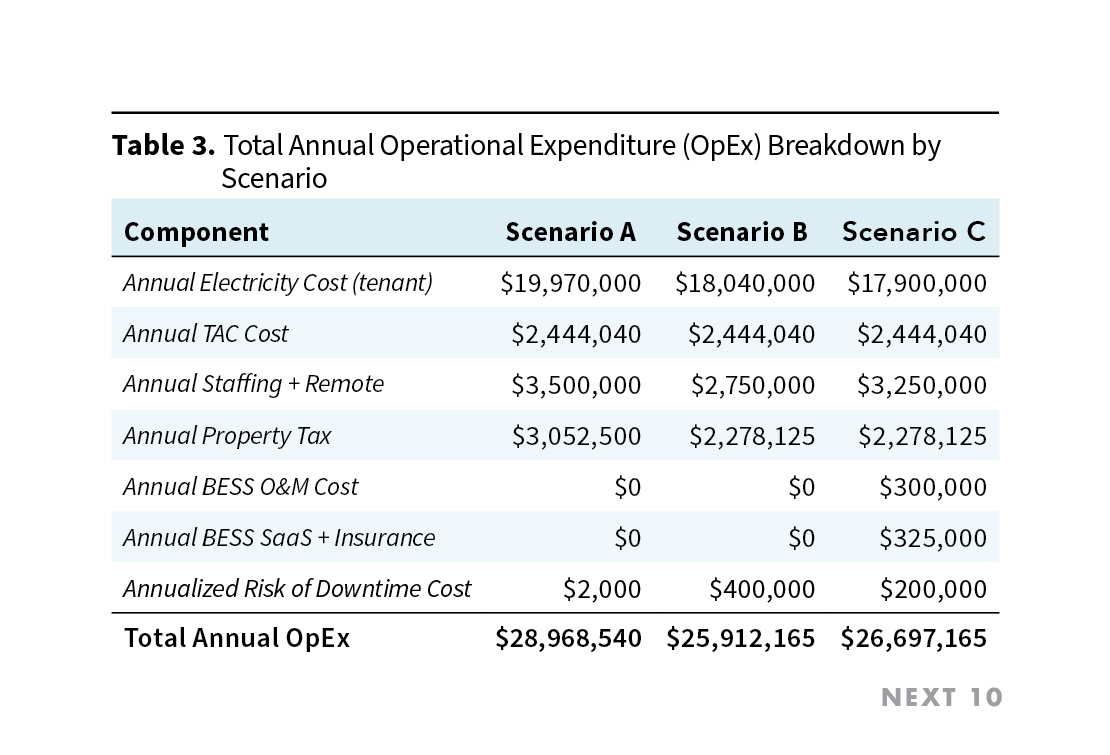
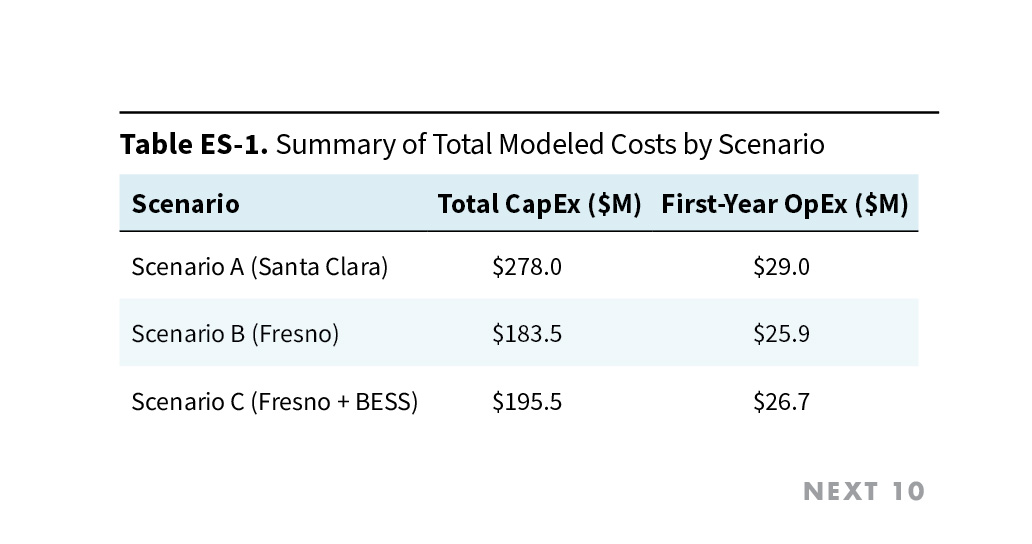
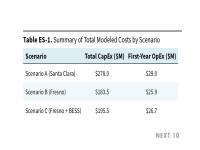
- The urban baseline (Scenario A) has the highest capital and operating expenditures, reflecting premium real estate and electricity prices in Silicon Valley.
- The rural datacenter that uses only curtailed energy (Scenario B) reduces operating costs by approximately 40% through access to near-zero marginal cost curtailed energy although computation is limited to times when curtailed energy is available.
- Augmenting the rural datacenter with batteries (Scenario C) increases capital expenditures by $8 million to $12 million but extends computational availability.
- While the upfront costs in Scenario C are higher, batteries become viable if the datacenter were to generate additional revenue through energy trading and grid services or if batteries continue to become less expensive.
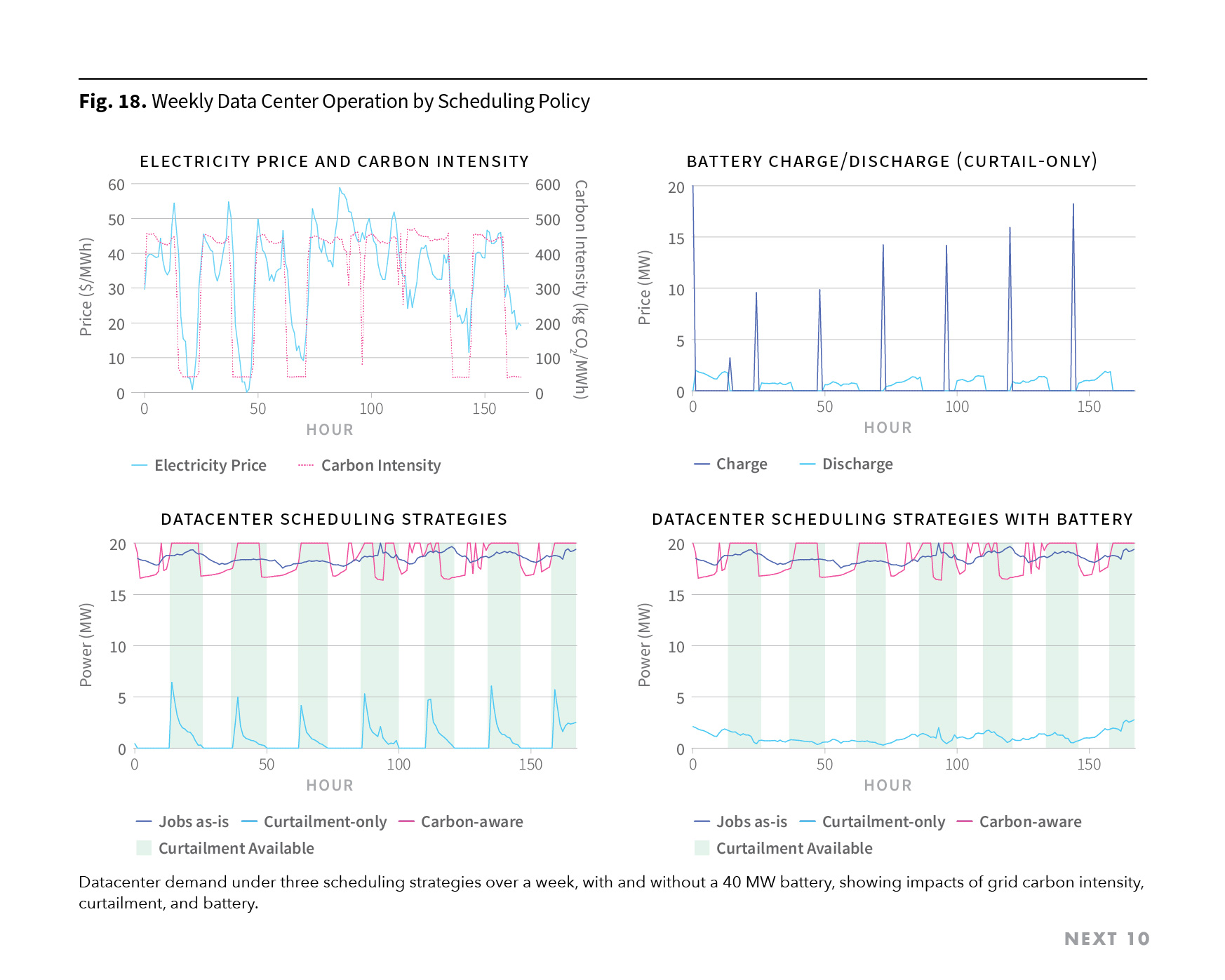
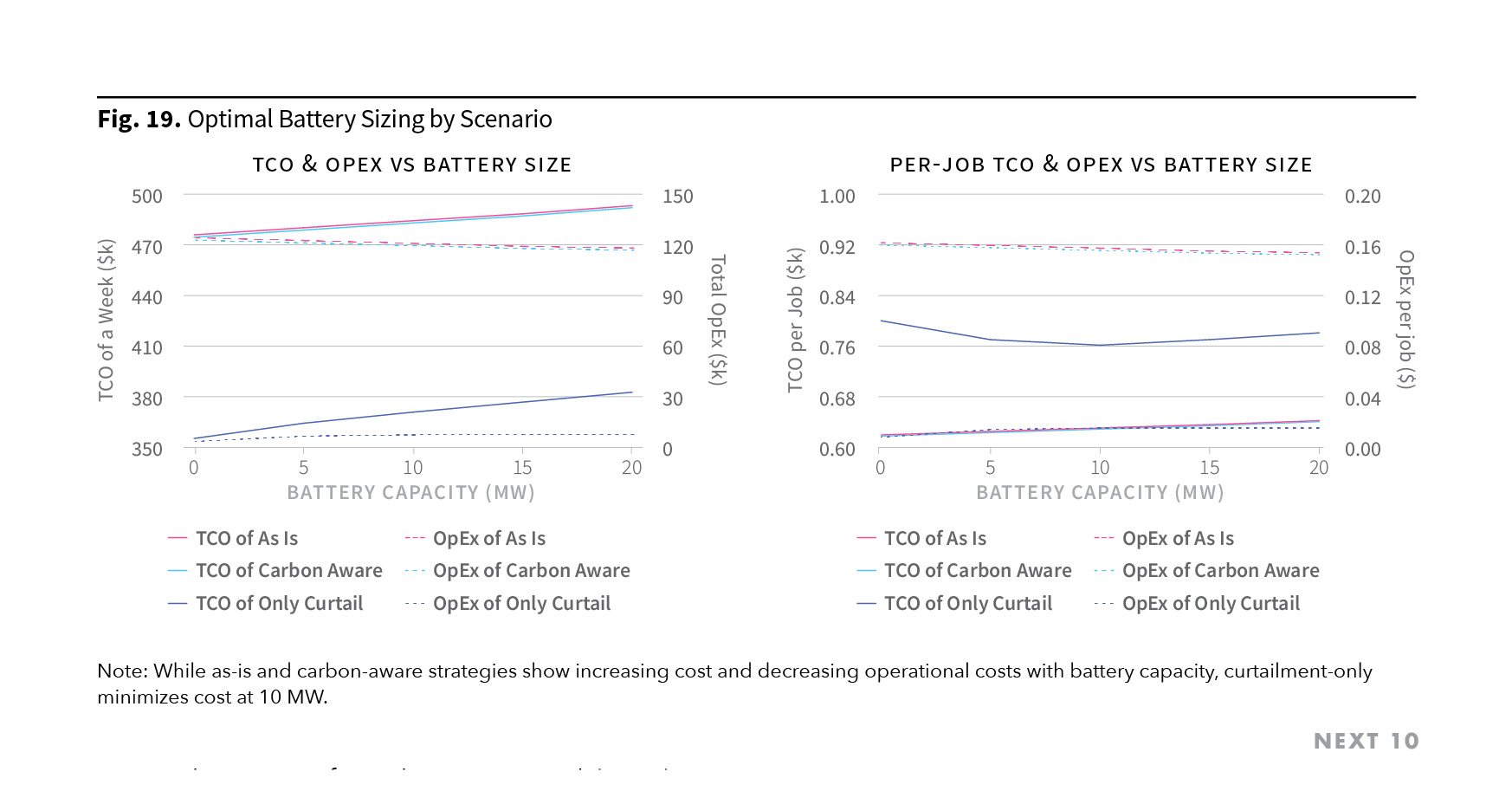
- Assuming optimally sized batteries, batteries can extend curtailment-only operations from 54% to 78% job completion while maintaining significant cost advantages over the urban datacenter.
- Siting datacenters in rural areas to harness surplus power could yield significant economic advantages, reducing break-even revenue from computation by nearly $14 million annually compared to conventional urban deployments.
Key Takeaways
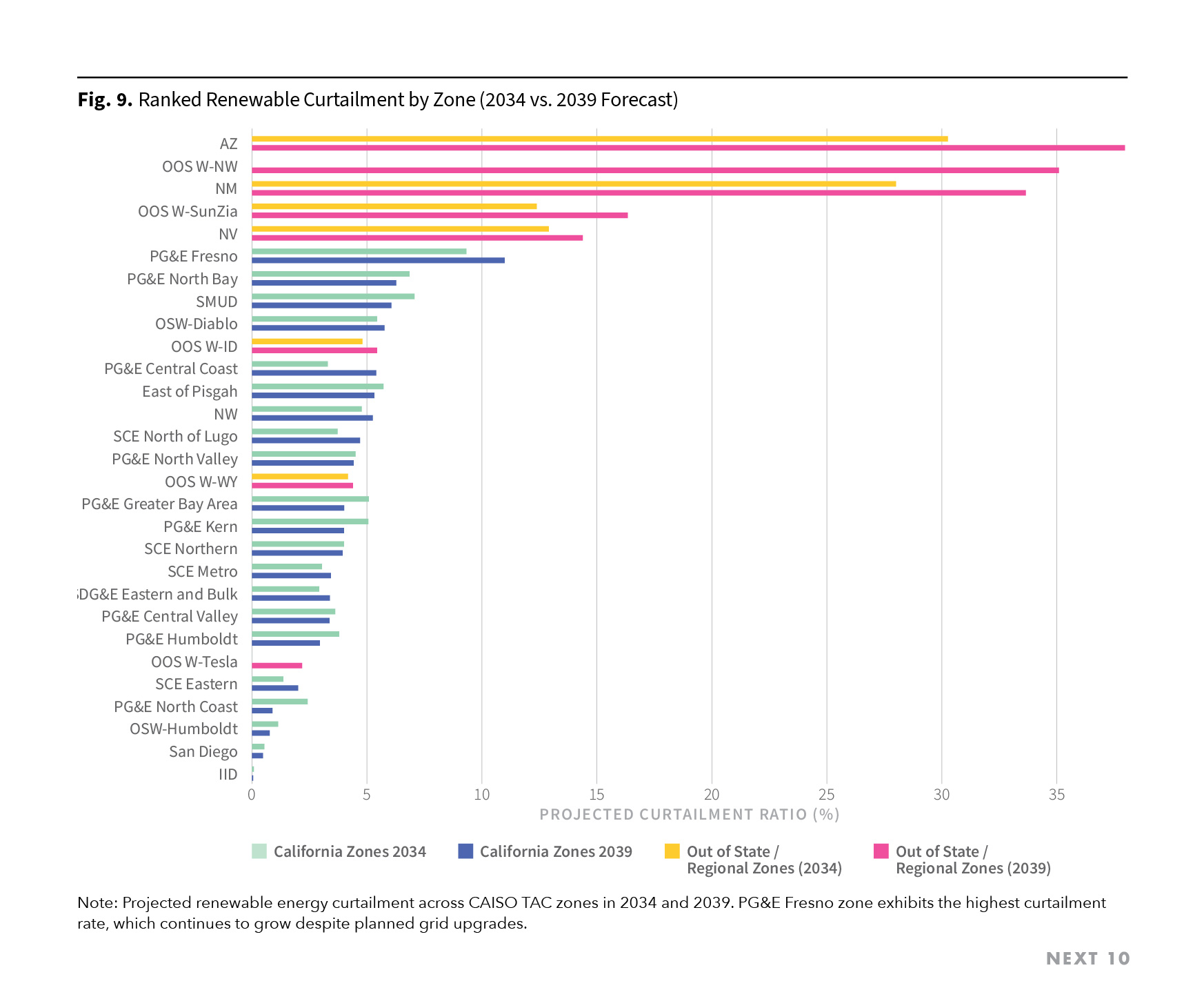
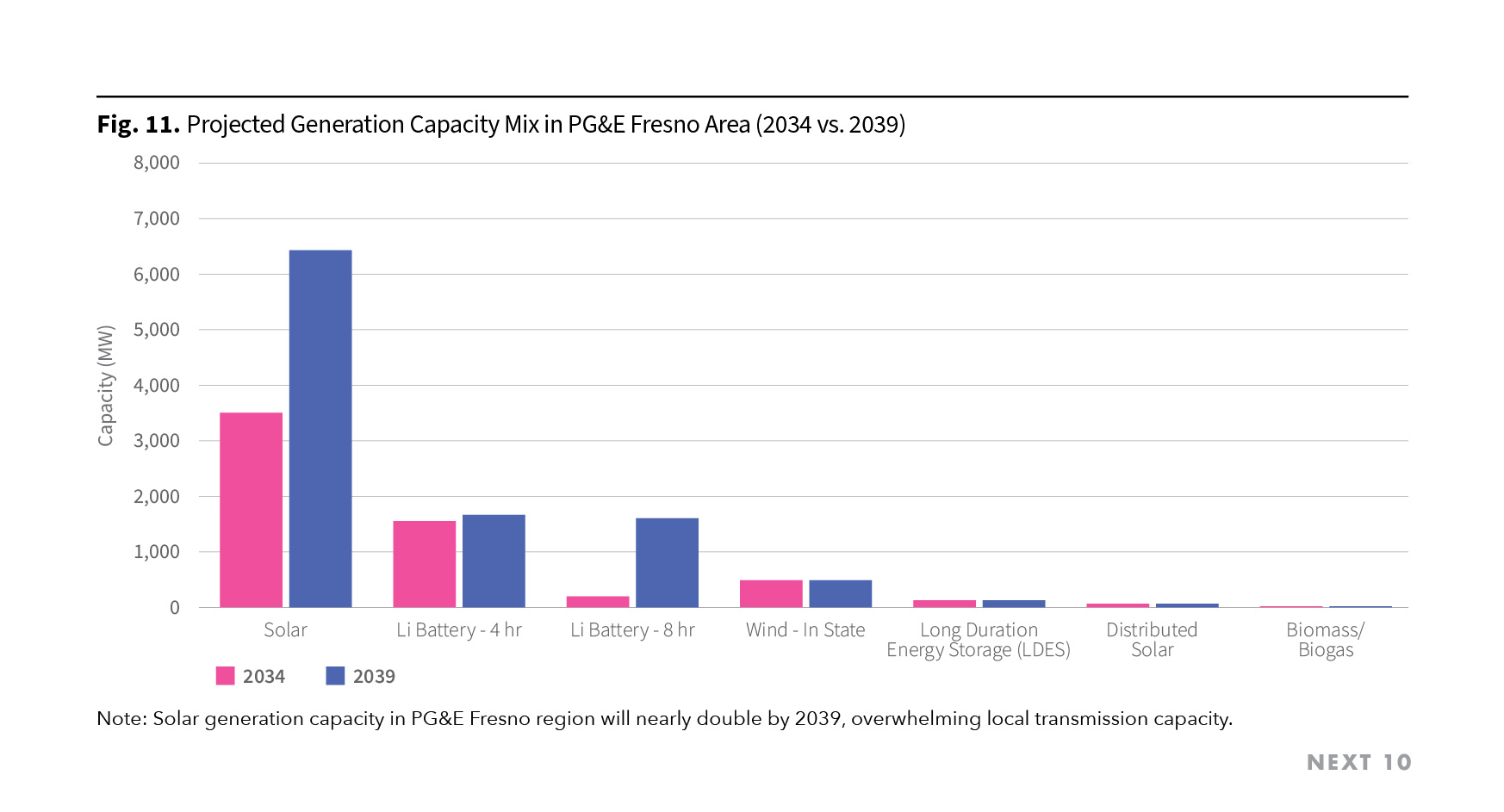
- Transmission Congestion, Not Oversupply, Drives Curtailment: Over 70% of California’s renewable curtailment stems from local transmission bottlenecks rather than system-wide excess generation. Path 15, the Central Valley corridor, will experience congestion in 7,343 hours of the year by 2039 (84% of hours), stranding solar generation even as consumers demand power. The PG&E Fresno zone exhibits the highest projected curtailment rate (11% by 2039), with solar capacity growing 83% faster than transmission expansion. This structural imbalance makes curtailment-based computing a durable opportunity rooted in grid topology rather than transient market conditions.
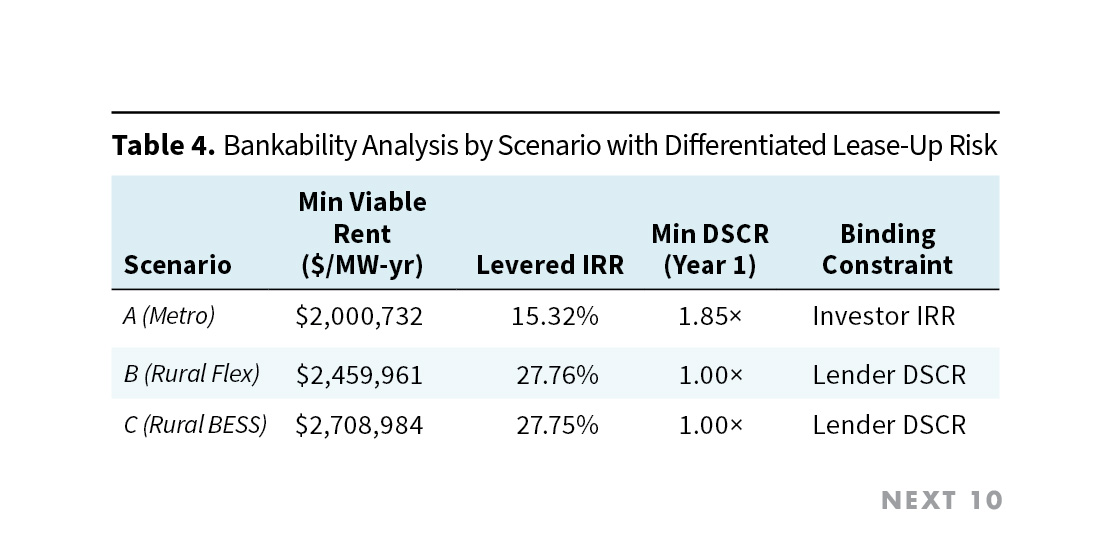
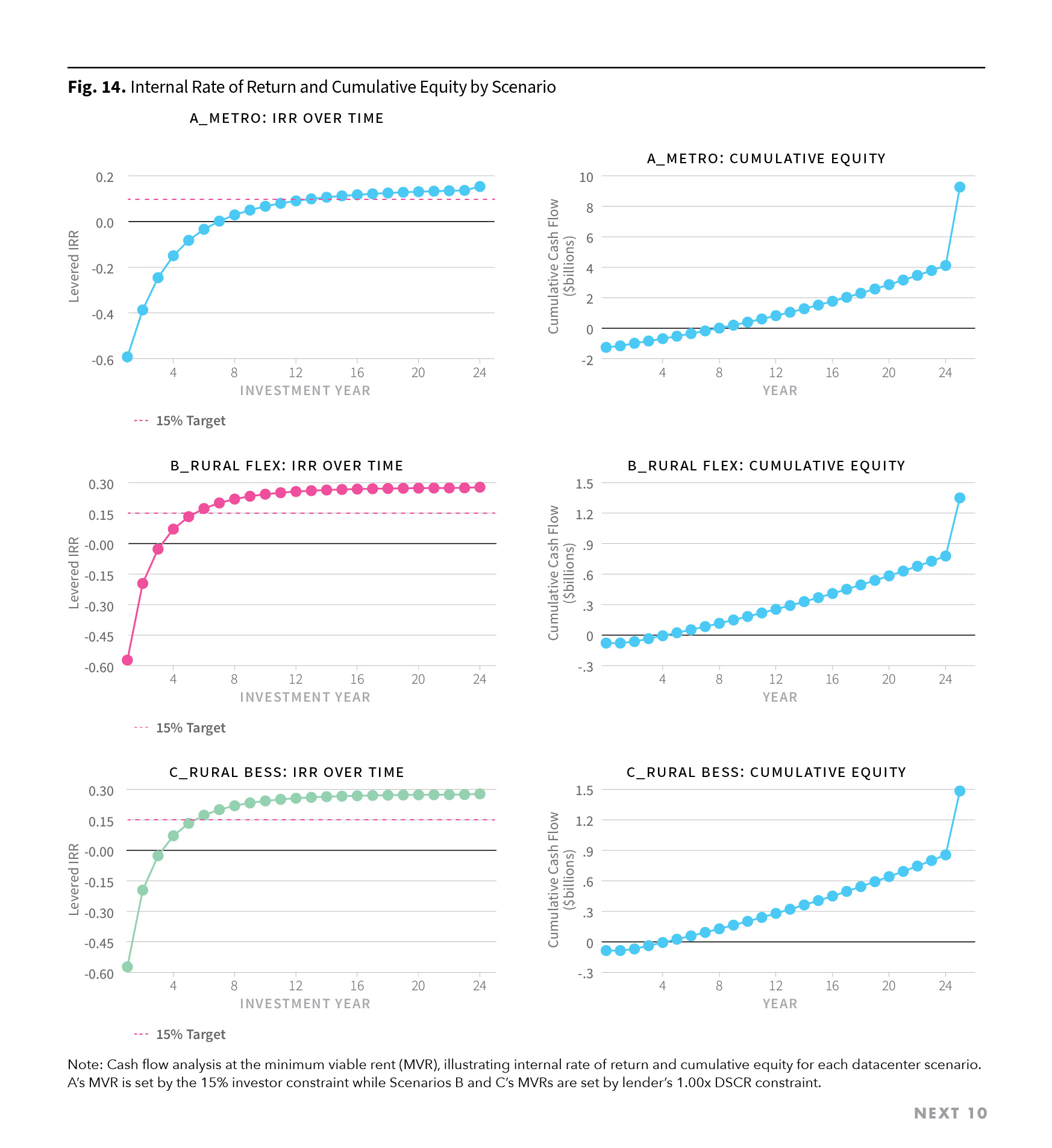
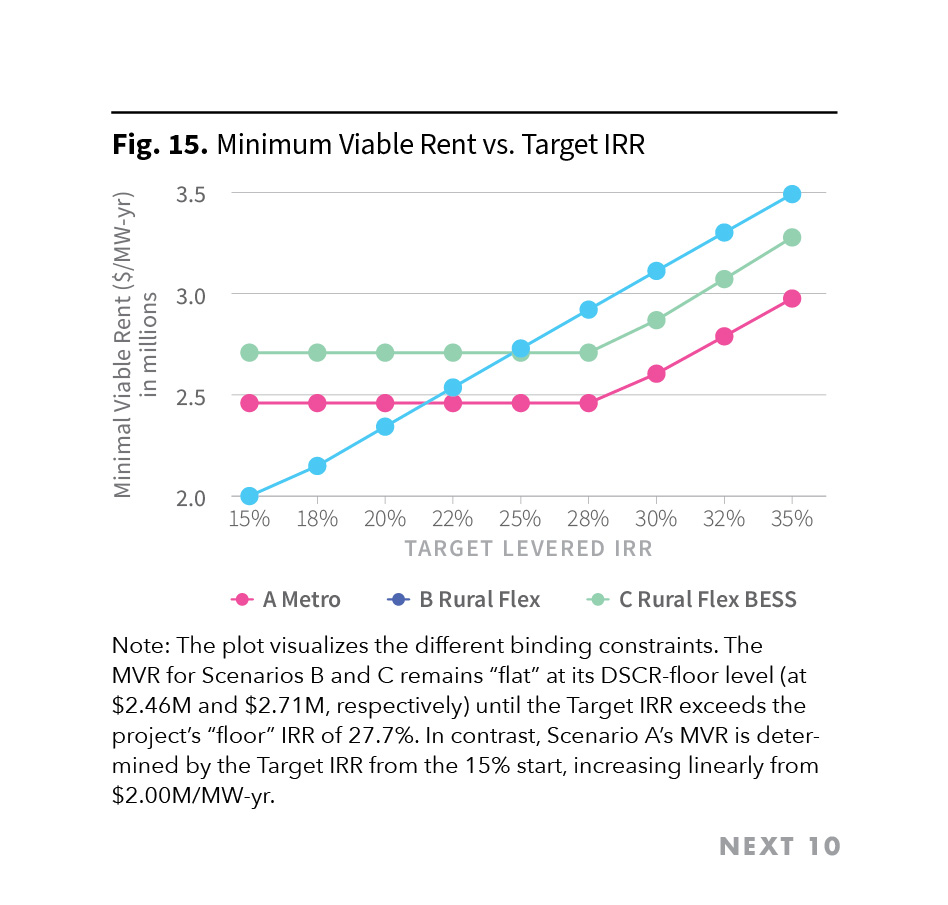
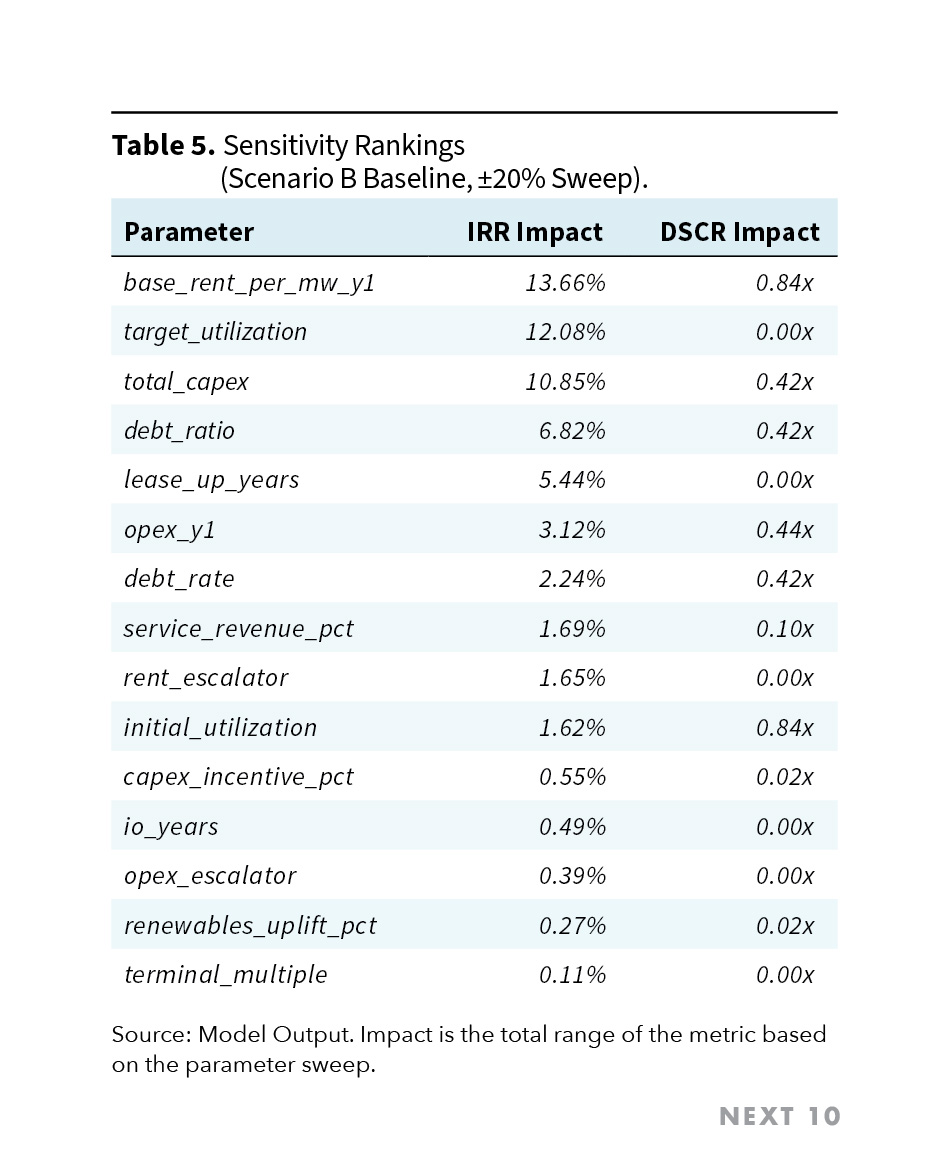
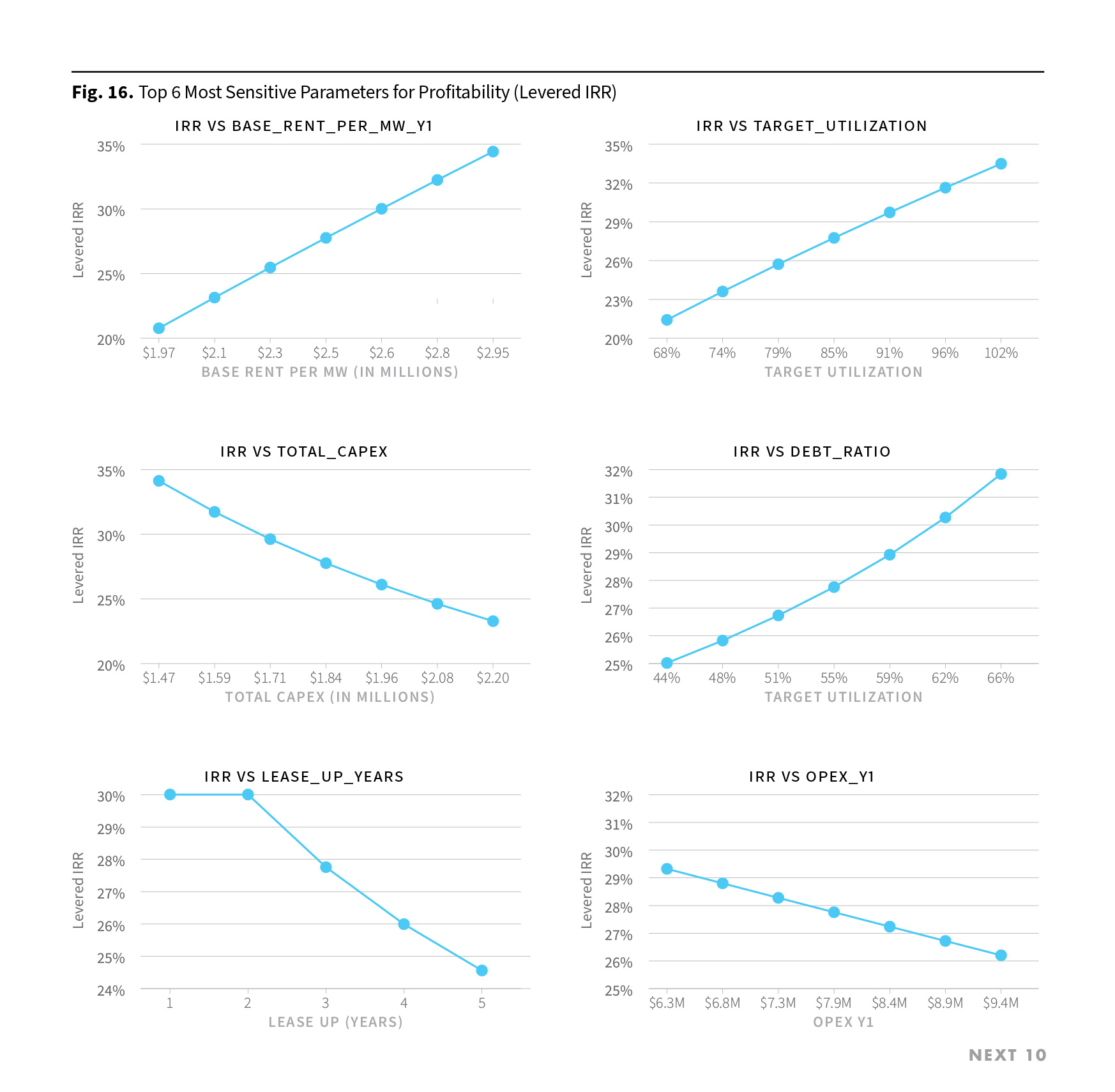
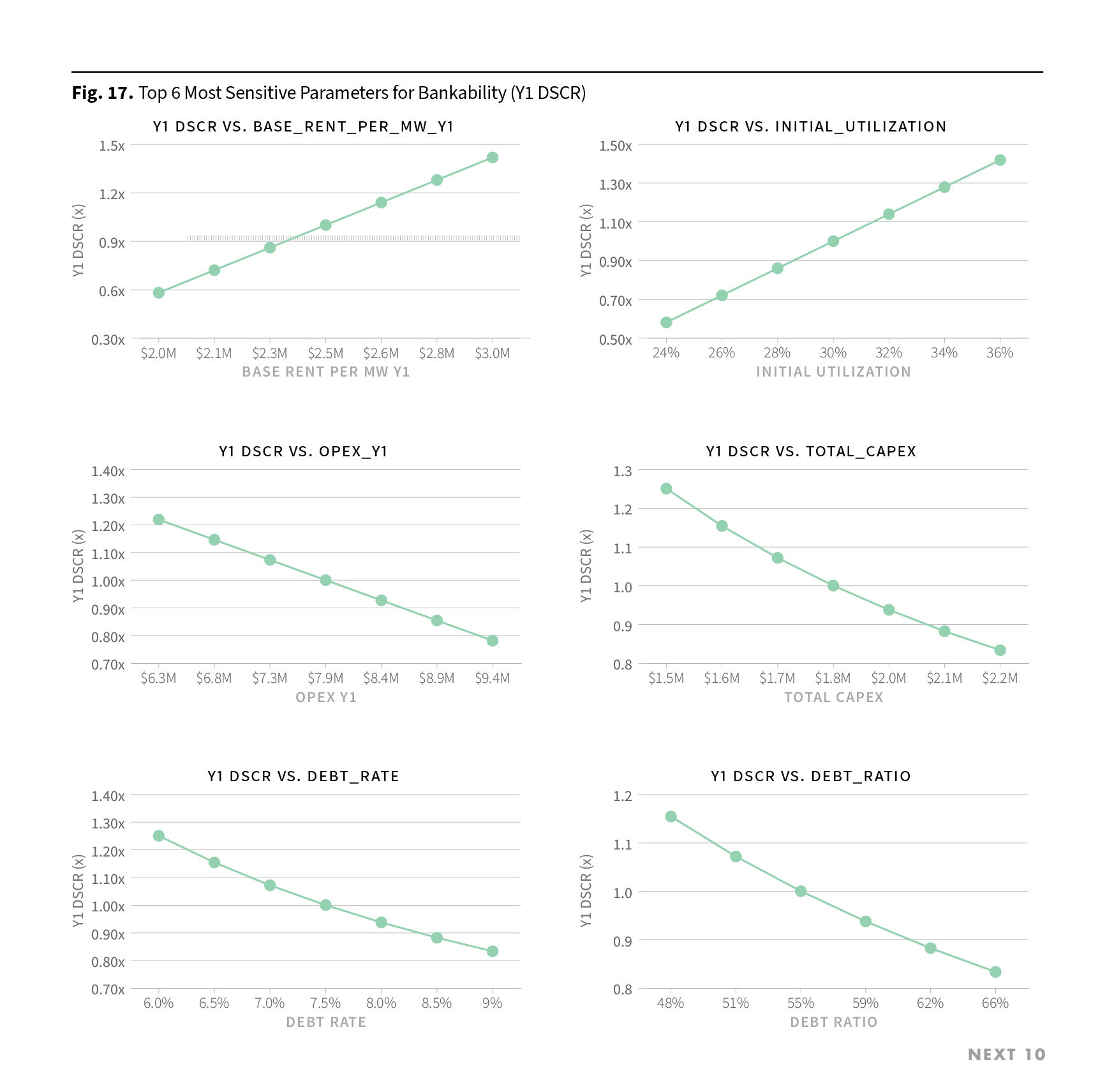
- Short-Term Bankability, Not Long-Term Profitability, Constrains Viability: Rural datacenters that use otherwise curtailed energy could deliver high returns (28% versus 15% for urban facilities). These datacenters could reduce capital costs by 34% through lower land and construct costs while their tenants could benefit from 10% lower electricity costs through access to less expensive power. However, weak initial occupancy might require 23% higher rents to service debt, creating a short-term bankability challenge rather than a long-term profitability challenge.
- Workload Flexibility Determines Economic Viability: Our simulations reveal trade-offs between cost and throughput. Computing continuously with grid power completes 100% of jobs with only modest cost savings (5–8%). Computing exclusively with curtailed energy significantly reduces costs (90%) but completes only 54% of jobs. Battery storage bridges this gap, enabling 78% completion while preserving cost advantages. These dynamics suggest differentiated computational tiers: baseline capacity for latency-sensitive workloads, opportunistic capacity for delay-tolerant batch jobs powered by curtailed energy, and battery-backed capacity for intermediate flexibility requirements.