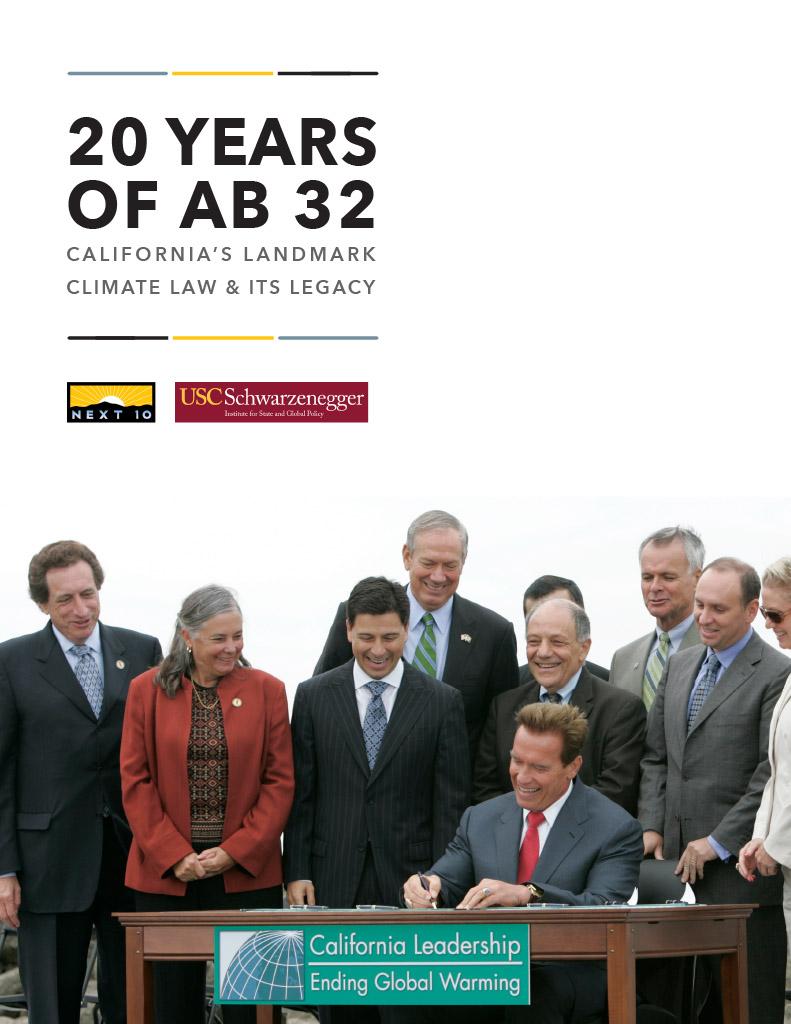
Following decades of work to reduce air pollution across the state, the California Legislature passed Assembly Bill 32 (AB 32), the Global Warming Solutions Act of 2006, co-authored by Assemblymember Fran Pavley and Speaker of the Assembly Fabian Nunez, and signed into law by
California leads the nation in renewable energy deployment, with solar and wind generation providing over a third of the state’s electricity in 2024. This clean energy system arises from successful public policy, falling technology costs, and abundant solar resources.
The 17th annual California Green Innovation Index finds total greenhouse gas emissions fell between 2022 and 2023, dropping by 3.0% to 360.4 million metric tons of carbon dioxide equivalent
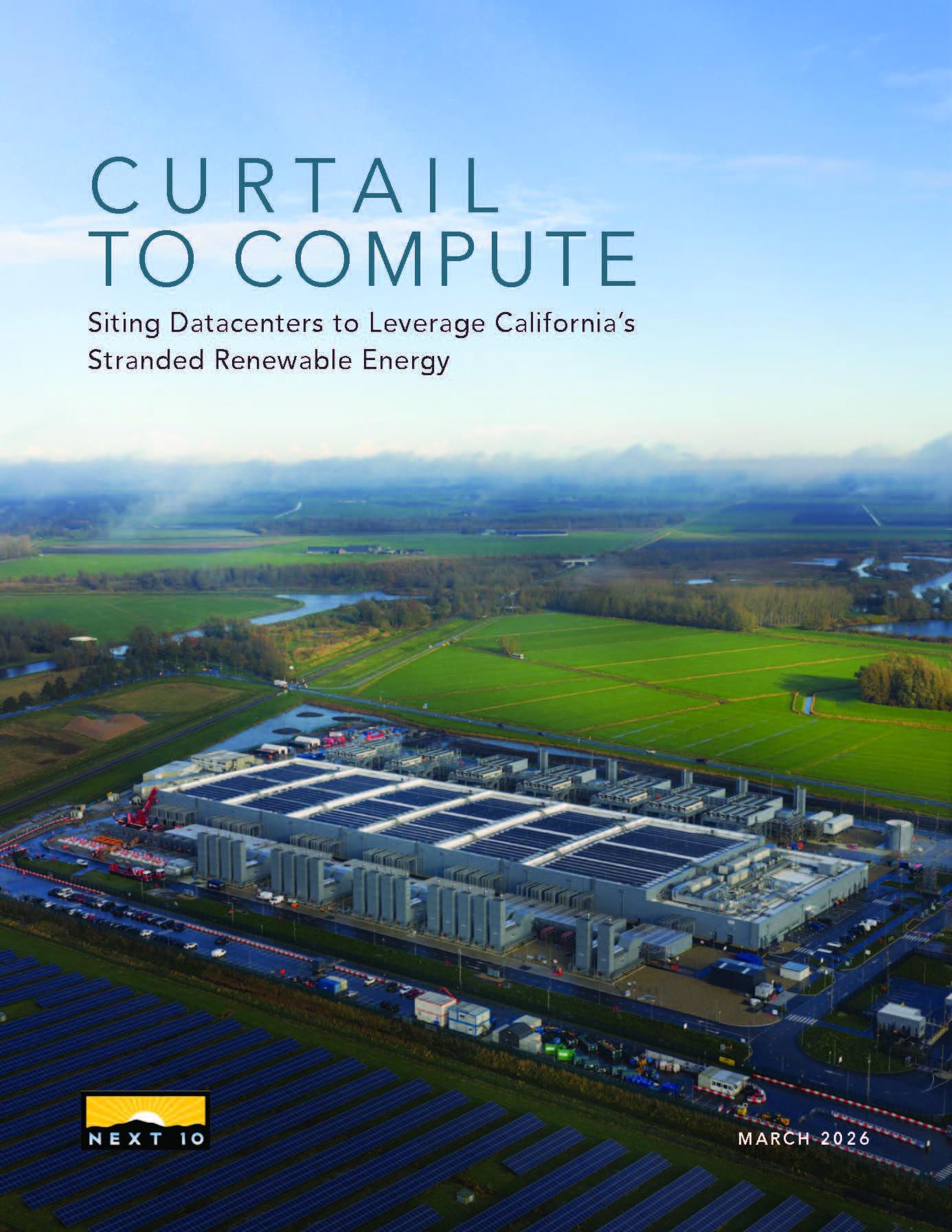
While data centers have long existed in California, the rise of artificial intelligence (AI) has significantly increased demand for new data centers over the last five years, and the pace is expected to increase through the rest of the decade.
The 16th annual California Green Innovation Index is primarily digital, allowing readers to learn and interact with the findings of the report in an interactive medium.
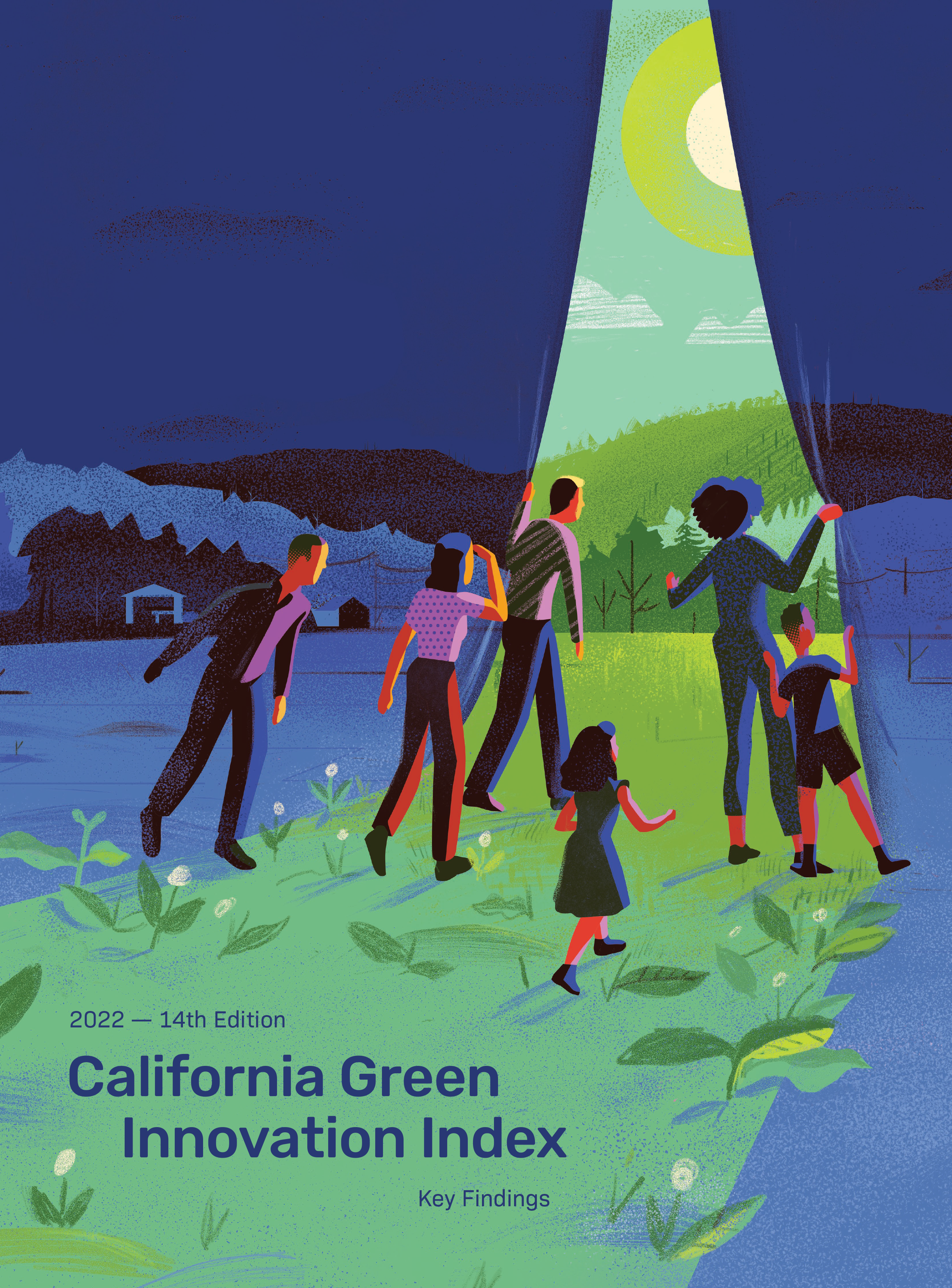
The 14th annual California Green Innovation Index is now primarily digital, allowing readers to learn and interact with the findings of the report in a n
For the first time since Next 10 began producing the Index in 2008, the 13th annual California Green Innovation Index is now primarily digital, allowing readers to learn and interact with the findings of the report in a new medium in 2021.
The 12th annual California Green Innovation Index finds that California's 2018 greenhouse gas emissions—the latest year for which data are available—rose overall for the first time since 2012, driven by increases in the power and commercial sectors.
California’s transportation sector is the largest contributor of greenhouse gas emissions in the state, accounting for 41 percent of statewide emissions.